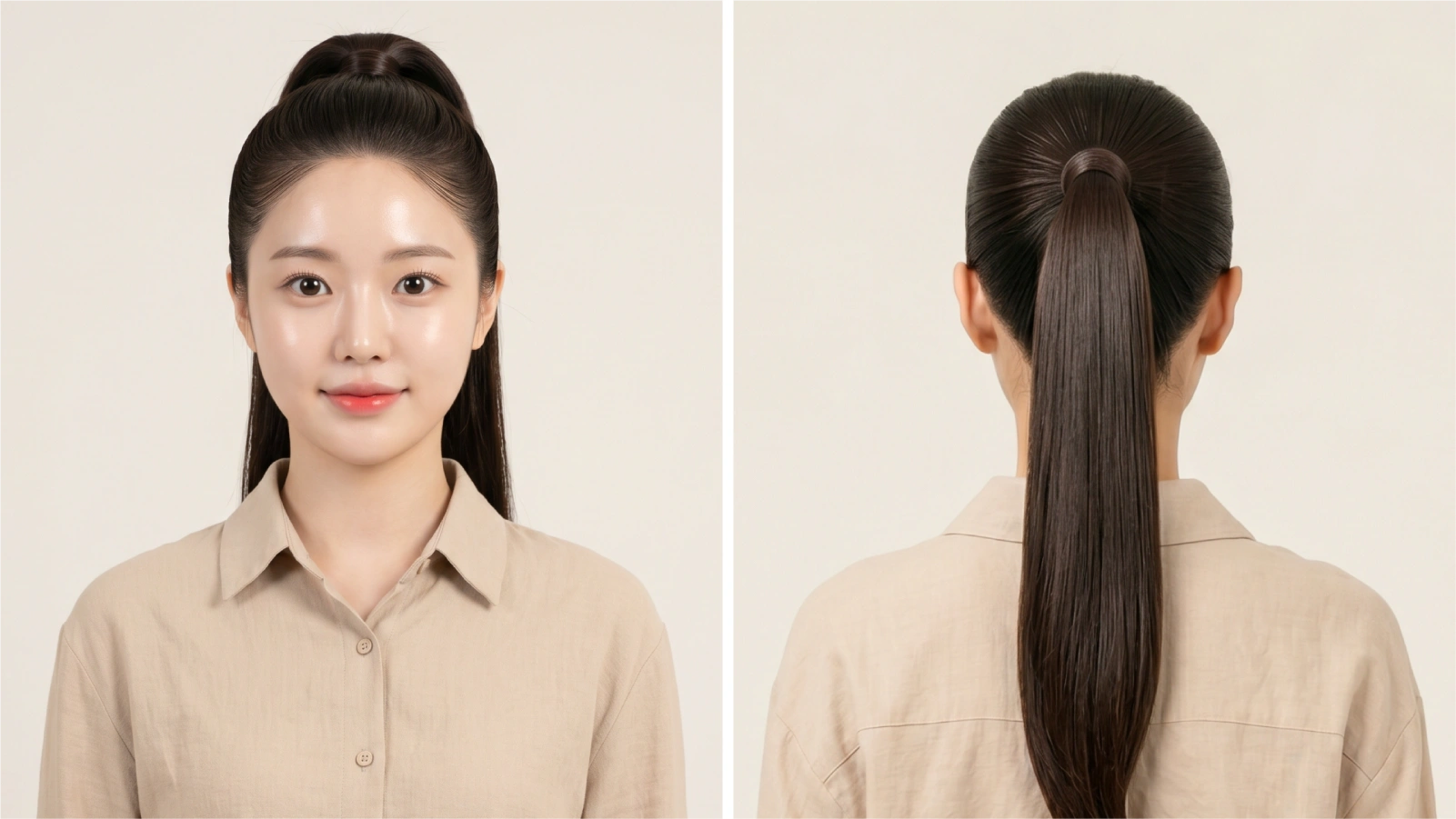
A sleek ponytail is a smooth, frizz-free updo where all hair is brushed back cleanly and secured at a chosen height — high, mid, or low — for a polished, editorial finish.
It takes between 5 and 15 minutes depending on your hair type and works for everything from job interviews to red-carpet events.
The right placement, product, and brushing technique are what separate a truly sleek result from a bumpy, limp version that falls apart by noon.
If you’re already exploring easy hairstyles for women, the sleek ponytail belongs at the top of your shortlist. It’s the rare hairstyle that reads as both effortless and intentional — at the same time.
Style Snapshot
- A sleek ponytail takes 5–15 minutes and works on straight, wavy, curly, and thick hair with the right prep.
- Ponytail height matters: high placement lifts and brightens the face; low placement reads as polished and professional.
- The American Academy of Dermatology (AAD) warns that wearing tight ponytails daily can cause traction alopecia — limit tight styles to 3–4 days per week and vary placement.
What Makes a Ponytail Truly “Sleek”?
A sleek ponytail is a different thing entirely from a regular one. A sleek ponytail is something different. It’s defined by three qualities: zero visible bumps from root to base, baby hairs and flyaways smoothed down, and a shine that looks intentional rather than accidental.
The biggest mistake? Skipping the product step and going straight to the brush. Hair gel, styling cream, or pomade at the roots is what creates the glassy, snatched look — not the brush itself. Think of the product as the foundation and the brush as the finisher.
Here’s how the main sleek ponytail styles compare:
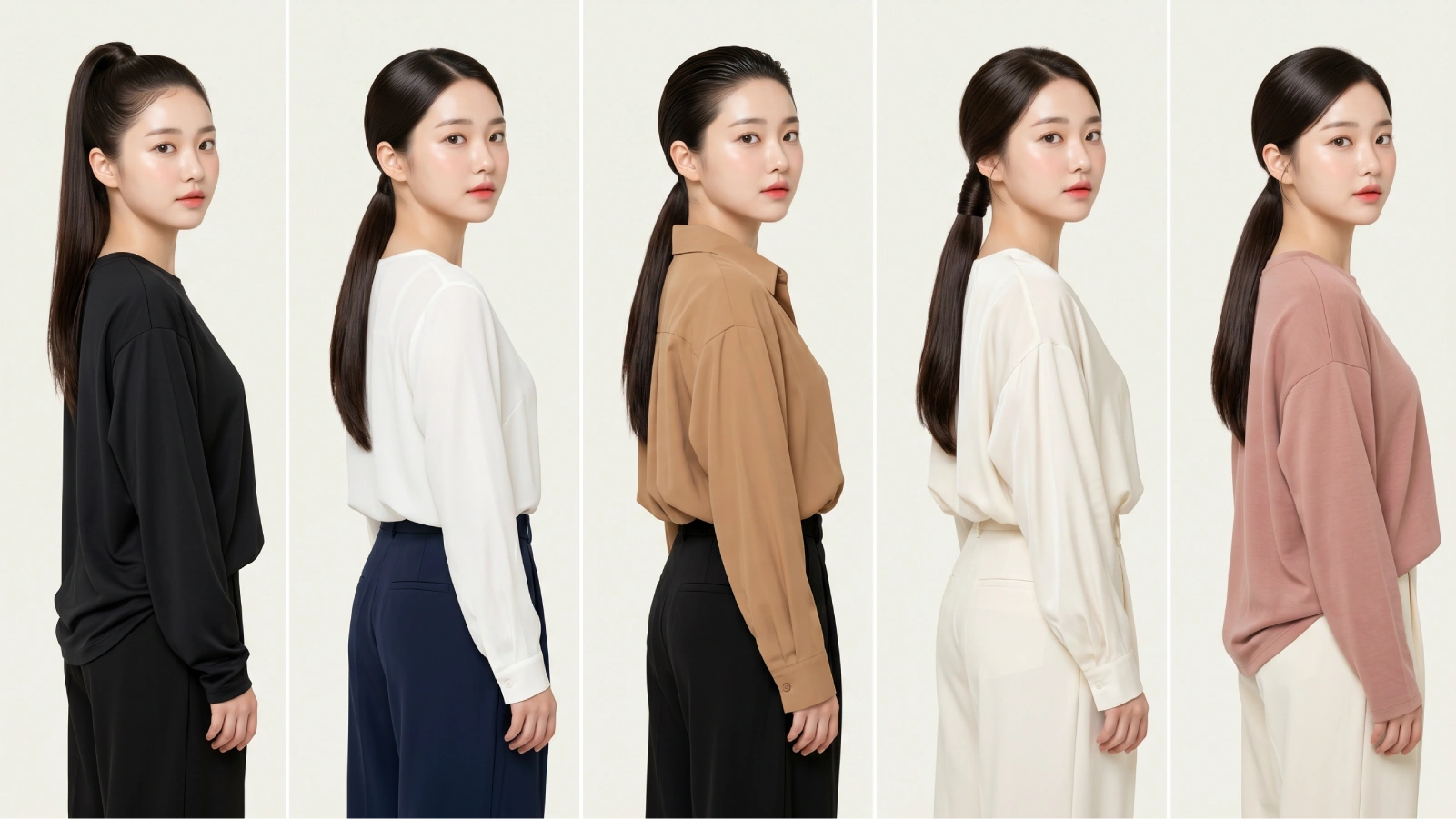
A sleek low ponytail communicates authority and professionalism in a way that very few hairstyles can match without any effort.
What Products Actually Work for a Sleek Ponytail?
The product you choose is the single biggest variable in whether your sleek ponytail holds for two hours or ten. Generic ‘just use gel’ advice fails anyone with thick, curly, or color-treated hair — the product needs to match your texture.
The right sleek-ponytail product depends on your hair texture, not your favorite brand — matching both is what separates a salon finish from a flat-looking attempt.
One pro tip straight from stylists: spray your boar bristle brush with hairspray rather than spraying directly onto hair. This gives you even distribution and precise control without stiff patches.
How Do You Get a Sleek Ponytail Step by Step?
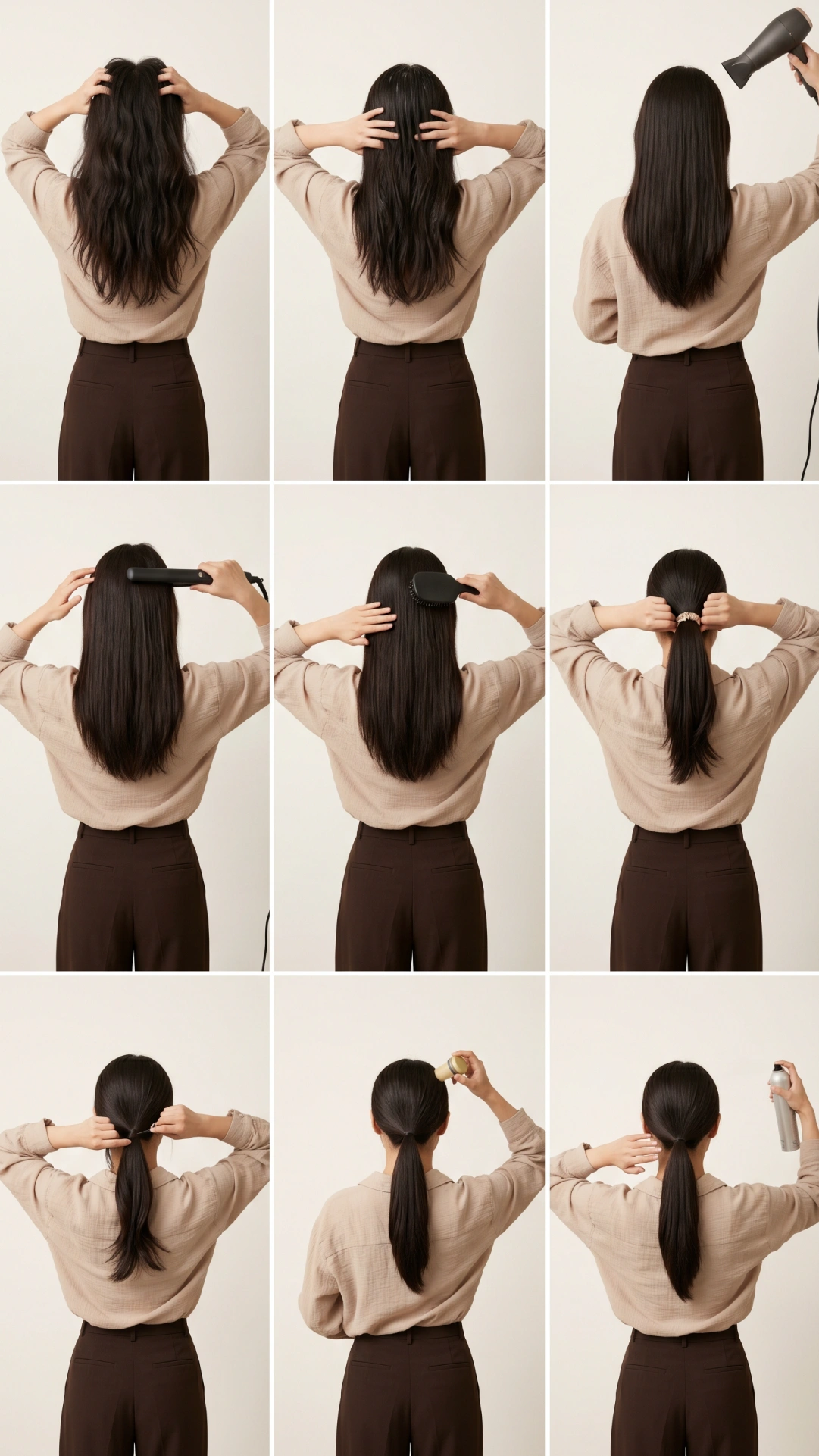
Getting a truly smooth result isn’t about scrubbing everything back and hoping for the best. Each step builds on the last — skip one, and you’ll have bumps or frizz showing up within an hour.
- Start with clean or second-day hair. Freshly washed hair is often too slippery to hold a tight ponytail. Light natural oil helps the style grip and stay longer.
- Apply smoothing cream to damp or dry hair from roots to mid-lengths. Work it through with your fingers, focusing on the scalp and hairline where flyaways start.
- Blow-dry pointing the nozzle downward along the hair shaft. Downward airflow seals the cuticle flat — upward airflow is the number one cause of post-blowout frizz.
- Use a flat iron on any areas that won’t lie smooth. You don’t need to go section by section — focus on the crown and any rough patches near the temples.
- Apply gel or pomade to a paddle brush and brush everything back slowly. Professional stylists stress this step: patience and prep matter most — rushing the brush-through creates ridges.
- Gather hair at your chosen height and secure with a snag-free elastic. Silk or satin-coated ties cause less friction and breakage than standard rubber-core bands.
- Wrap a thin section of hair from the ponytail around the elastic. Pull it taut, then pin the end underneath with a bobby pin. This hides the tie completely.
- Use a wax stick or edge-control product on baby hairs and hairline flyaways. A clean toothbrush works just as well as a specialized edge brush for precision.
- Mist lightly with strong-hold hairspray and smooth one final time with your palm or brush.
For a related elevated style that starts from the same foundation, explore the high ponytail technique for extra lift and drama.
Can You Do a Sleek Ponytail Without Heat?
Yes — and this method is kinder to your strands long-term. The heat-free sleek ponytail relies on product hold rather than thermal straightening, and it works especially well on wavy or naturally textured hair.
Heat-free method by hair type:
- Straight hair: Apply gel to damp hair, brush back with a boar bristle brush, secure, and allow to air dry. Takes 20–30 minutes but delivers a glossy, long-lasting result.
- Wavy hair: Use a smoothing leave-in conditioner plus strong-hold gel. Brush back while damp, wrap the perimeter tightly in a silk scarf for 15 minutes while it sets, then secure.
- Curly or coily hair: Apply a generous layer of hair gel or edge control to each section, use a denman brush to smooth, then gather. The natural texture at the ponytail itself adds visual interest without any heat needed.
- Thick hair: Divide hair into two horizontal sections. Smooth and secure the bottom half first, then layer the top section over it. This prevents the bulk from fighting the elastic.
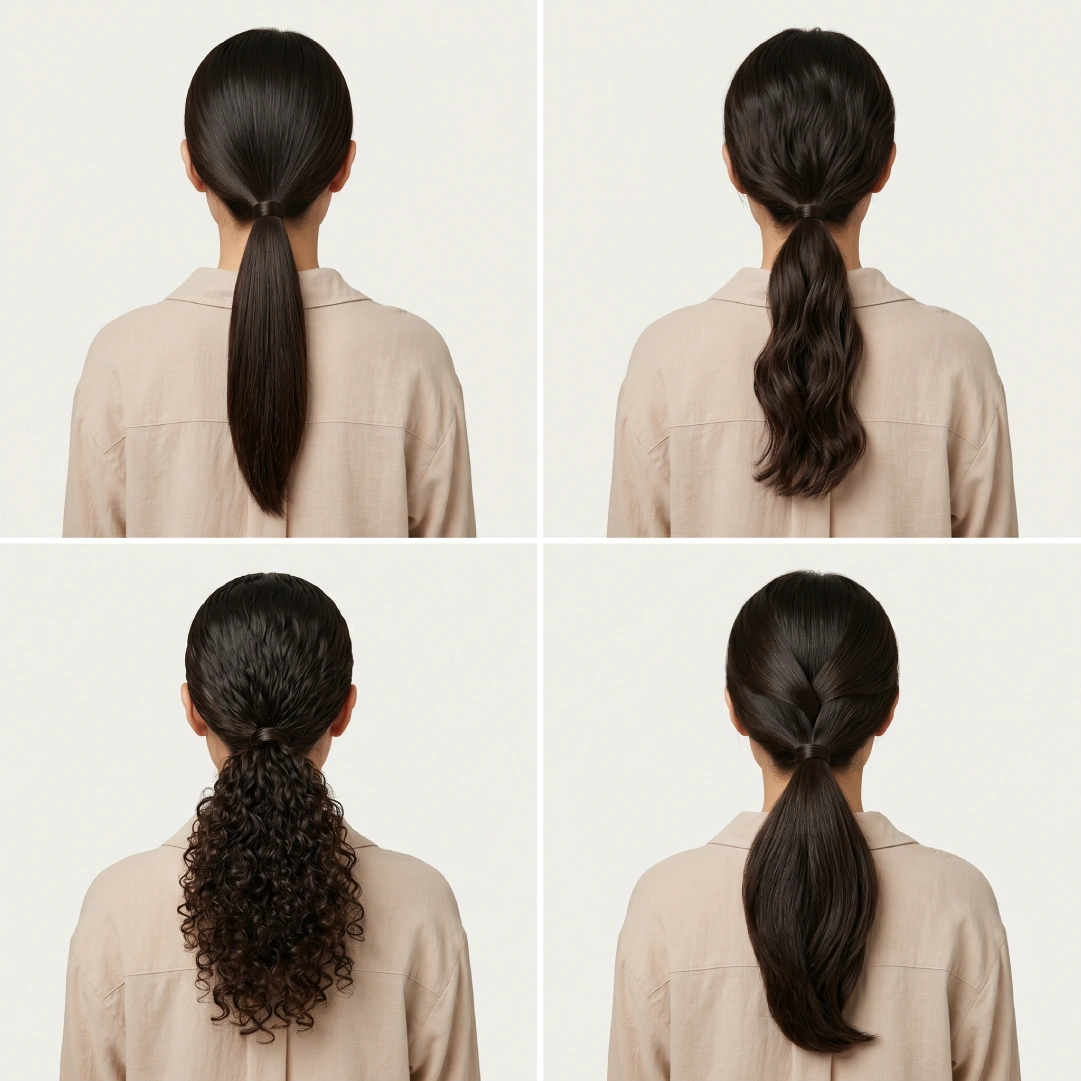
Skipping heat doesn’t mean sacrificing sleekness — the right gel-to-brush combination produces results that rival a flat iron on most hair types.
Which Sleek Ponytail Height Suits Your Face Shape?
Most face-shape guides treat all ponytails the same. They don’t. A sleek finish changes how much your bone structure shows — which means height selection matters more for this style than for a messy or textured pony.
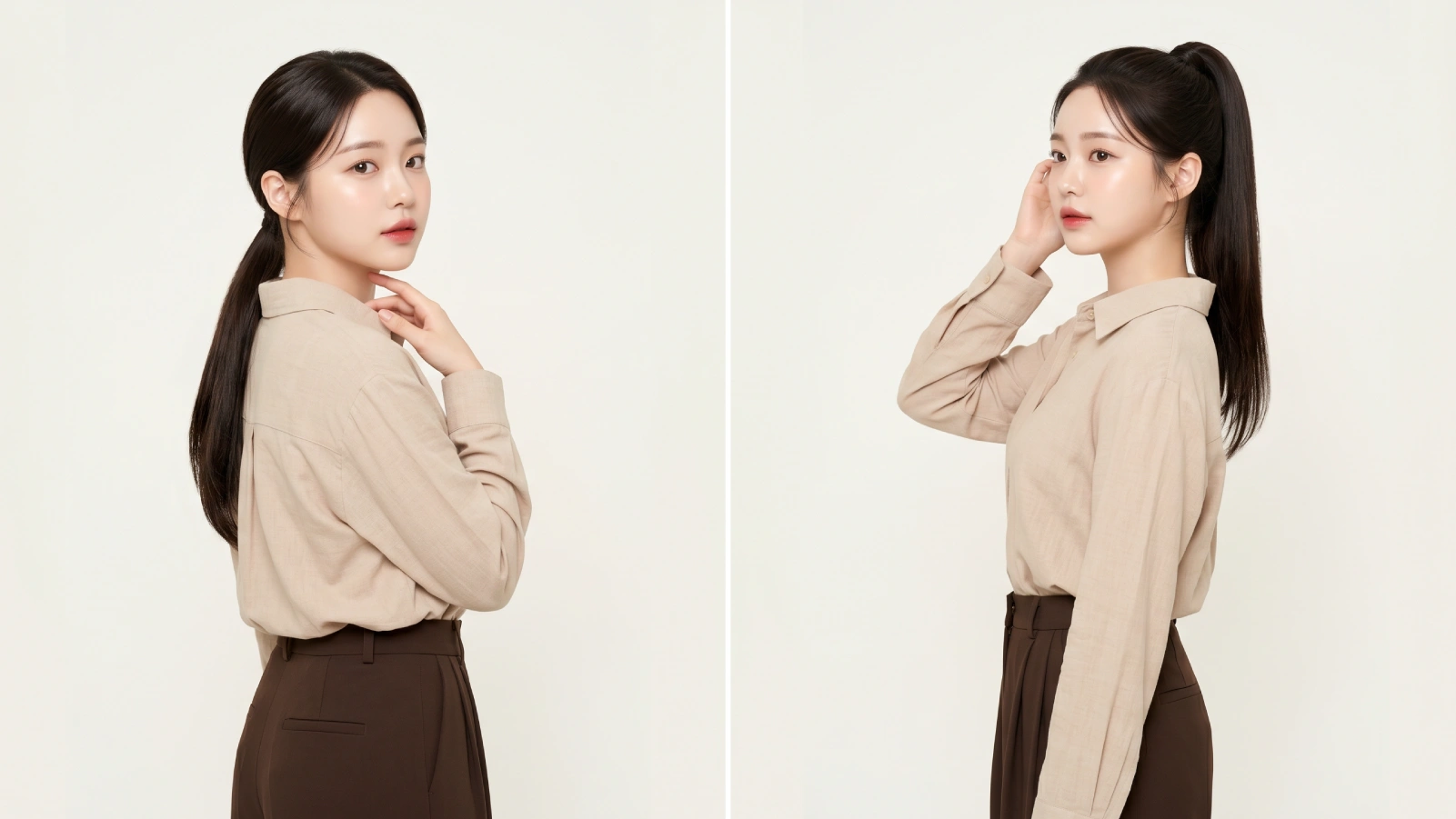
Choosing the wrong ponytail height for your face shape can emphasize features you’d rather soften — but one small placement adjustment fixes everything.
One adjustment changes everything for round faces: instead of pulling straight back, position the elastic slightly toward the crown rather than the center of your head. This shifts the visual axis upward and adds the length effect immediately.
How Do You Keep a Sleek Ponytail Looking Fresh All Day?
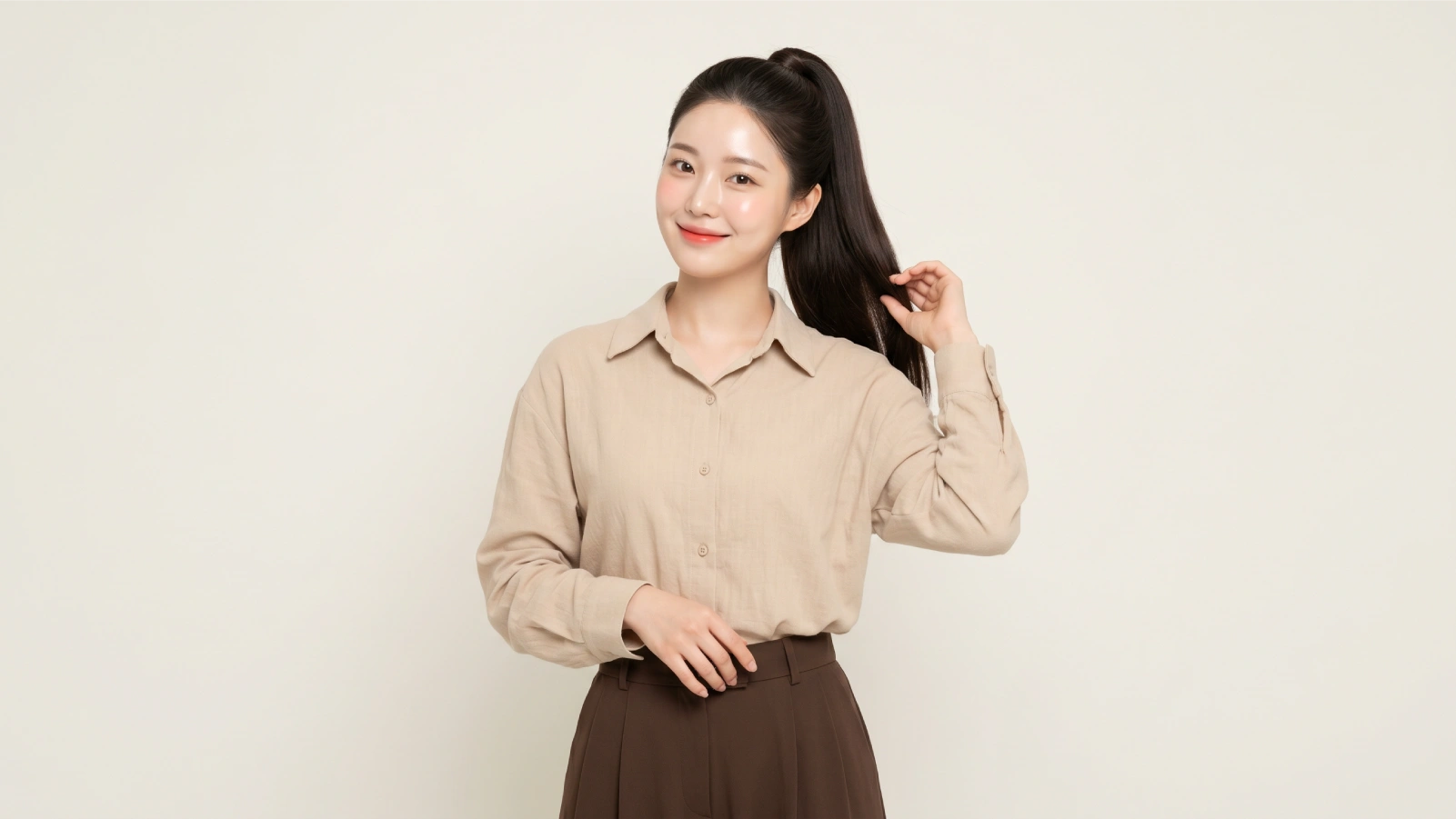
Getting the sleek look in the morning is step one. Keeping it that way by 6 PM takes a few specific habits.
Touch-up kit to keep at your desk or in your bag:
- Wax stick — swipe along any re-emerging flyaways in seconds; fits in any makeup bag
- Mini bottle of hairspray — spot-spray and smooth with your palm, don’t drench
- 2–3 bobby pins — re-secure the wrapped section if it loosens
- Pocket-size boar bristle brush — 5 strokes along the top realigns everything
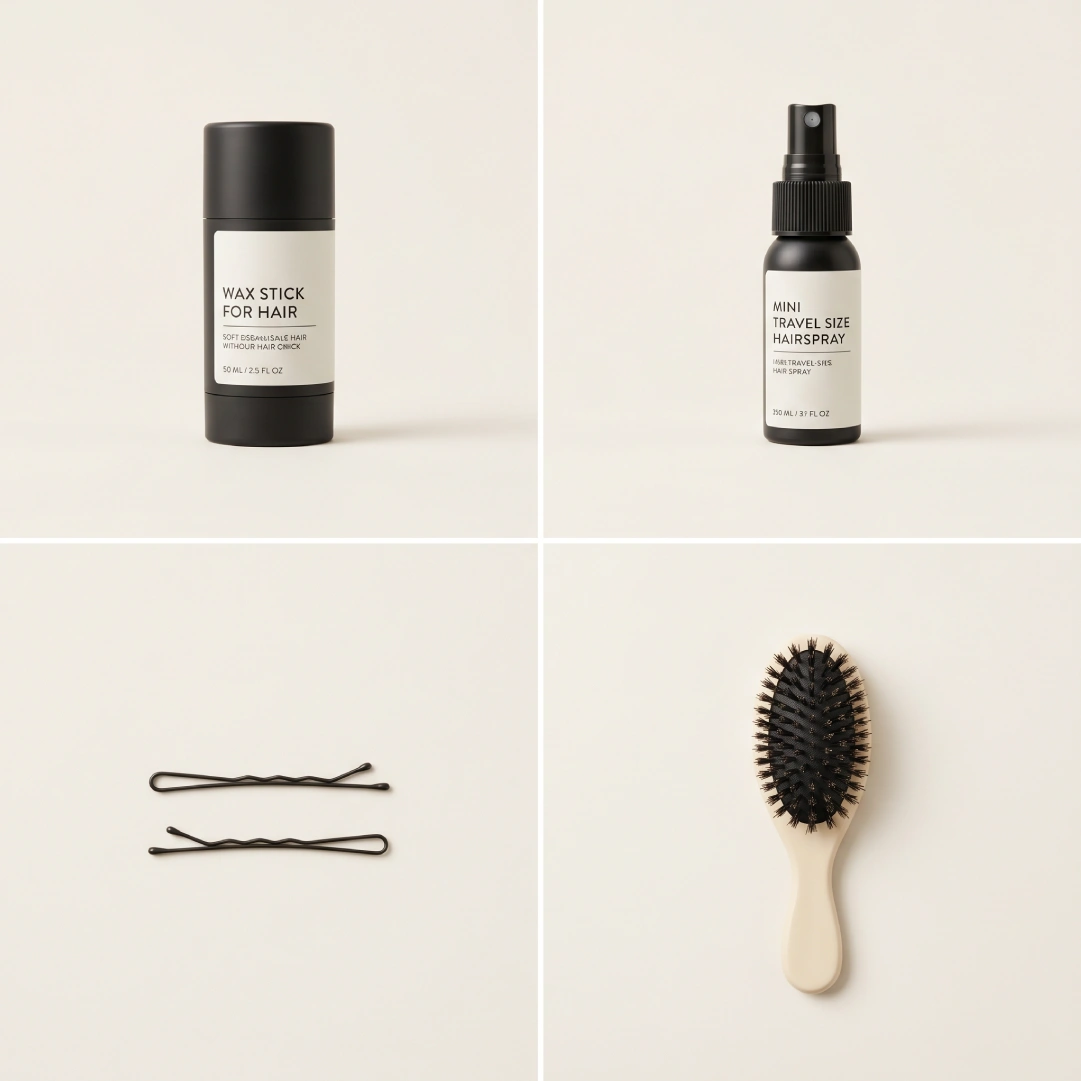
Longevity habits that prevent early breakdown:
- Avoid touching the crown throughout the day — oils from your fingertips soften gel and hairspray
- Sleep on a satin pillowcase if you plan to rewear the ponytail the next morning
- Don’t re-wet the hairline to fix flyaways mid-day — it disrupts the set; use the wax stick instead
One additional note on hair health: dermatologists flag that traction alopecia — hair loss caused by repeated tension at the hairline — is a real risk with daily tight sleek ponytails.
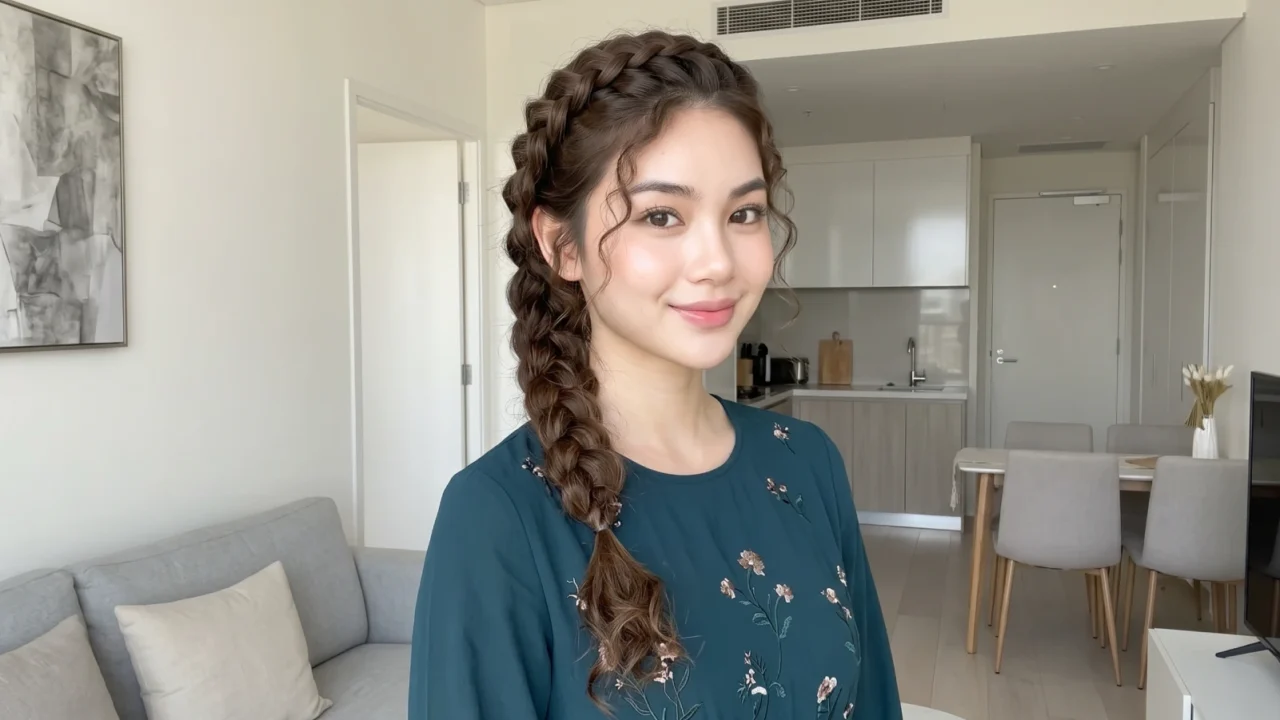
If you wear this style frequently, rotating with looser styles like a half up half down hairstyle or a milkmaid braid at least twice per week significantly reduces scalp tension and breakage risk.
What Are the Hair Health Risks of Wearing a Sleek Ponytail?
This part matters as much as the technique — and it’s worth addressing directly.
The American Academy of Dermatology (AAD) has explicitly flagged that repetitive tight hairstyles can cause traction alopecia, a form of gradual, preventable hair loss caused by constant tension on the hairline and scalp.
The sleek ponytail, by design, requires moderate-to-high tension. That’s not a reason to avoid it — it’s a reason to wear it strategically.
How to protect your hair:
- Rotate styles 3–4 days per week. Alternate between the sleek pony, a loose milkmaid braid, or a low bun to relieve tension zones.
- Use silk or satin scrunchies instead of standard rubber elastics — they dramatically reduce friction and breakage at the base.
- Vary the placement each time you wear it. Repeated tension at the exact same point accelerates follicle stress.
- Never sleep in a tight ponytail. Switch to a loose, low braid or a silk sleep cap overnight.
- Watch for warning signs: Persistent scalp tenderness, small bumps along the hairline, or thinning at the temples are early signals to ease up on tight styles.
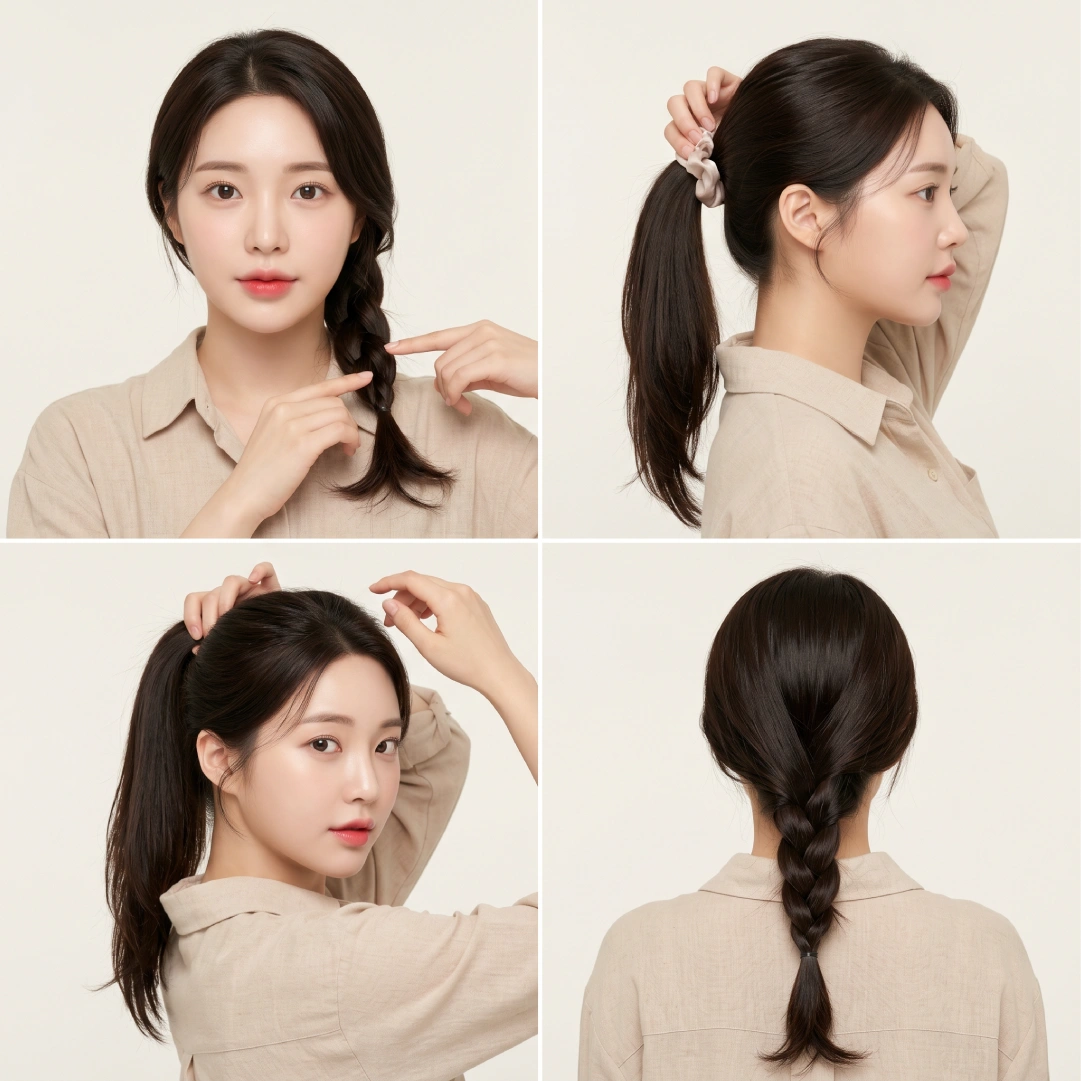
Caught early, traction alopecia is usually reversible — but left unchecked, the hair loss along the hairline can become permanent. That’s why varying your styling habits matters.
Frequently Asked Questions
Bumps form when hair is gathered dry without product. Apply a strong-hold gel or styling cream to the roots before brushing, tilt your head back as you gather, and use a fine-tooth comb for the final smooth-over. Re-brush the crown before securing the elastic, not after.
Yes — a sleek low ponytail works well on bob-length hair and above. Apply gel to damp strands, brush back firmly, and secure with a small elastic. For hair that’s too short to gather fully, slick the perimeter back and use bobby pins to anchor stray sections at the nape.
With the right products — strong-hold gel plus a finishing hairspray — a sleek ponytail holds 8–12 hours on straight or wavy hair. Curly and thicker textures may need a midday touch-up with a toothbrush dipped in edge control. Humidity is the biggest enemy; a humidity-blocking spray extends hold significantly.
Not recommended. Daily tight styling puts repetitive stress on the same follicles along the hairline and temples. The AAD advises alternating tight updos with looser styles to prevent traction alopecia. Aim for no more than 3–4 sleek ponytail days per week, and vary the placement each time.
Fine hair needs hold without weight. A lightweight styling gel (rather than a heavy pomade) layered with a medium-hold hairspray is the most effective combination. Avoid heavy creams or oils on fine hair — they flatten the ponytail and eliminate any natural body. A volumizing powder at the crown before gathering can add the illusion of fullness at the base.
Key Takeaways
The sleek ponytail earns its iconic status because it’s genuinely versatile — a high version reads high-fashion and dramatic, a low version signals quiet elegance, and both can be done in under 15 minutes once the technique clicks.
- Match product type to your hair texture, not a brand recommendation
- Use the face-shape table to choose your ponytail height before you start
- Always wrap the elastic with a small section of hair — it’s the one step that changes the whole result
- Build a 4-piece touch-up kit so your afternoon looks as polished as your morning
- Alternate tight sleek styles with looser options to protect hairline health long-term
Master these fundamentals and the sleek ponytail stops being a style you attempt and becomes one you rely on.