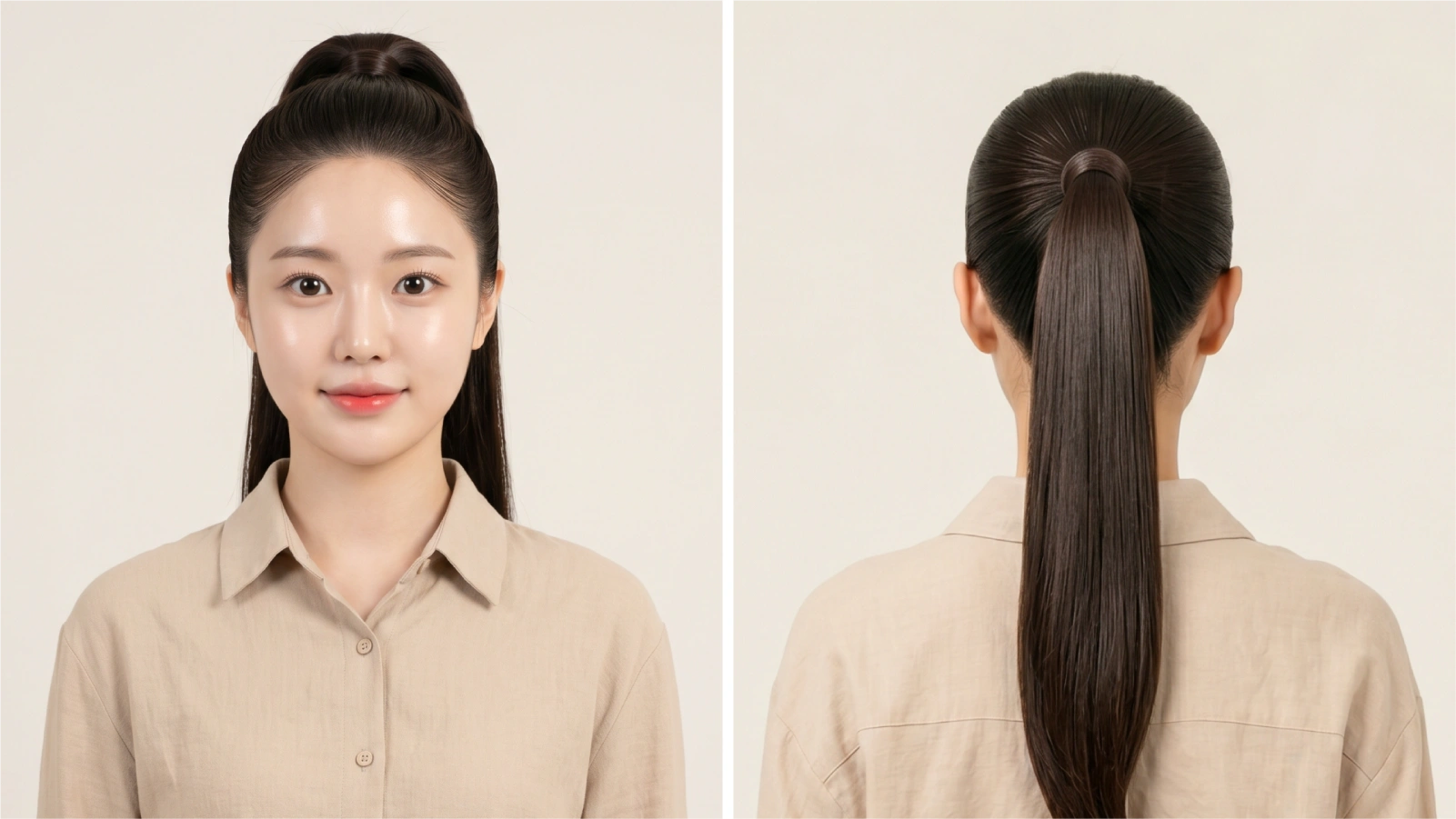
A fishtail braid is a two-strand braid made by crossing thin pieces of hair from the outside of one section into the other, over and over, until the pattern looks like woven fish scales. It only looks complicated: there are no three strands to juggle and no hand position to memorize, just one move repeated down the length of your hair.
The look has stayed in rotation for years because it reads as effortless on second-day hair and polished enough for a wedding, depending on how tightly you pull it.
This guide walks you through the basic technique step by step, then covers prep that keeps the braid from slipping, five variations worth learning, and how to wear it without stressing your hairline. If you’re building a rotation of simple everyday hairstyles, this one earns its spot because it looks far more involved than the effort it takes.
Style Snapshot
- A fishtail uses two sections, not three, and one repeated move: pull a thin piece from the outer edge of one side and cross it to the other.
- Day-two hair grips best. On clean hair, work in a texturizing or dry shampoo spray first.
- Thinner crossing pieces give a tighter, more defined scale pattern; thicker pieces give a faster, looser braid.
- Pancake the braid by gently tugging the outer loops once it’s tied off, which makes thin hair look noticeably fuller.
How do you do a fishtail braid step by step?

Split your hair into two even sections, then repeatedly move a small piece from the outer edge of one section across to the inner edge of the other. That single move, alternating sides, is the whole braid.
Beginners usually find it easier to work over one shoulder rather than straight down the back, since you can actually see what your hands are doing.
Keep your hands close to the braid itself. The most common beginner mistake is holding the sections too far down, which lets the crossings loosen before you’ve secured the next one.
- Prep the hair. Brush out tangles, then mist mid-lengths and ends with dry shampoo or texture spray for grip.
- Divide into two. Part down the center and hold one section in each hand, like you’re starting pigtails.
- Cross the first piece. Take a thin strand (about half an inch) from the far outside of the right section and bring it over to join the left.
- Mirror it. Take the same size strand from the far outside of the left section and bring it over to join the right.
- Repeat all the way down. Keep the crossing pieces consistent in width so the pattern stays even.
- Tie and loosen. Secure with a clear elastic, then gently pull the outer loops to widen the braid.
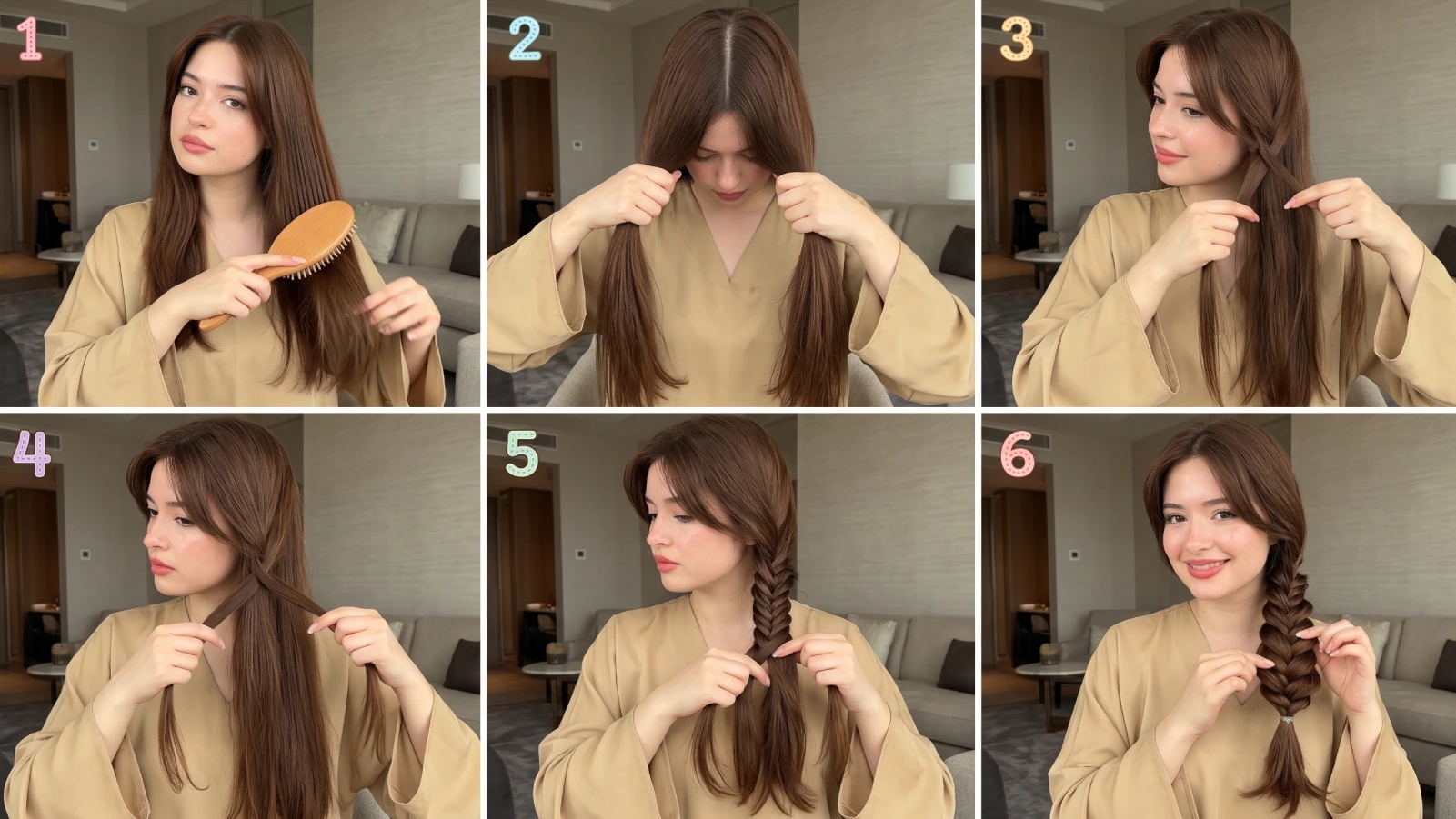
If you want the braid to start at the crown instead of the nape, add hair from the sides as you go, using the same pick-up method as the French braid technique.
What hair type and prep work best for a fishtail?
Fishtails hold best on hair with some grit: second or third-day hair, natural wave, or straight hair that’s been prepped with a texturizing product. Freshly washed, silky hair tends to slide loose within an hour.
Product placement matters more than product choice. Spray at the mid-lengths and ends where the braid actually sits, not at the roots, or you’ll end up with grit exactly where you don’t need it.
Length matters less than most tutorials suggest. Shoulder-length hair handles a full fishtail fine, and shorter cuts can carry a smaller accent braid started higher on the head.
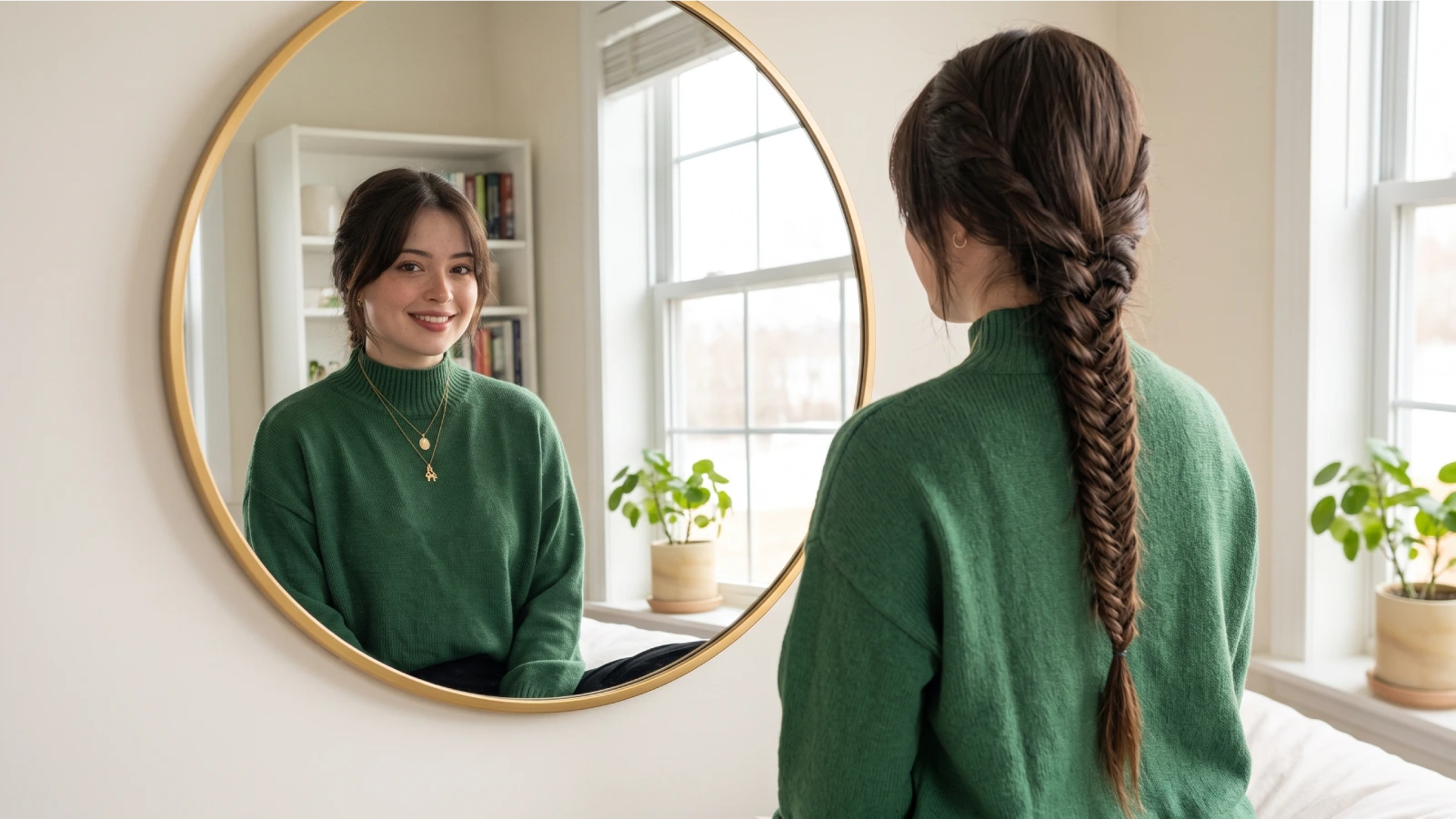
Curly and coily textures produce the most dramatic version of this braid, since the natural volume exaggerates the scale pattern. Damp hair with a curl cream gives you enough control to keep sections separated.
Fine hair benefits most from the pancaking step. Once the braid is tied, tug each outer loop outward a few millimeters at a time, working from the bottom up so the braid doesn’t unravel.
Which fishtail braid variations are worth learning?
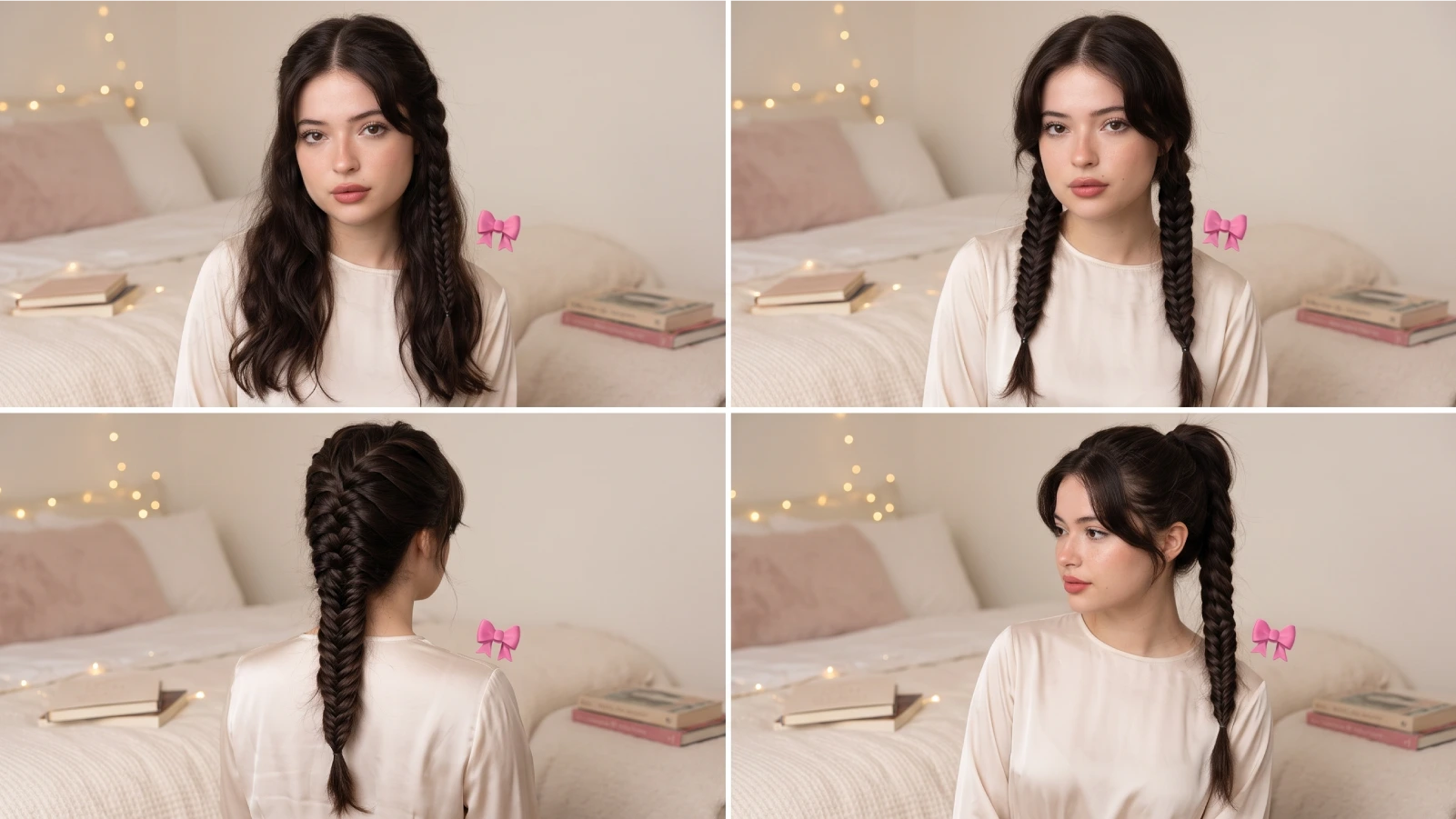
Once you can do the basic version, a handful of variations cover almost every occasion, and each one is the same crossing move applied differently. None of them require a new technique, only a different starting point or direction.
- Side fishtail: the classic, pulled over one shoulder. Easiest to see and the fastest to learn.
- Half-up fishtail: braid only the top section and leave the rest loose. Works well on short and layered hair.
- Double fishtail: center part, one braid per side. Sportier, and it distributes weight evenly.
- Fishtail ponytail: tie a ponytail first, then fishtail the tail. Cleanest option for the gym or a workday, and the elastic does the hard work of holding the base.
- Dutch fishtail: cross the pieces under instead of over, adding hair as you go, so the braid sits raised on the scalp.
The fishtail’s only real skill is consistency. Same size piece, same side, every time.
That last variation is worth practicing if you already know the Dutch braid method, since the logic carries straight across.
Can a fishtail braid damage your hair?

A loose fishtail is one of the gentler braided styles, because it spreads tension across many small crossings instead of one tight pull. The risk comes from how tightly you anchor it, not from the braid pattern itself.
Repeated pulling at the hairline can cause traction alopecia, a form of hair loss linked to tight styling.
The American Academy of Dermatology advises loosening any braid that pulls at the hairline, and giving your scalp regular breaks from pulled-back styles.
Wearing a fishtail occasionally is very different from wearing one pulled tight every single day in the same spot. Rotation is the part most people skip.
Practical ways to keep a fishtail low-tension:
- Start the braid loosely at the scalp and let the pattern tighten naturally further down.
- Use a fabric-covered or clear silicone elastic instead of a rubber band with a metal clasp.
- Take the braid out before bed, or swap to a loose version on a silk pillowcase.
- Rotate styles rather than wearing the same tight braid in the same spot every day.
Frequently Asked Questions
Expect 10 to 15 minutes the first few times, dropping to about five once the crossing motion becomes automatic. Thinner crossing pieces take longer but produce a much more defined scale pattern, so budget extra time for a polished, small-scale finish.
A regular braid uses three sections crossed in rotation. A fishtail uses two sections with thin pieces moved between them, which is why the finished texture looks woven and flat rather than roped and rounded. The fishtail also sits closer to the head.
Yes, with adjustments. Start the braid higher on the head, use smaller crossing pieces, and consider a half-up or accent braid rather than one full-length braid. Bob-length hair works; very short crops generally don’t.
Usually inconsistent piece sizes. If some crossings are thick and others are thin, the scale pattern breaks up and reads as untidy rather than intentionally undone. Slow down, keep every piece roughly the same width, and pull the braid taut as you work.
The takeaway
- A fishtail is two sections and one repeated crossing move, not a harder version of a three-strand braid.
- Texture beats freshness: day-two hair or a texture spray keeps the braid from slipping.
- Consistent piece width is what separates a clean fishtail from a messy one.
- Keep it loose at the scalp, and swap styles regularly to protect your hairline.
Once this one feels automatic, try working the same crossing motion into a fuller, rounder style like the bubble braid look for a different weekend look.