
A scalp care routine is a repeatable schedule of cleansing, occasional buildup removal, and light hydration, sized to how oily your scalp gets and how coarse your hair is. Most people need three moving parts: a wash rhythm, a monthly reset, and a way to soothe irritation when it shows up.
The confusing part isn’t which products exist. It’s how often to use them. Wash too rarely and flakes and buildup collect. Wash too aggressively and you trade greasiness for itching and dryness.
Below you’ll get a weekly framework, wash frequency guidance split by hair texture, a scalp-type breakdown, and the over-treating habits that undo progress. It slots into an existing healthy hair care routine without adding twenty minutes to your morning.
Quick Take
- Wash frequency should track your hair texture and oil levels, not a fixed number of days.
- Apply shampoo to the scalp and let the rinse-through clean your lengths.
- Use a clarifying or exfoliating step roughly monthly, not weekly, unless buildup is visible.
- Persistent flaking, soreness, or shedding after four weeks of consistent care needs a dermatologist, not a stronger product.
What does a basic scalp care routine look like week to week?

A workable routine has three tiers: what you do every wash, what you do about once a month, and what you do only when something feels off. Layering more than that is where people burn out.
Here’s the every-wash sequence, which takes about four minutes:
- Rinse with warm, not hot, water for thirty seconds to loosen oil and product.
- Work shampoo into the scalp with the pads of your fingers, not your nails.
- Rinse fully, then shampoo a second time if you used styling products or dry shampoo.
- Keep conditioner on the mid-lengths and ends, away from the roots.
- Blot with a towel and let the scalp dry completely before tying hair up.
The monthly tier is a single clarifying or gently exfoliating wash to clear silicone, oil, and dry shampoo residue. That’s usually enough. Doing it weekly is the fastest way to end up with a tight, itchy scalp.
The as-needed tier covers targeted treatment: a medicated shampoo for flaking, or a lightweight scalp serum for dryness. Those are responses to a symptom, not permanent fixtures in your wash day routine.
How often should you wash your scalp?

Wash based on how quickly your scalp gets oily, and let texture set the outer limits. The American Academy of Dermatology frames this as a range rather than a rule, with daily shampooing reasonable at one end for oily, straight hair and every two to three weeks acceptable at the other for dry, textured, or coily hair.
That’s a wide range on purpose. Sebum travels down straight strands quickly and sits on the scalp of coily hair instead, so the same schedule can’t serve both.
Signals that you’re washing too infrequently:
- Flakes appear even though your scalp doesn’t feel dry
- Roots look flat and separated within a day of styling
- Your scalp itches most right before a wash, not after
Signals that you’re washing too often or too harshly:
- Tightness or stinging in the first hour after a wash
- Ends feeling straw-like while roots still get greasy fast
- Redness along the part line
Flaking is worth naming carefully. The American Academy of Dermatology notes that dandruff can develop for several reasons, including certain medical conditions, hair care habits, or oily skin, and that mild cases can usually be managed at home by washing regularly. If a dandruff shampoo is part of your plan, the AAD suggests using it about twice a week for fine or straight hair, and roughly once a week for coarse, curly, or coily hair.
How do you adjust the routine for your scalp type?
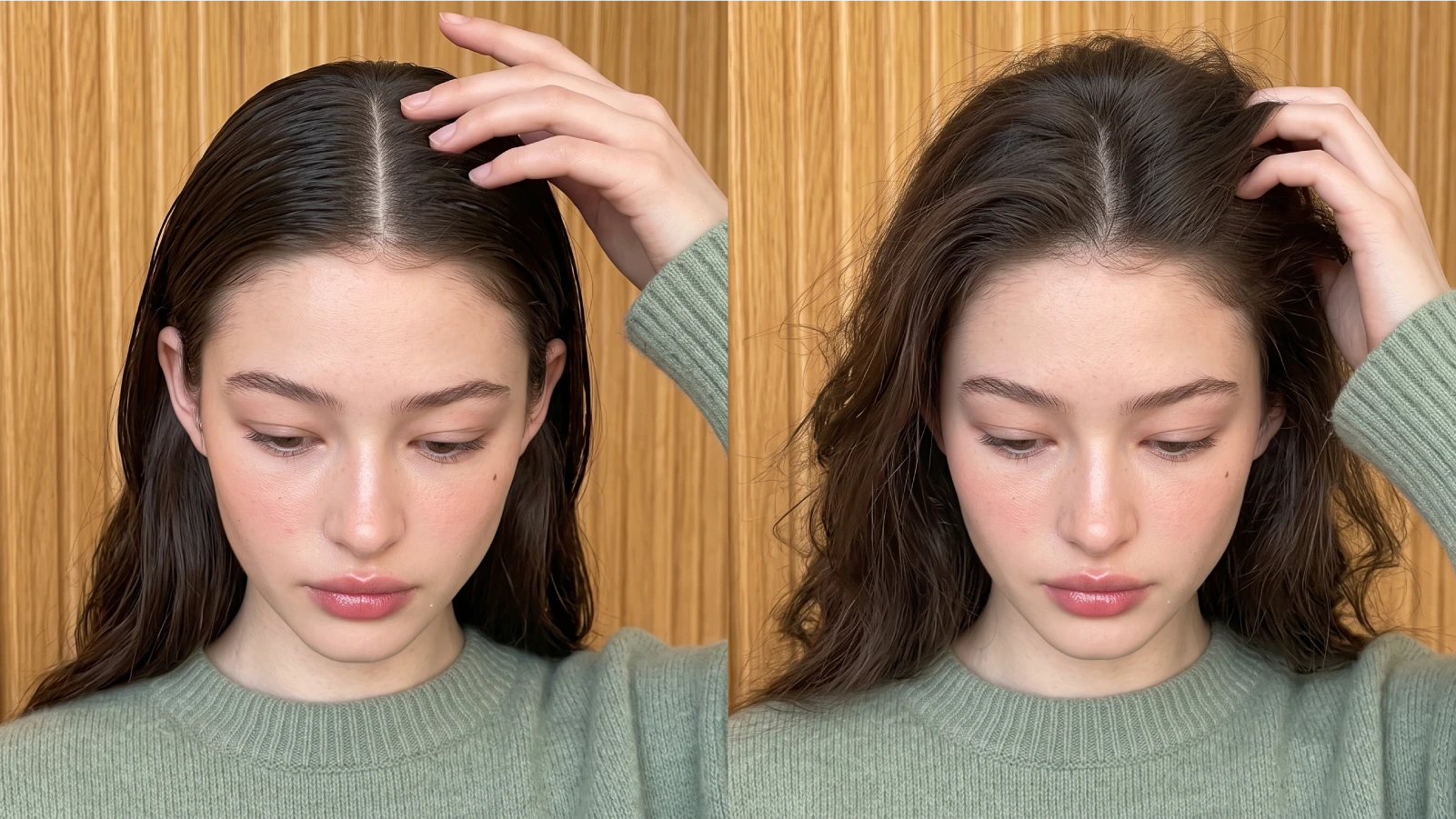
Match the cleanse strength to the problem, then leave everything else alone. Most scalp routines fail because they treat oiliness and dryness with the same aggressive shampoo.
One detail matters for curly and coily hair specifically: dandruff shampoo ingredients can dry the strand, so keep the product on the scalp and use your regular shampoo and conditioner on the lengths afterward.
Two extras are worth mentioning because they’re easy to overlook. Sun exposure hits the scalp directly along the part, and some medicated shampoos, coal tar in particular, increase that sensitivity. A wide-brimmed hat works, or a broad-spectrum SPF 30 or higher in powder or spray form for easier application on visible scalp. That’s the same logic behind a seasonal shift in your summer hair care routine.
Second, scalp massage during shampooing costs nothing and helps lift buildup. Sixty seconds with your fingertips is plenty.
Can you overdo scalp care?

Yes, and it’s the most common way a good routine goes wrong. Scalp care has a ceiling, and past it you’re stripping a skin barrier that was doing fine on its own.
The usual over-treating patterns look like this:
- Stacking actives. A salicylic acid scrub, a clarifying shampoo, and an exfoliating serum in the same week is three treatments for one problem.
- Weekly scrubs. Physical exfoliation more than about once a month tends to irritate rather than clean, especially on a scalp that’s already itchy.
- Chasing shedding with products. Some hair falls out during every wash, and washing less doesn’t reduce it, it just concentrates it into fewer wash days.
- Switching too fast. A scalp product needs three to four weeks before you can judge it.
If flaking, soreness, or noticeable thinning persists after a month of consistent, gentle care, that’s a signal to see a board-certified dermatologist rather than escalate the product lineup. Ongoing shedding in particular has causes that no shampoo addresses, which is worth understanding before reducing hair loss becomes a trial-and-error spending problem.
Frequently Asked Questions
Generally no. Conditioner belongs on mid-lengths and ends, where damage accumulates. Applying it at the roots adds weight and buildup, especially on fine or oily hair, without doing much for the skin underneath.
Gentle, occasional exfoliation shouldn’t. What you see in the drain during a scrub is usually hair that had already released from the follicle. Aggressive scrubbing with nails or gritty products can irritate the scalp, so use fingertips and go monthly.
Expect three to four weeks for changes in itch, flaking, and oil balance. Anything involving hair density takes considerably longer because of how slowly hair grows. Judge a routine on scalp comfort first.
You can keep it minimal. A balanced scalp with no itch, flaking, or buildup needs a suitable shampoo used regularly and little else. Adding treatments to a scalp with no complaint tends to create one.
The Takeaways
- Set wash frequency by how fast your scalp gets oily, using hair texture as the guardrail.
- Shampoo the scalp, condition the lengths, and keep the two separate.
- Clarify or exfoliate about monthly, not weekly.
- Treat persistent flaking or soreness as a reason to see a dermatologist, not to buy something stronger.
Once your scalp settles into a rhythm, the next thing worth dialing in is how you handle the rest of wash day, from detangling order to drying method.