
A wash day routine is a single planned session where you cleanse your scalp, condition your hair, detangle it, and dry it properly instead of rushing all four in a five minute shower. Done right, it takes 30 to 90 minutes depending on your hair’s length and texture, and it sets up how your hair behaves for the next several days.
Most wash day advice online is written for coily and curly hair only. This one scales. You’ll get the order of steps that protects your strands, a frequency guide by hair type, a realistic time budget, and the small mistakes that quietly undo everything you just did.
Quick Take
- Apply shampoo to your scalp and let the runoff clean your lengths, since rubbing shampoo through your ends dries them out.
- Condition the ends only if your hair is fine or straight, and root to tip if it’s dry or curly.
- Detangle with a wide-tooth comb from the ends upward, in the shower for curly hair and after slight drying for straight hair.
- Budget 30 minutes for fine or straight hair and up to 90 for thick, textured, or long hair.
What actually happens on a wash day?

A wash day is a reset for your scalp, not just a hair wash. You’re clearing away sebum, sweat, dead skin, and product buildup, then putting moisture back into the parts of your hair that need it. Everything else in your hair care routine sits on top of that reset.
The reason it gets its own name is that texture makes it a project. Coily and thick hair needs sectioning, longer conditioner contact, and careful detangling, so squeezing it into a normal shower usually means tangles and breakage instead of clean hair.
Here’s a workable time budget by texture:
If your wash day regularly runs past 90 minutes, the fix is usually sectioning earlier rather than working faster.
How do you build a wash day routine step by step?
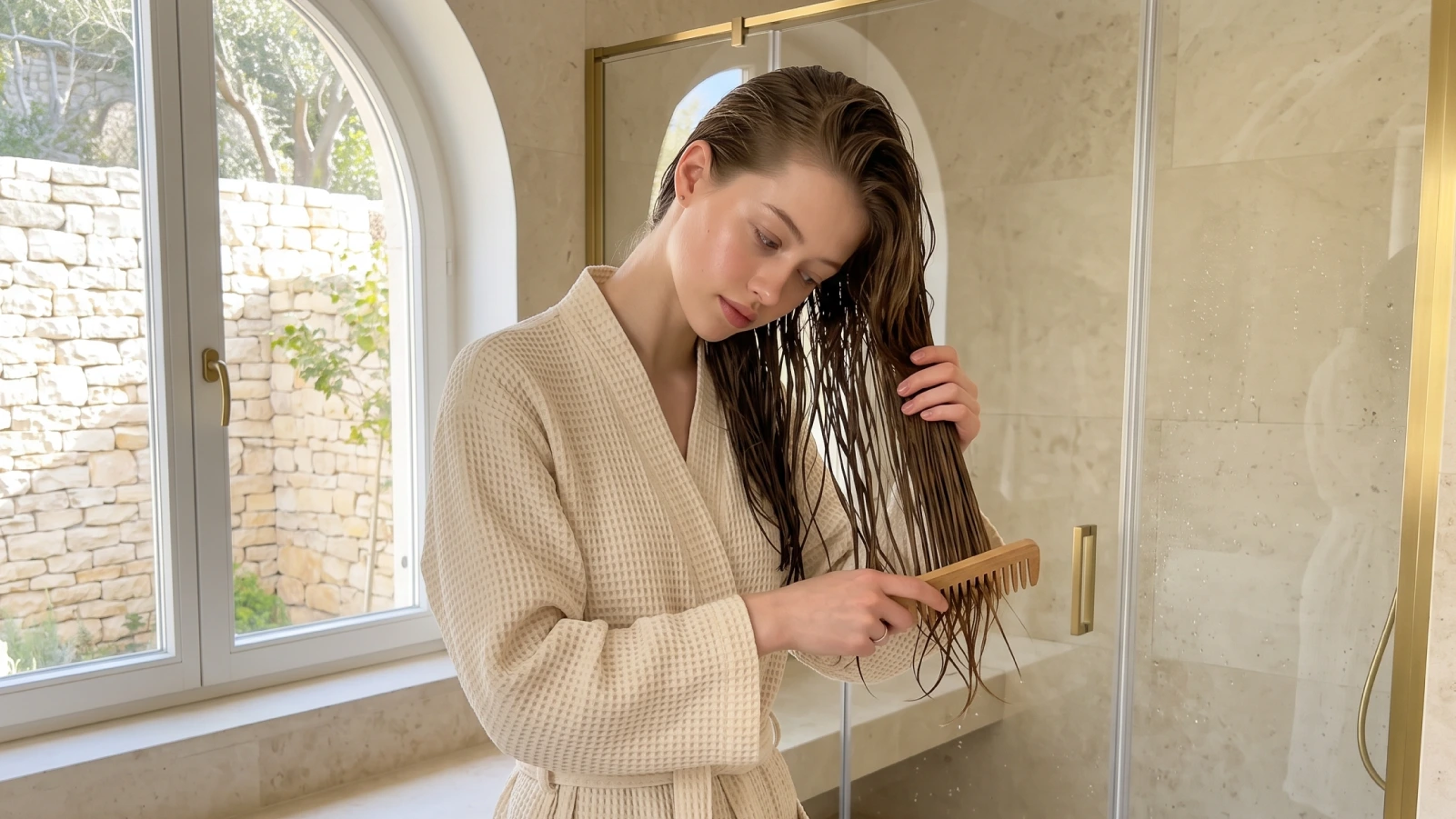
Follow the same order every time so nothing gets skipped: prep, cleanse, condition, detangle, dry, style. The order matters more than the products, because detangling before conditioning is where most breakage happens.
- Prep. Finger-separate large tangles and split hair into two to six sections. For thick or textured hair, coat the lengths in oil for 20 to 30 minutes first to reduce dryness during shampooing.
- Cleanse. Wet hair with warm water, then work shampoo into your scalp with your fingertips. The American Academy of Dermatology recommends applying shampoo to your scalp rather than the whole length so you remove buildup without over-drying your hair.
- Condition. Apply conditioner to the ends if your hair is fine or straight, and along the full length if it’s dry or curly. Give it three to five minutes, longer for a deep conditioner.
- Detangle. Use a wide-tooth comb while conditioner is still in. Start at the ends, then work higher in short passes.
- Rinse and dry. Rinse thoroughly, then squeeze water out and wrap your hair in a towel or cotton t-shirt.
- Style. Apply leave-in or styling product to damp hair, then air-dry or blow-dry on a low to medium setting.
Shampoo is for your scalp. Conditioner is for your hair. Get those two in the right places and half your wash day problems disappear.
If your scalp feels tight or itchy by day two, that’s usually a signal to adjust your scalp care routine rather than to wash more aggressively.
How often should you have a wash day?

Wash when your hair actually gets oily or dirty, not on a fixed calendar. AAD guidance says people with straight hair and an oily scalp may want to shampoo daily, while dry, textured, curly, or thick hair can go longer, shampooing as needed and at least once every two to three weeks (AAD, 2024).
That range is wide on purpose, because scalp oil production, workout frequency, and product use all shift the answer. Use these signals instead of a rule:
- Wash sooner if your roots look flat and greasy, your scalp itches, or you’ve been sweating heavily.
- Wash later if your ends feel dry and crunchy, your hair tangles more than usual, or color is fading fast.
- Wash now regardless if you can see flakes, which can mean you aren’t shampooing often enough or aren’t using the right conditioner for your hair type.
Season changes the math too. Indoor heating pulls moisture out of both scalp and strands, which is why a winter hair care routine usually stretches the gap between washes and adds a richer conditioner.
What ruins an otherwise good wash day?

The most common wash day damage happens after the shower, not in it. Hair is at its weakest when wet, so how you handle it in the following ten minutes decides whether it looks smooth or frizzy.
Watch for these:
- Brushing wet hair. Use a wide-tooth comb instead, since a brush pulls through tangles rather than separating them.
- Rubbing hair dry with a towel. Roughly rubbing wet hair can cause damage, so blot and wrap instead.
- Detangling from the roots down. You’re just pushing every knot into a bigger knot at the ends.
- Skipping conditioner to avoid greasiness. The real fix is placement, not omission. Keep it off the roots.
- High heat right after washing. Excessive heat damages every hair type, so keep tools on low or medium and use a heat protectant.
Stacking these week after week shows up as breakage and shorter-looking ends, which is often mistaken for shedding. If your strands are snapping mid-length rather than coming out at the root, the handling is the problem, and small changes here do more to reduce hair loss than any new bottle will.
Frequently Asked Questions
Yes, if you use a lot of product or go long between washes. The first lather lifts buildup and barely foams, the second actually cleans the scalp. Fine, oily hair rarely needs a second pass.
Not for everyone. Pre-poo oiling mainly helps dry, coily, or chemically treated hair by reducing how much moisture shampoo strips. Straight or oily hair usually skips it without any downside.
Cold water feels good and helps flatten hair against your head, but the bigger factor is rinsing completely. Leftover conditioner near the roots is what makes hair look limp by evening.
Yes, in between washes. Dry shampoo absorbs oil but doesn’t clean hair, so it buys you a day or two rather than replacing shampoo and water.
Bringing it together
- Cleanse the scalp, condition the lengths, and never reverse those two.
- Detangle with a wide-tooth comb from the ends up, and time it to your texture.
- Set your frequency by how your scalp behaves, not by a fixed weekly schedule.
- Treat the ten minutes after your shower as part of the wash, since that’s where most breakage happens.
Once your wash day is steady, the next thing worth dialing in is what you do on the days between washes.