
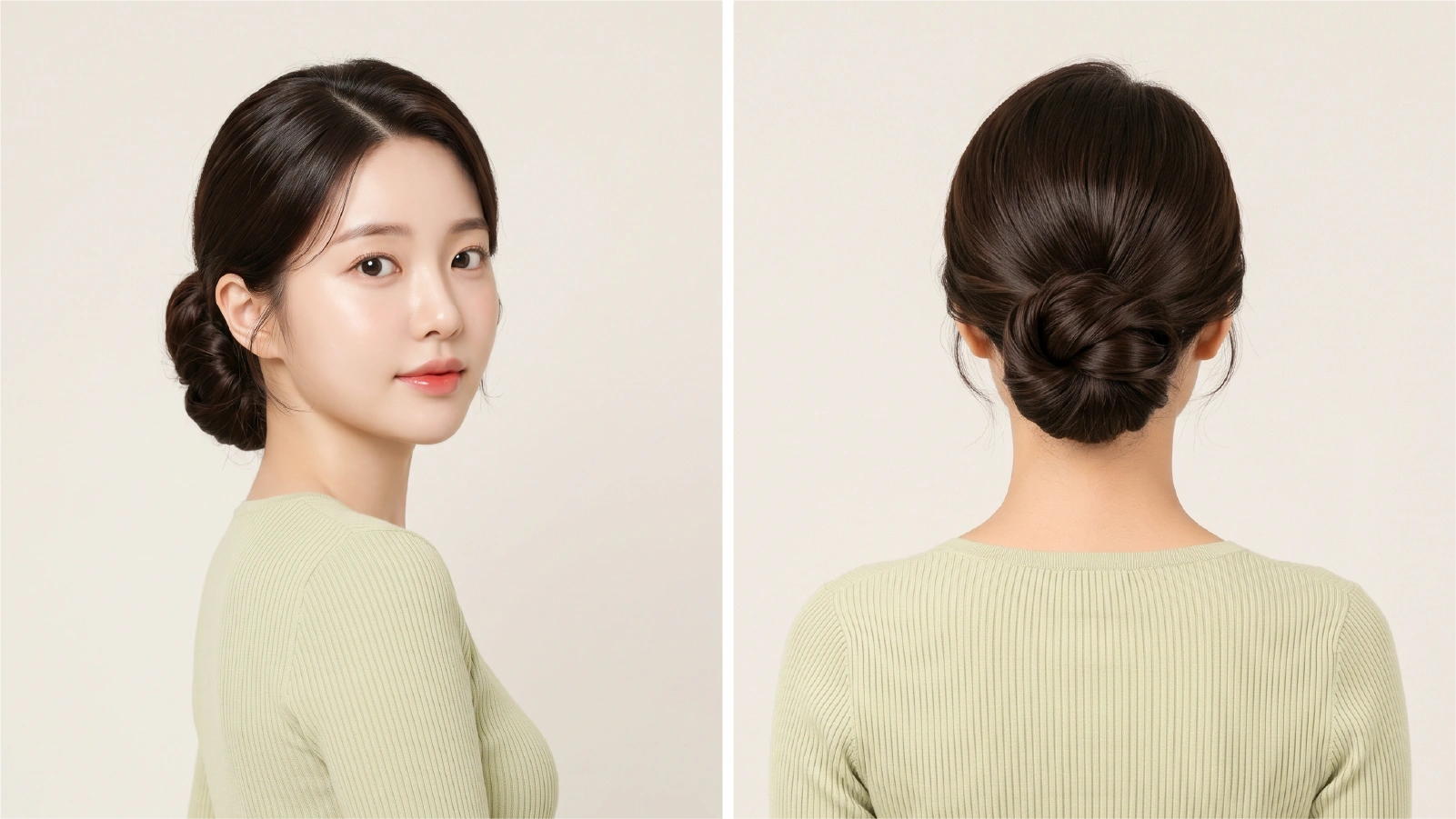
A chignon bun is a twisted, low updo secured at the nape of the neck — and it’s one of the most versatile hairstyles you can learn. The name comes directly from the French phrase chignon du cou, meaning “nape of the neck.”It traces back to ancient Greece, where Athenian women secured the style with ivory or gold hairpins.
Unlike a standard bun, which can sit anywhere on the head, a true chignon always rests low at the back, giving it that signature polished, elegant silhouette.
Whether you’re prepping for a wedding, a work presentation, or a Saturday dinner, this style takes under ten minutes once you’ve got the technique down.
It’s also one of the most practical easy hairstyles for women — refined enough for an event, without booking a salon appointment.
Here’s the thing — the chignon isn’t reserved for formal events. Modern styling has turned it into an everyday go-to that works with straight, wavy, curly, and coily textures alike.
You don’t need waist-length hair either. Shoulder-length strands can pull this off with the right prep.
Style Snapshot
- A chignon bun is a low, twisted updo pinned at the nape of the neck — it takes under 10 minutes once you learn the technique.
- Second-day hair holds a chignon better than freshly washed hair because natural oils add grip and texture.
- Use hairpins (U-shaped) rather than bobby pins for stronger hold — pin diagonally toward the scalp in a crisscross pattern.
- The style works on straight, wavy, curly, and coily hair types; shoulder-length is the minimum length needed.
What Makes a Chignon Different from a Regular Bun?
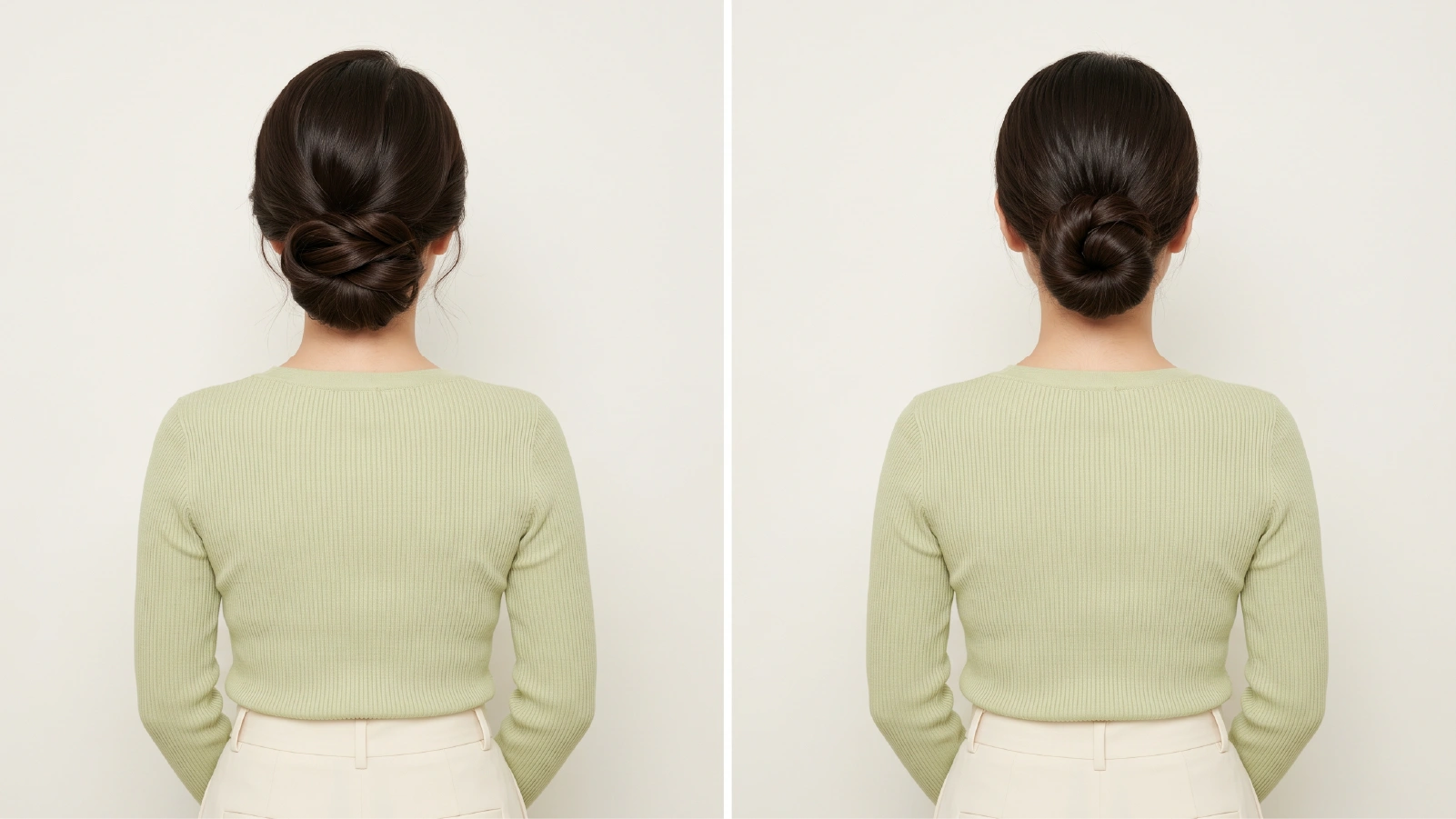
People use “bun” and “chignon” interchangeably, but they’re not the same thing. Understanding the difference helps you style each one correctly. A bun is the umbrella term for any hairstyle where hair wraps into a rounded shape and gets secured. High buns, messy buns, space buns — all count.
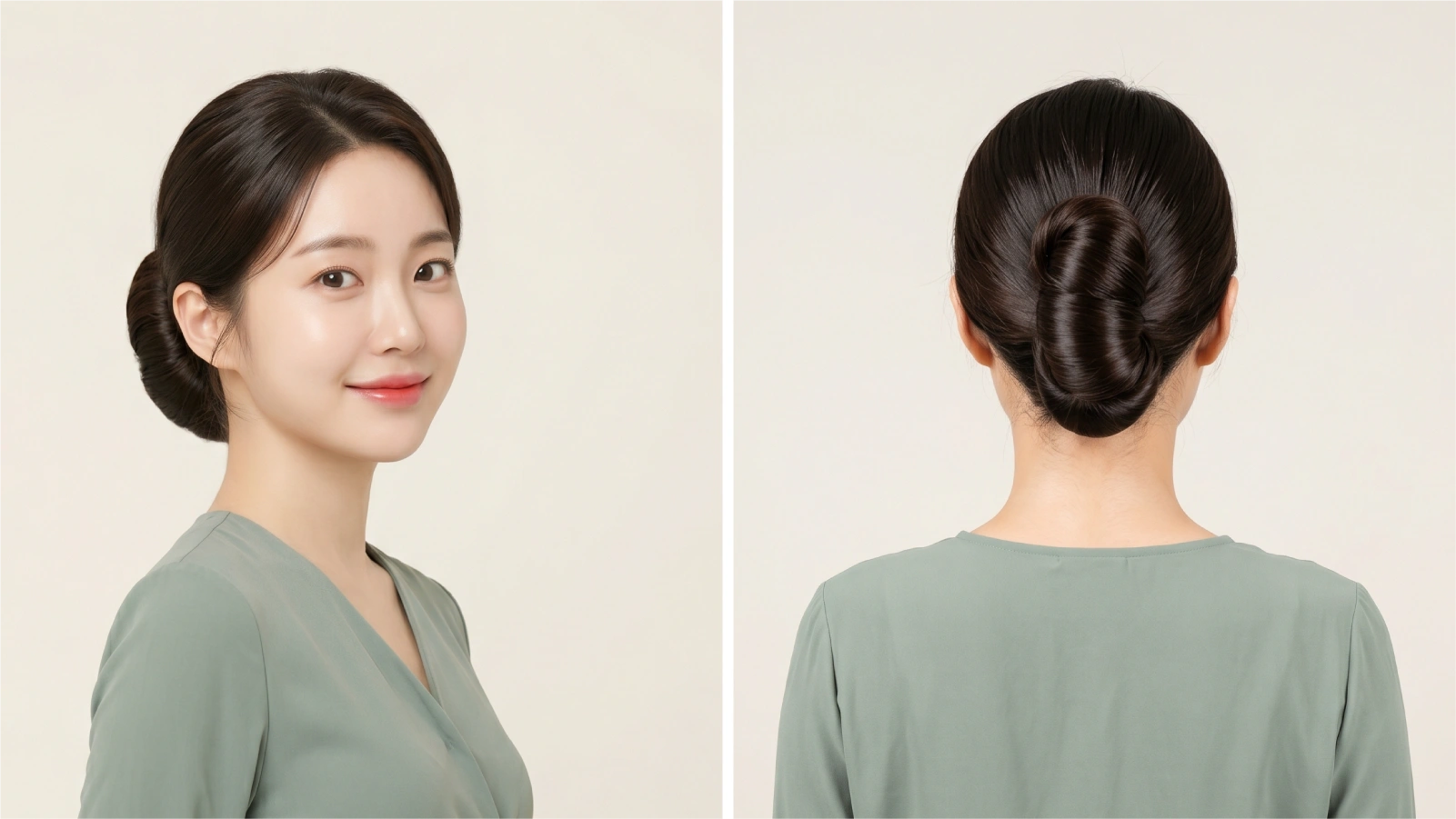
A chignon is a specific type of bun defined by three characteristics: it sits low at the nape, it involves twisting or coiling (not just wrapping), and it always presents as a single, structured shape.
A chignon is always a type of bun, but not every bun qualifies as a chignon — placement and construction method are what separate the two.
The practical takeaway? If you’re choosing between a quick messy bun and a chignon for an event, the chignon will photograph better and hold its shape longer through a full evening.
How Do You Create a Classic Chignon Bun at Home?
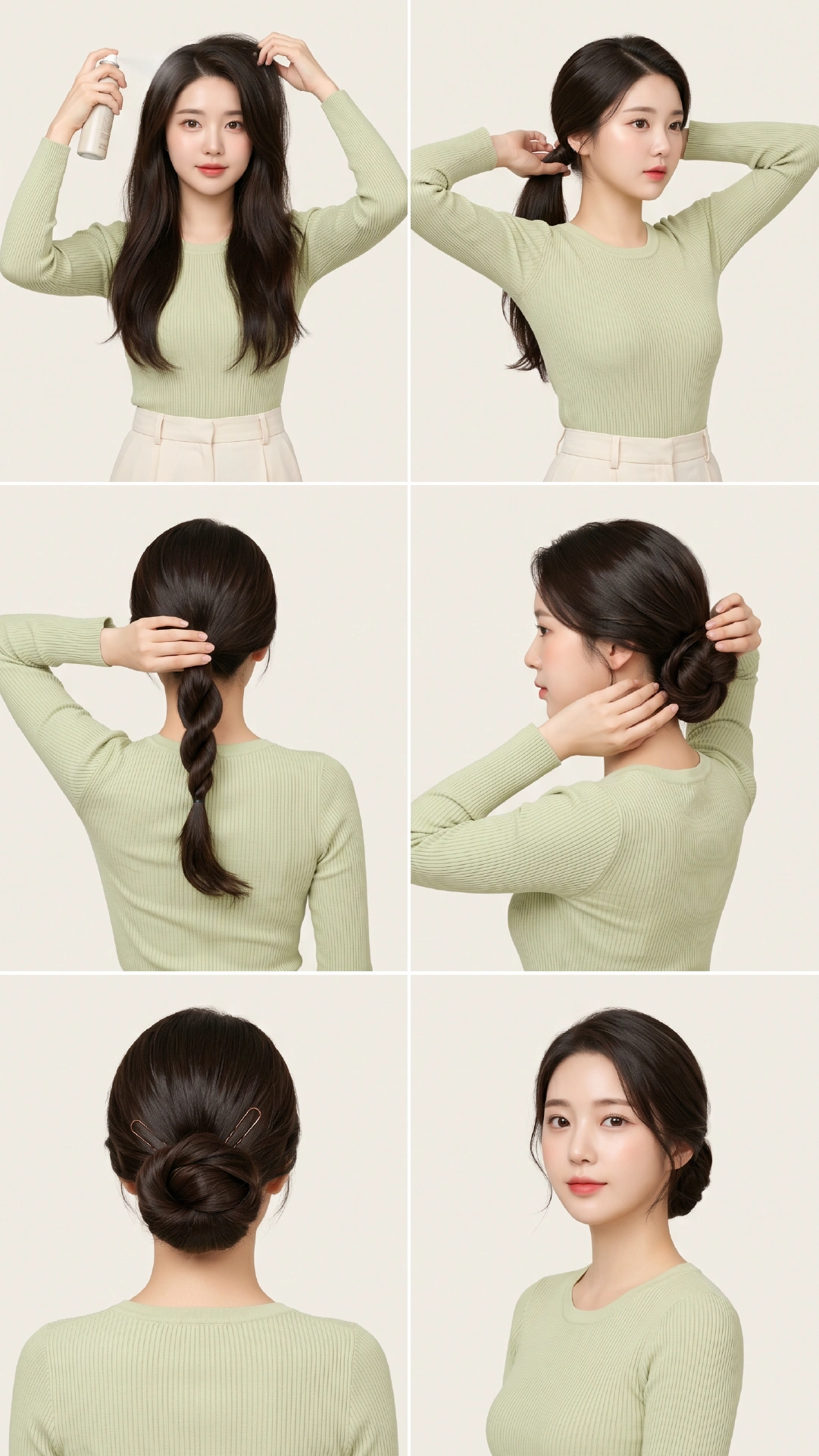
You don’t need salon-level skills for this. The classic version requires about five tools and seven minutes. Here’s the process broken into clear steps:
- Prep your hair. Second or third-day hair works best — freshly washed strands tend to be slippery. If your hair is clean, mist it with dry shampoo or texturizing spray to add grip.
- Detangle thoroughly. Use a boar-bristle brush or wide-tooth comb from ends to roots. Knots will create lumps in the finished style.
- Gather into a low ponytail. Secure your hair at the nape with a thin elastic. Keep it snug but not painfully tight.
- Twist the ponytail. Rotate the length clockwise until it forms a tight rope.
- Coil around the base. Wrap the twisted hair around the elastic, forming a flat spiral. Tuck the tail end underneath.
- Pin in place. Insert U-shaped hairpins diagonally through the coil and into the scalp hair, using a crisscross pattern for security. Most hair types need 8–12 pins.
- Finish. Set with a light-hold hairspray. Pull out a few face-framing tendrils if you want a softer look.
Second-day hair holds a chignon noticeably longer than freshly washed hair — natural oils create the grip that pins need to stay anchored.
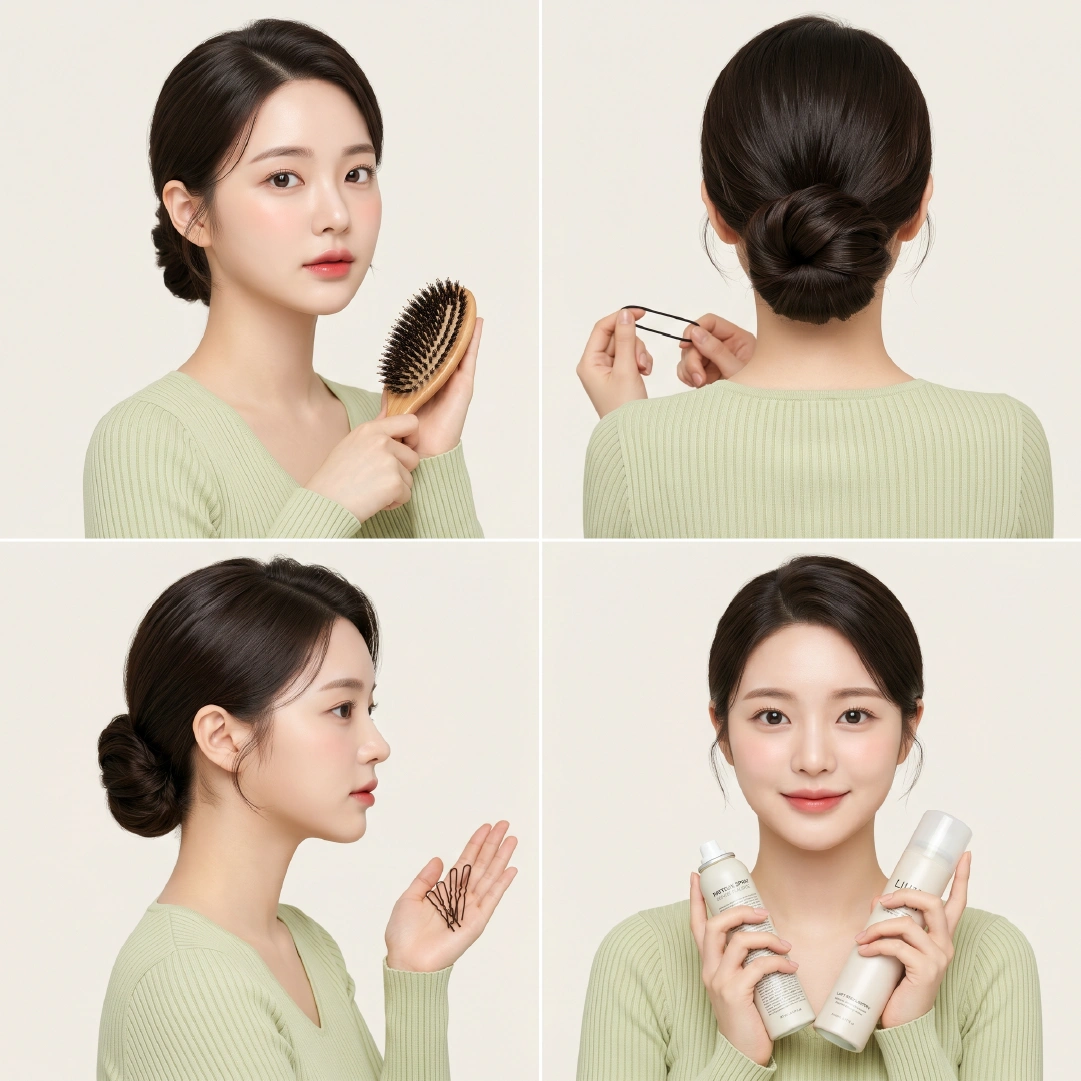
Essential tools checklist:
- Boar-bristle brush or wide-tooth comb
- Thin elastic hair tie
- U-shaped hairpins (not standard bobby pins — they’re stronger)
- Texturizing spray or dry shampoo
- Light-hold hairspray
Can You Do a Chignon Bun on Short or Fine Hair?
Yes — but you’ll need a modified approach. The minimum workable length is roughly shoulder-length, where you can gather the hair into a stubby ponytail at the nape.
For short hair, skip the tight twist. Instead, backcomb the ponytail for volume, then coil loosely and pin section by section. A foam donut or bun maker fills out the shape when you don’t have enough length to create volume naturally. Clip-in bun attachments also work well and take seconds to secure.
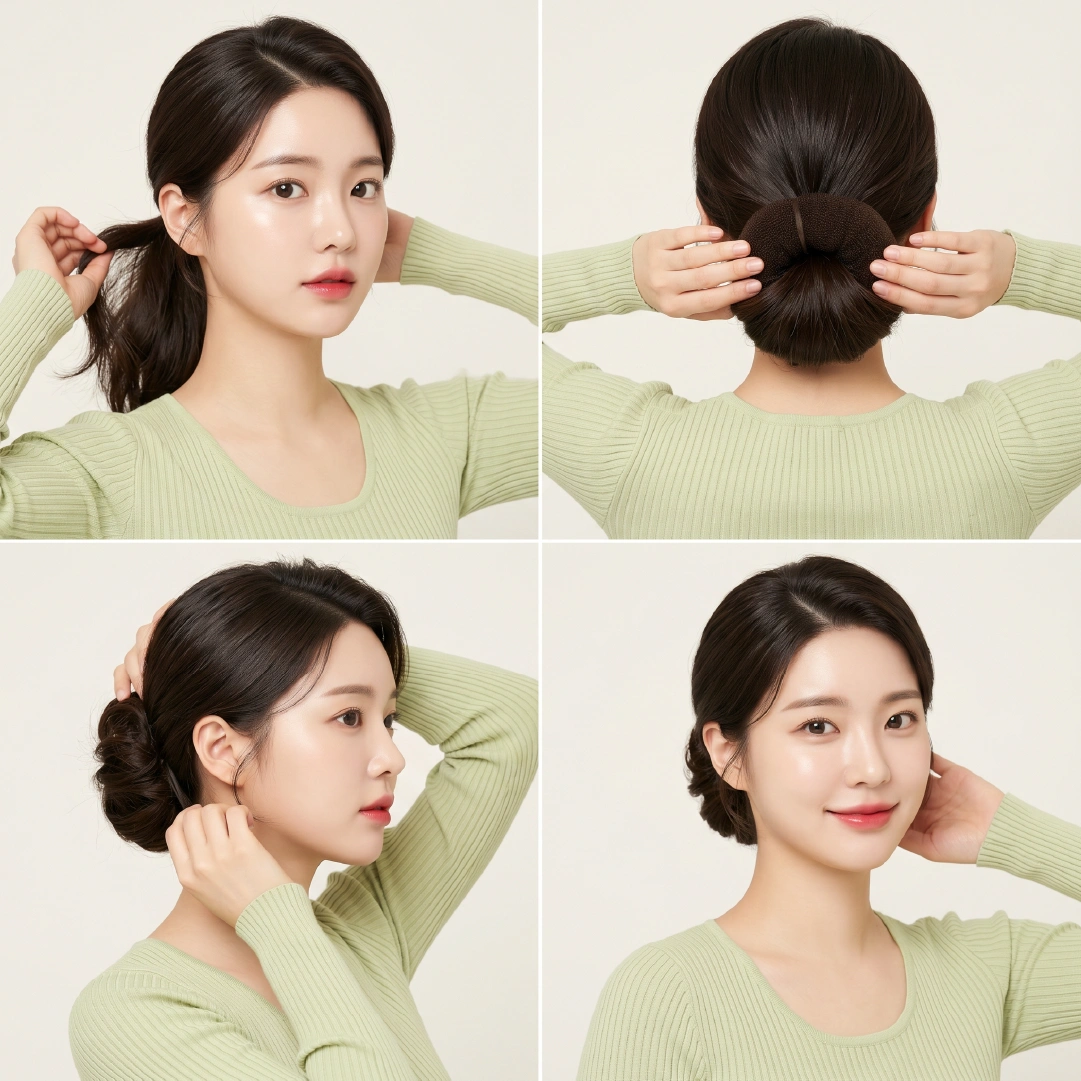
For fine hair, the biggest challenge is slippage. Pins slide out, and the whole thing sags within an hour. Fix this by:
- Using texturizing powder at the roots before styling (it creates micro-grip)
- Choosing spin pins instead of standard hairpins — they anchor into fine strands without the pulling that leads to hair breakage
- Wrapping a small hairnet around the bun before pinning — it acts like an invisible scaffolding
- Applying hairspray before coiling, not just after
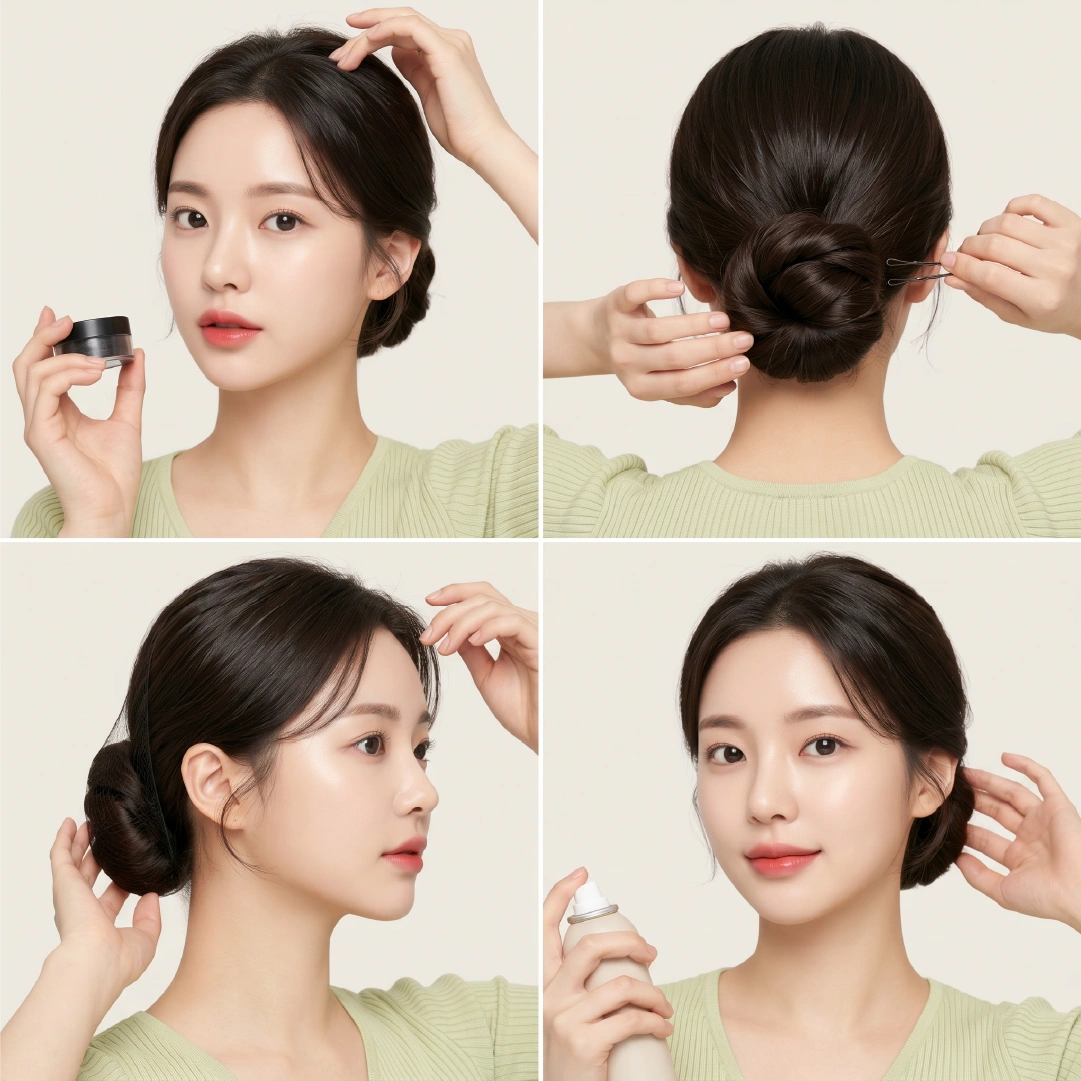
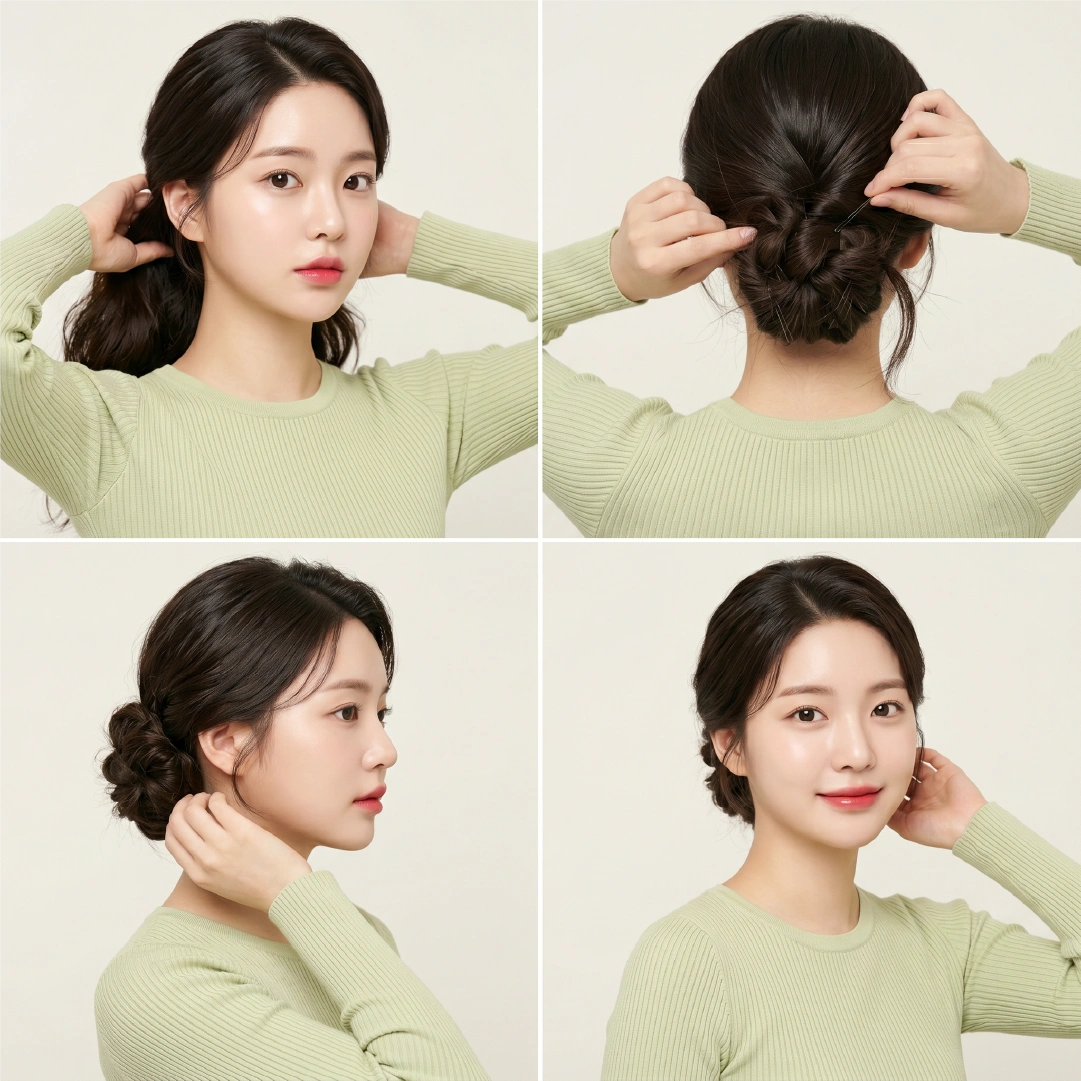
For thick or curly hair, embrace your texture. Skip the tight-twist method and instead pin two-inch sections individually to the nape, building the chignon chunk by chunk. This prevents the bun from becoming too heavy and sagging.
Fine-haired women can dramatically extend their chignon’s hold time by wrapping the bun in a thin hairnet before pinning — it creates invisible structure that stops slippage.
What Are the Best Chignon Variations for Different Occasions?
The classic version is just the starting point. These variations let you adapt the chignon to match whatever you’re dressing for.
Face shape guidance — a quick reference before you choose:
- Round face: Classic low chignon with a center part elongates the face
- Square face: Tousled chignon with loose face-framing pieces softens the jaw
- Heart face: Half-up chignon adds width to the lower face
- Oval face: Any variation works — this is the most forgiving face shape for updos
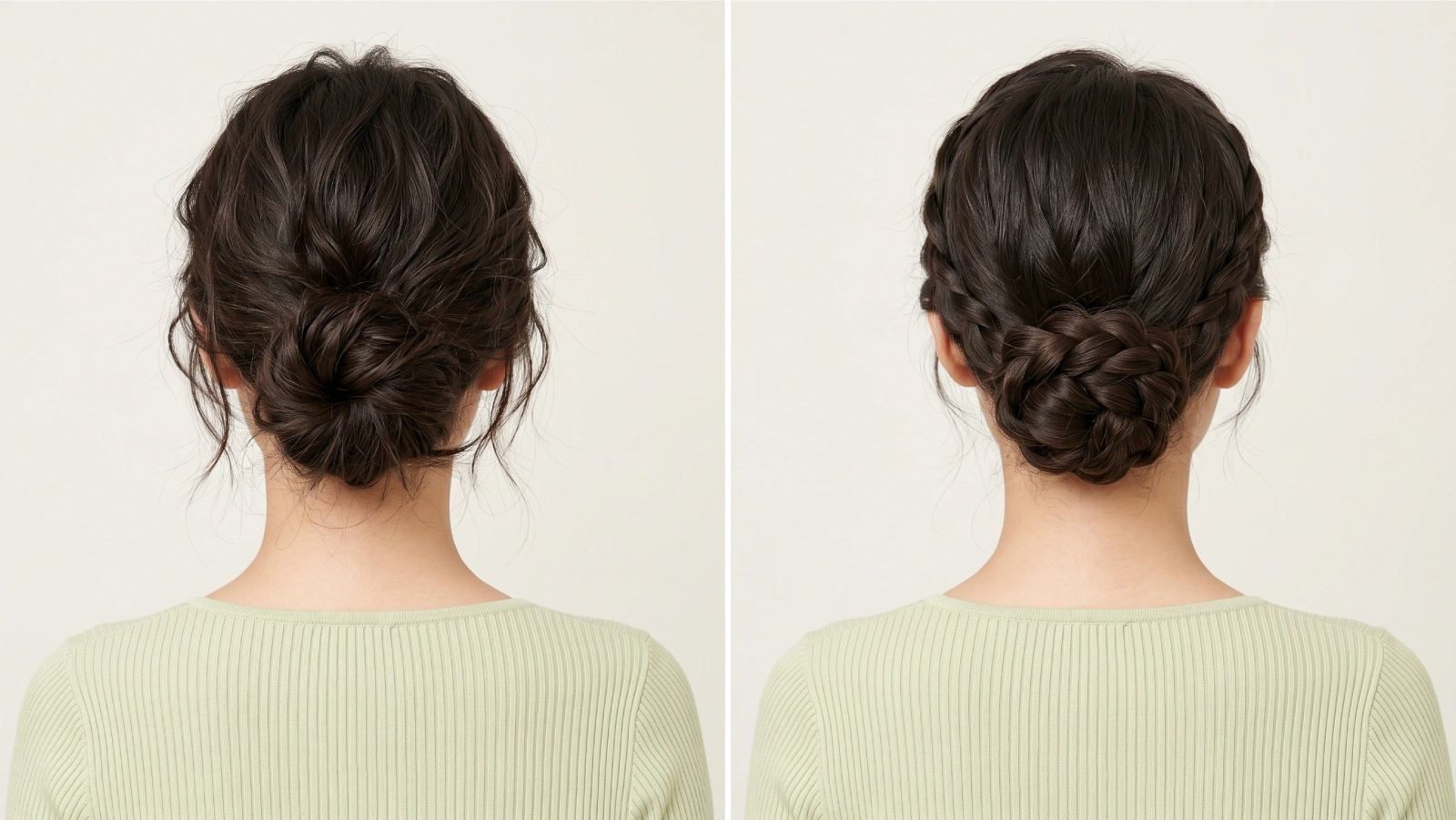
The tousled chignon has become especially popular for everyday styling. It borrows the low bun silhouette but adds intentional imperfection — loose pieces, a relaxed coil, and visible texture. Think less Audrey Hepburn, more off-duty model.
The braided chignon pairs well with half up half down hairstyles as a hybrid option. Create two braids from the front sections, then wrap them into and around the base of a standard chignon. It adds visual interest without complicating the hold.
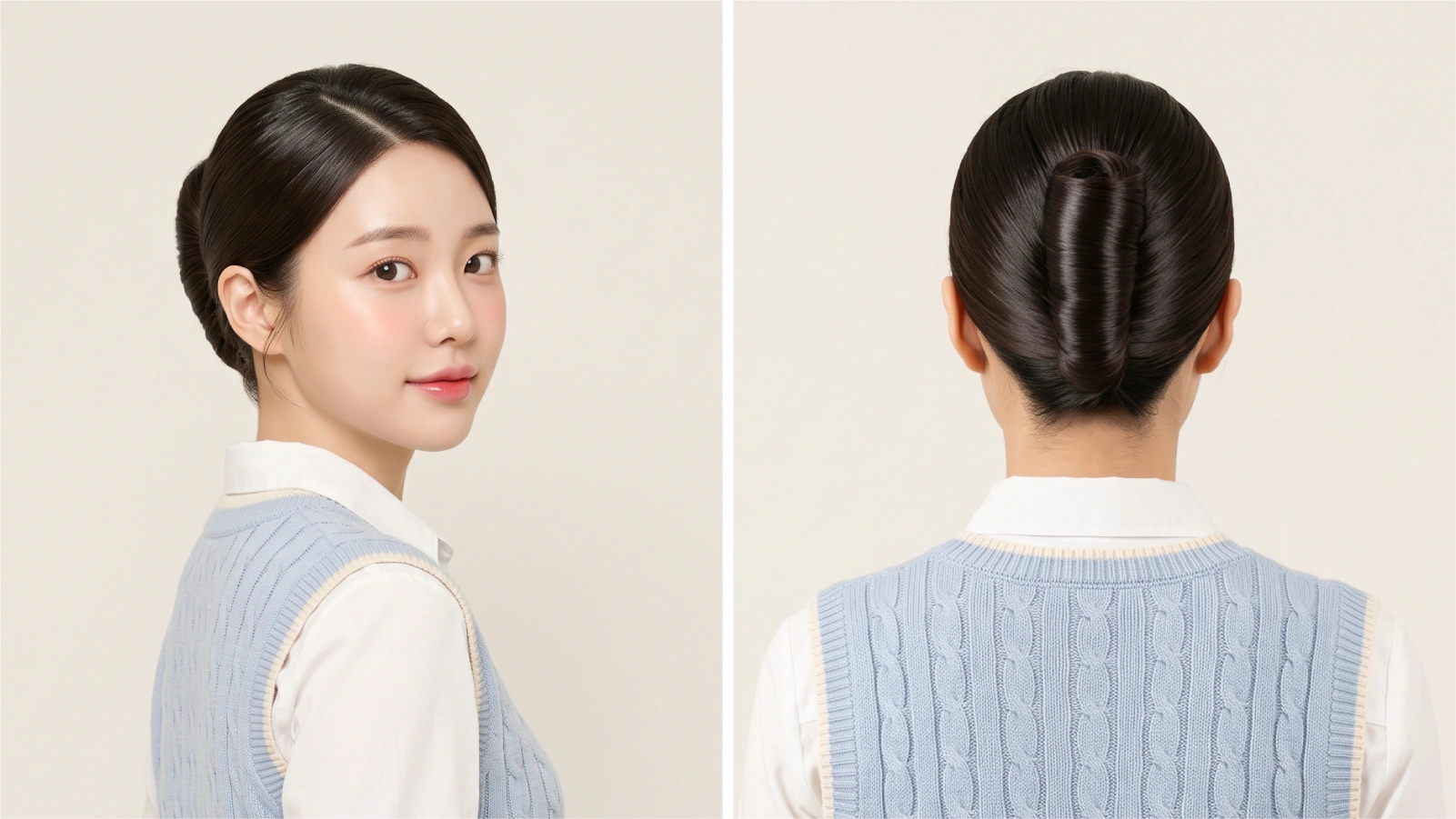
For a faster alternative that captures the same nape-of-neck elegance, the banana bun uses a vertical fold instead of a horizontal coil — it’s worth trying if the classic twist feels fussy on your hair type.
How Long Does a Chignon Bun Actually Last?
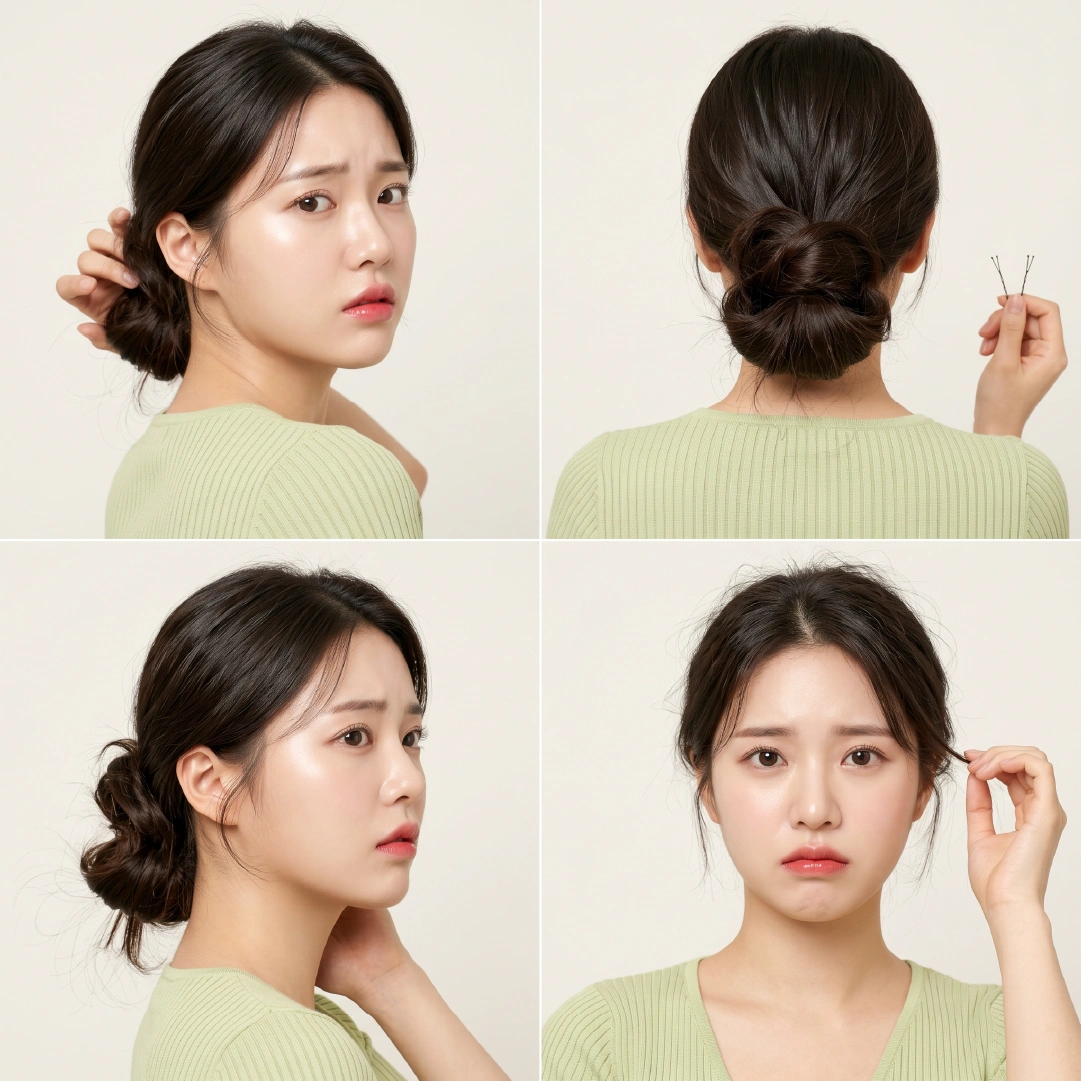
Hold time is the most important question to answer before choosing a wedding hairstyle — here’s what actually determines it. A well-pinned chignon on prepped hair should last 6–8 hours minimum. But several factors shorten or extend that window.
What kills hold time:
- Freshly washed, conditioned hair (too slippery)
- Humid weather without anti-humidity spray
- Too few pins — most people use far fewer than the style actually needs
- Using bobby pins instead of U-shaped hairpins
- Heavy hair accessories that pull the bun downward
What extends hold time:
- Second-day hair with texturizing product
- Backcombing the ponytail base before coiling
- Crisscross pinning pattern (pins lock into each other)
- Setting spray applied both before and after styling
- A hairnet layer underneath
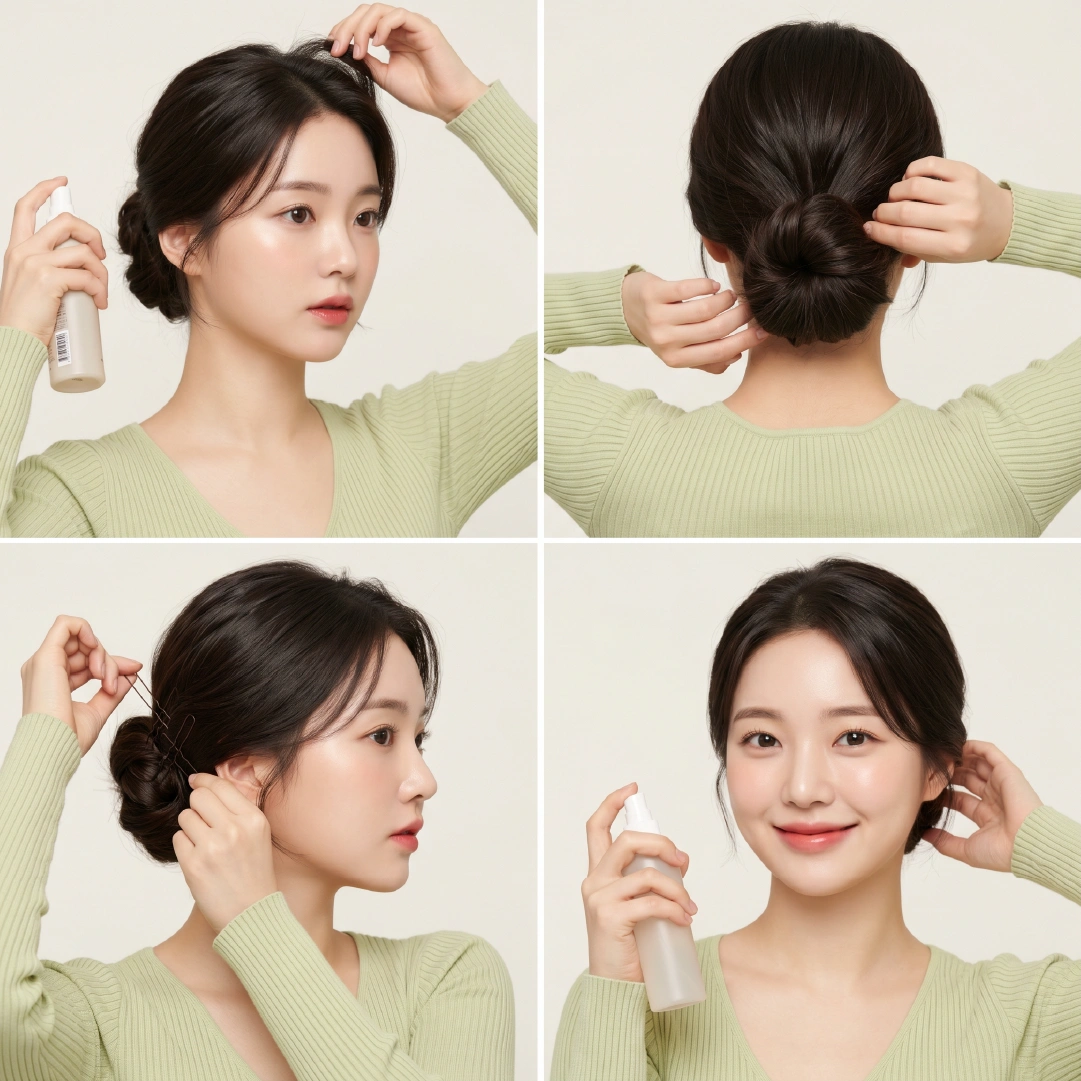
For events longer than 6 hours, pack a few extra pins and a travel-size hairspray in your bag. A 30-second touch-up during a bathroom break can rescue a loosening chignon completely.
Most chignon failures happen because people use half the pins they actually need — aim for 8–12 hairpins minimum on medium-density hair.
Frequently Asked Questions
Not exactly. A French twist rolls hair vertically up the back of the head, while a classic chignon coils horizontally at the nape. Both fall under the chignon family, though, since they sit low and involve tucking or rolling techniques.
Shoulder-length hair is the practical minimum. If your layers are shorter than chin-length, you’ll likely need clip-in extensions or a snap-on bun piece to create enough bulk for the coil.
You can, but it won’t look fresh. A better approach is to sleep with your hair in a loose braid, then coil and pin the chignon in the morning — it takes under five minutes on pre-textured hair.
The three most common reasons are freshly washed hair (too slippery), too few pins, and using the wrong pin type. Switch to U-shaped hairpins, add texturizing spray before styling, and pin in a crisscross pattern for maximum grip.
Absolutely. Curly and coily textures actually hold chignons exceptionally well because the natural texture creates built-in grip. Instead of twisting a ponytail, pin sections individually to the nape and let your curls form the shape organically.
Final Takeaways
- The chignon bun is defined by its nape placement and twisted construction — it’s more structured than a basic bun and works for casual through formal settings.
- Always style on second-day hair with texturizing product for maximum hold.
- Use U-shaped hairpins in a crisscross pattern — they outperform standard bobby pins significantly.
- Adapt the technique to your hair type: fine hair benefits from hairnets and spin pins, thick hair from section-by-section pinning, and short hair from foam donuts or clip-in pieces.
- Try variations like the tousled chignon or braided chignon to match the occasion without learning an entirely new technique.
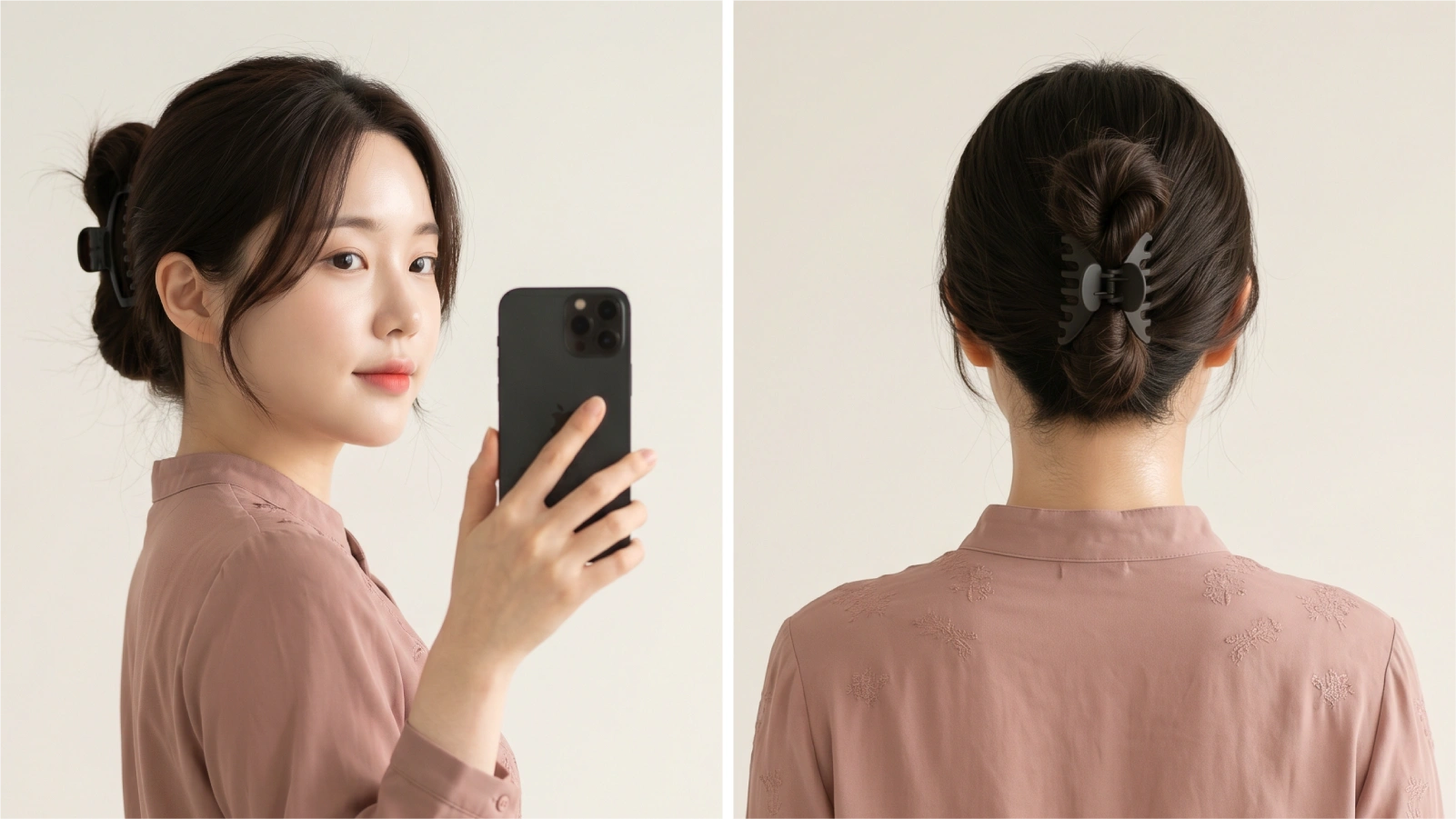
Looking for a quicker alternative with the same low-bun elegance? The claw clip bun delivers a similar nape-of-neck silhouette in about 30 seconds flat.

)