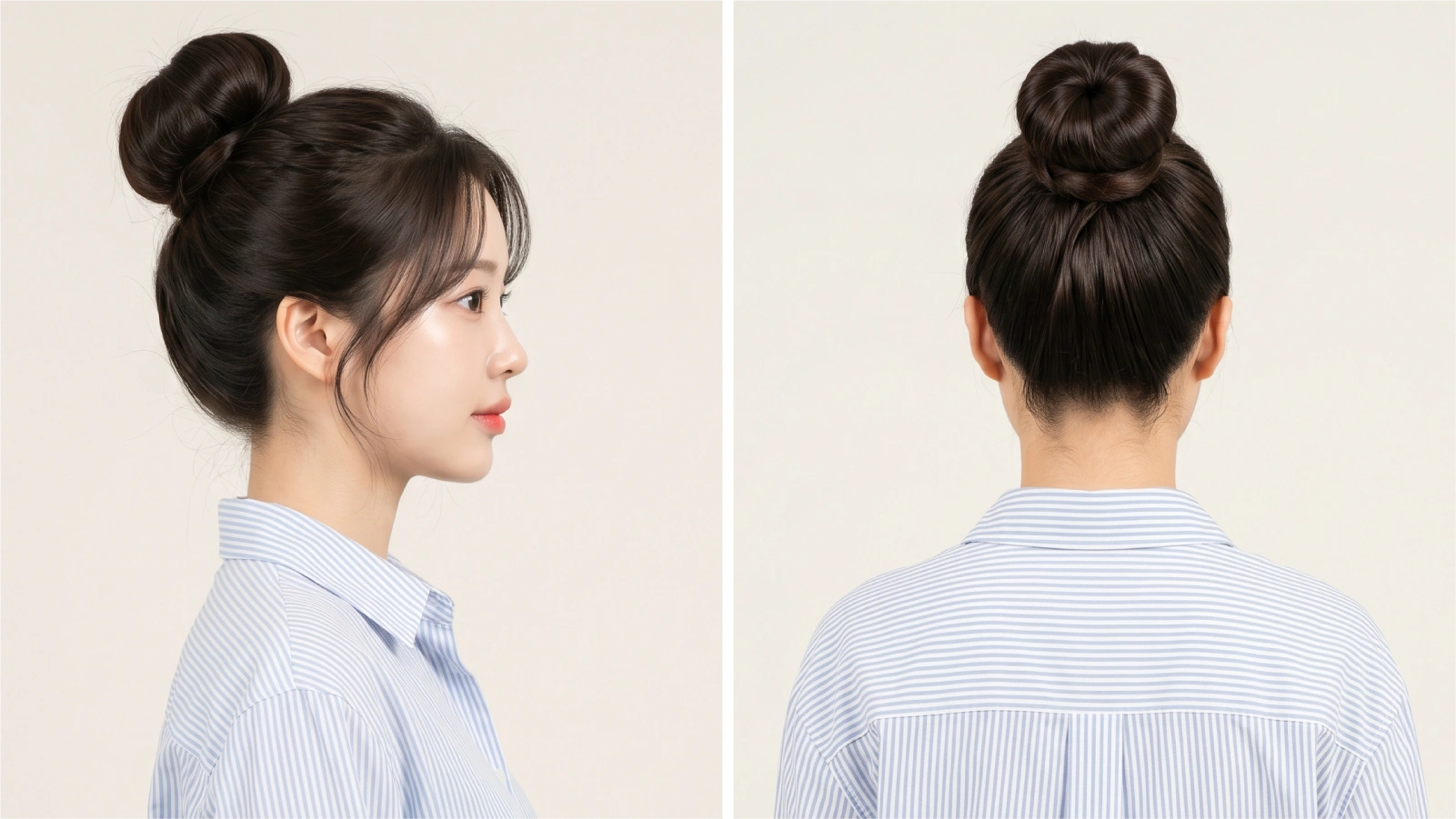
The top knot is one of the most versatile updos in women’s hairstyling—a high bun placed at the crown of the head that works across every hair type, length, and occasion.
Whether you’re going for a sleek, polished look or an effortlessly undone vibe, the top knot takes under five minutes and adapts to your mood.
This guide covers everything from step-by-step technique to hair health, so you wear this style smarter—not just prettier.
For the full range of everyday looks that complement the top knot, easy everyday hairstyles for women covers the complete weekly rotation worth knowing.
Style Snapshot
- A top knot sits at the crown of the head and takes 3–5 minutes for most hair types and lengths, including medium-length hair.
- Wearing a tight top knot daily raises your risk of traction alopecia (hair loss from tension); use a silk scrunchie and loosen your style so it feels secure but not tight — if your scalp is pulled, it’s too tight
- Oval and diamond face shapes suit a high top knot best; round and square faces benefit from a lower, slightly off-center placement.
What Exactly Is a Top Knot (and How Does It Differ from a Messy Bun)?
A top knot is an updo where hair is gathered at the crown—the highest point of the head—and coiled or twisted into a structured knot. It sits higher than a standard bun (which typically sits mid-skull to nape) and higher than the popular messy bun style, which prioritizes loose, undone texture over defined placement.
Here’s the clearest breakdown:
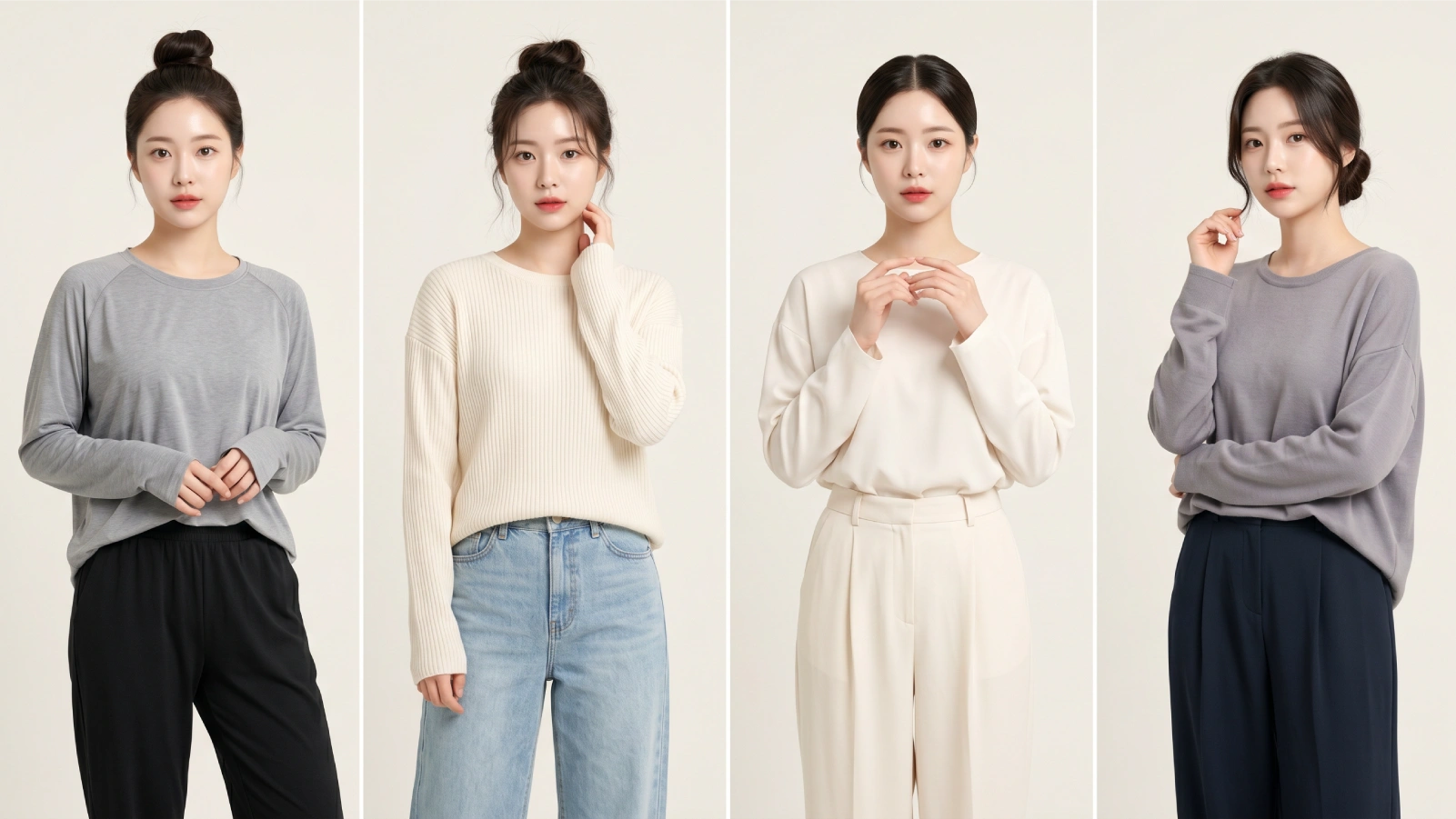
The top knot’s defining feature is height and deliberate placement—it visually elongates the neck and lifts the face, which is exactly why it became a staple from ballet studios to boardrooms.
A top knot placed at the crown of the head visually elongates the neck and creates an instant face-lift effect — placement alone does more than any product can.
How Do You Do a Top Knot? Step-by-Step by Hair Type
The technique shifts depending on what you’re working with. Follow the version that matches your texture.
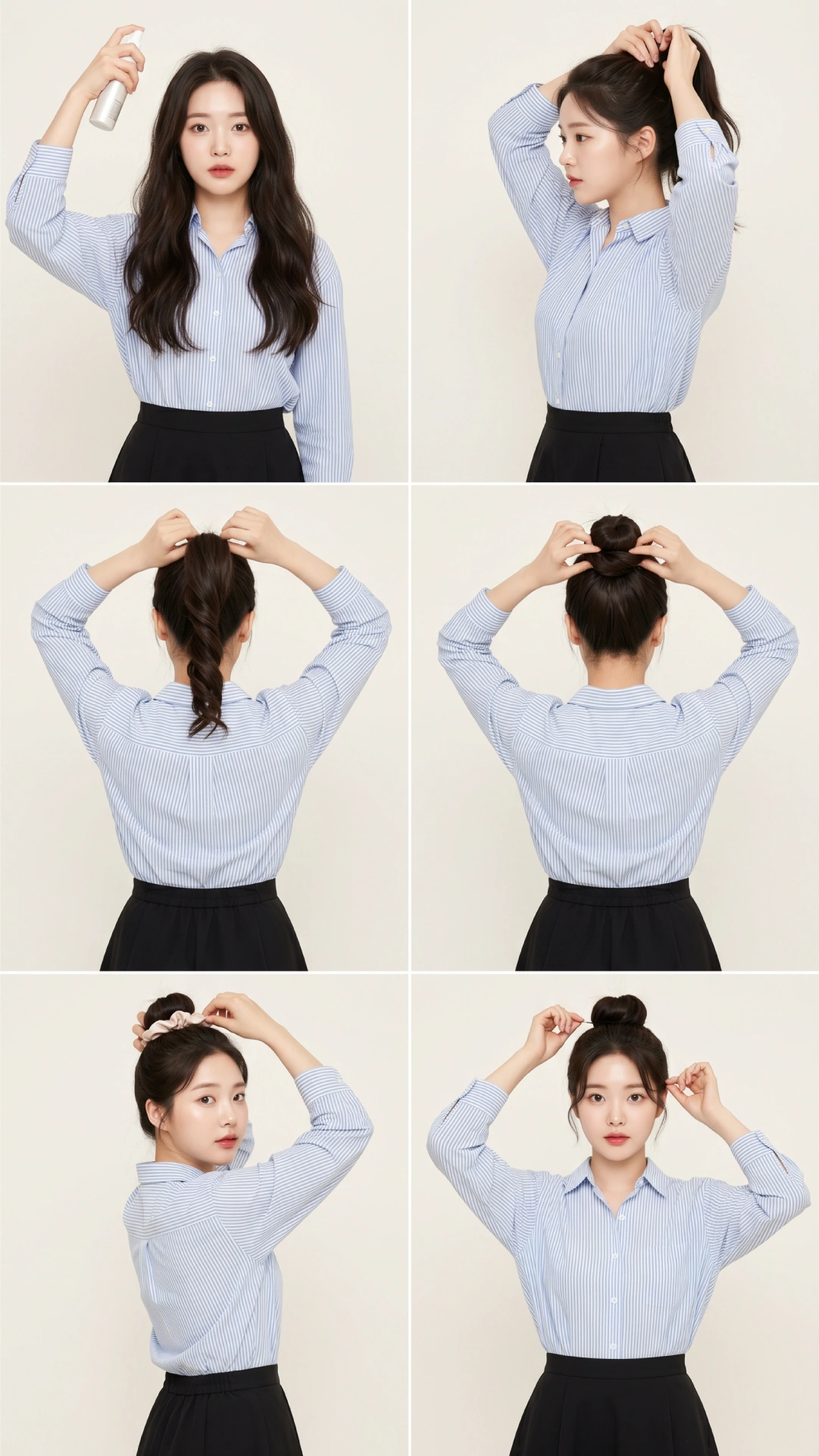
For Straight or Fine Hair
- Apply a texturizing spray or dry shampoo to roots—clean, slippery hair fights this style.
- Tilt your head forward slightly and gather all hair at the crown.
- Twist the ponytail clockwise until it coils back on itself.
- Wrap the coil around its base to form the knot shape.
- Secure with a silk scrunchie (not a tight elastic).
- Pancake the bun: gently pull sections outward to create width and fake volume.
- Pin any loose sections with bobby pins; pull two small face-framing pieces free at the temples.
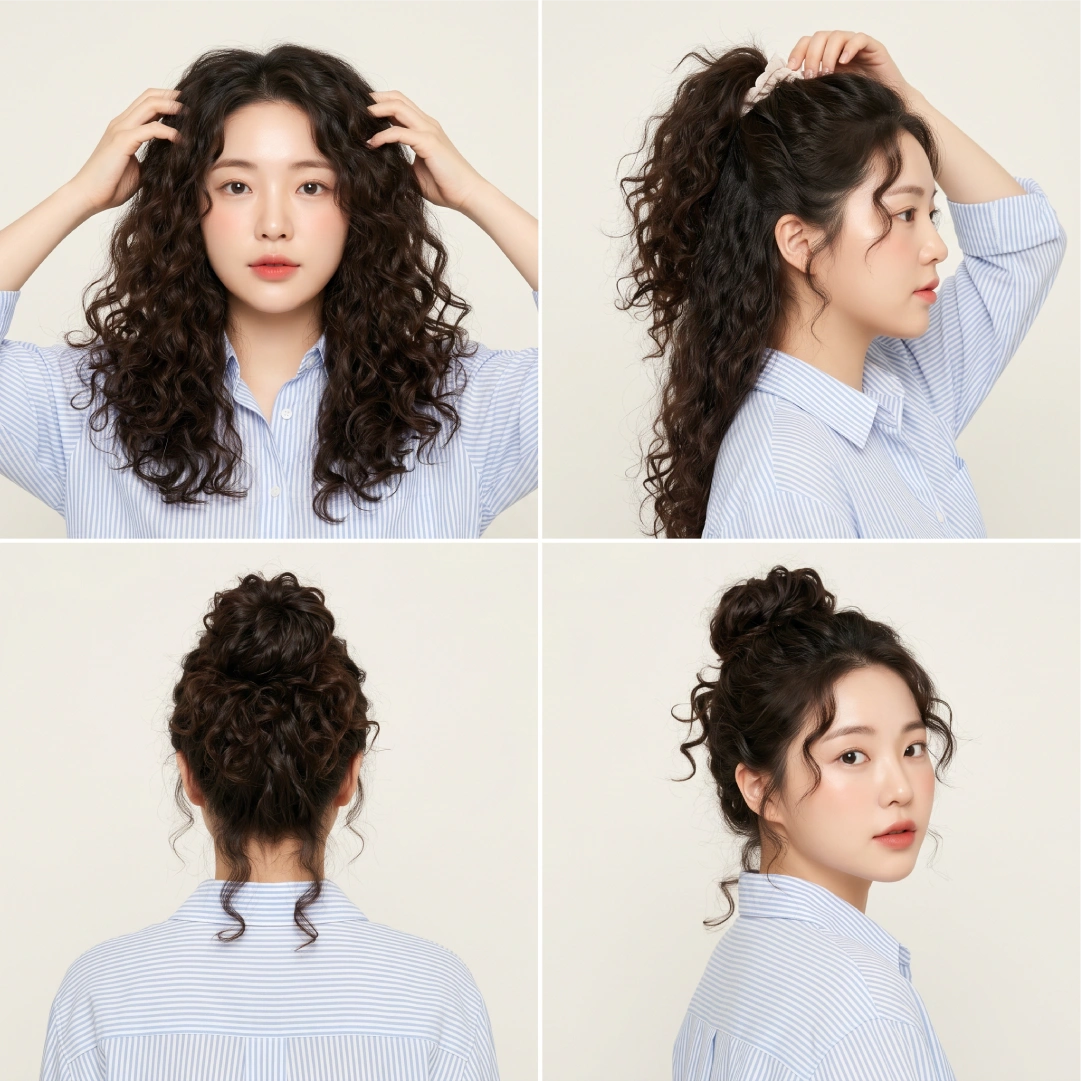
For Curly or Thick Hair
- Skip the texturizing spray—your natural texture already provides grip.
- Finger-detangle rather than brushing; brushing breaks curl pattern and causes frizz.
- Secure loosely. Tight tension on thick or curly hair is where traction alopecia begins.
- Leave a few curls loose at the nape and temples for that effortless finish.
- A twisted bun works beautifully here — the twists add structure without requiring a flat base.
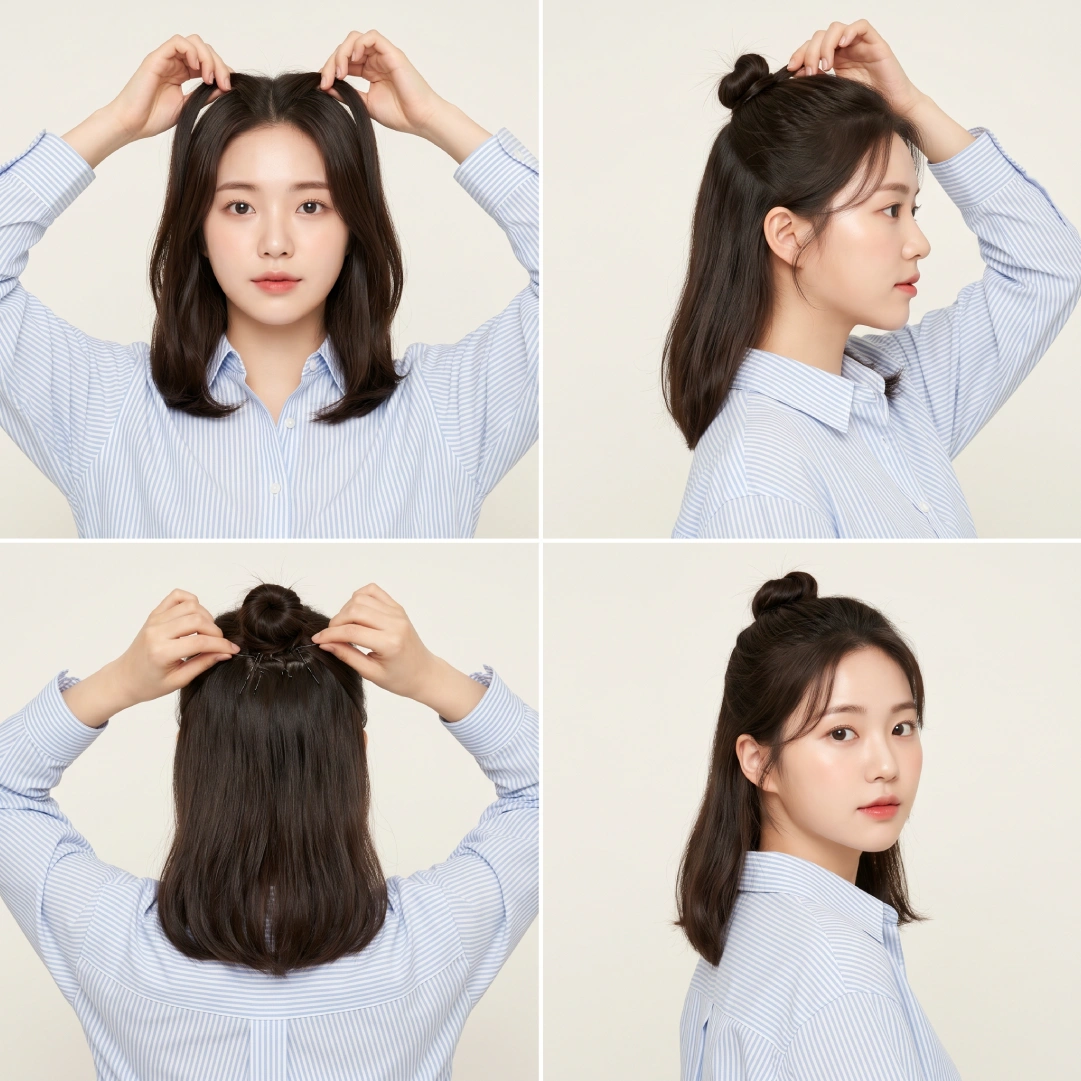
For Short or Medium Hair
- Use the half-up method: section only the top crown layer, not all your hair.
- The half up half down approach solves the “not enough length” problem entirely—the knot sits at the crown while the rest of your hair flows naturally.
- Bobby pins are your best friend. Use 4–6 to anchor what elastics can’t catch.
Which Top Knot Style Suits Your Face Shape?
Face shape determines more about flattery than any technique does — here’s the placement guide:
Leave a few face-framing strands out at the temples if your face shape calls for softening. One or two loose pieces at the hairline change the entire silhouette of the style.
For round face shapes, a high, tight top knot is one of the most effective non-surgical ways to add vertical length to your facial profile.
Can Wearing a Top Knot Every Day Damage Your Hair?
The honest answer: yes, it can — but only under specific conditions. Traction alopecia (hair loss from repeated, prolonged tension on the follicle) is a real risk for daily top knot wearers.
The American Academy of Dermatology identifies tight buns and high ponytails as direct contributors to this condition, which first appears as a thinning hairline and temple recession.
Signs you’re wearing your top knot too tight:
- Headache within an hour of styling
- Scalp soreness at the base of the ponytail
- Small pimple-like bumps around the hairline
- Short, broken hairs appearing at the temples
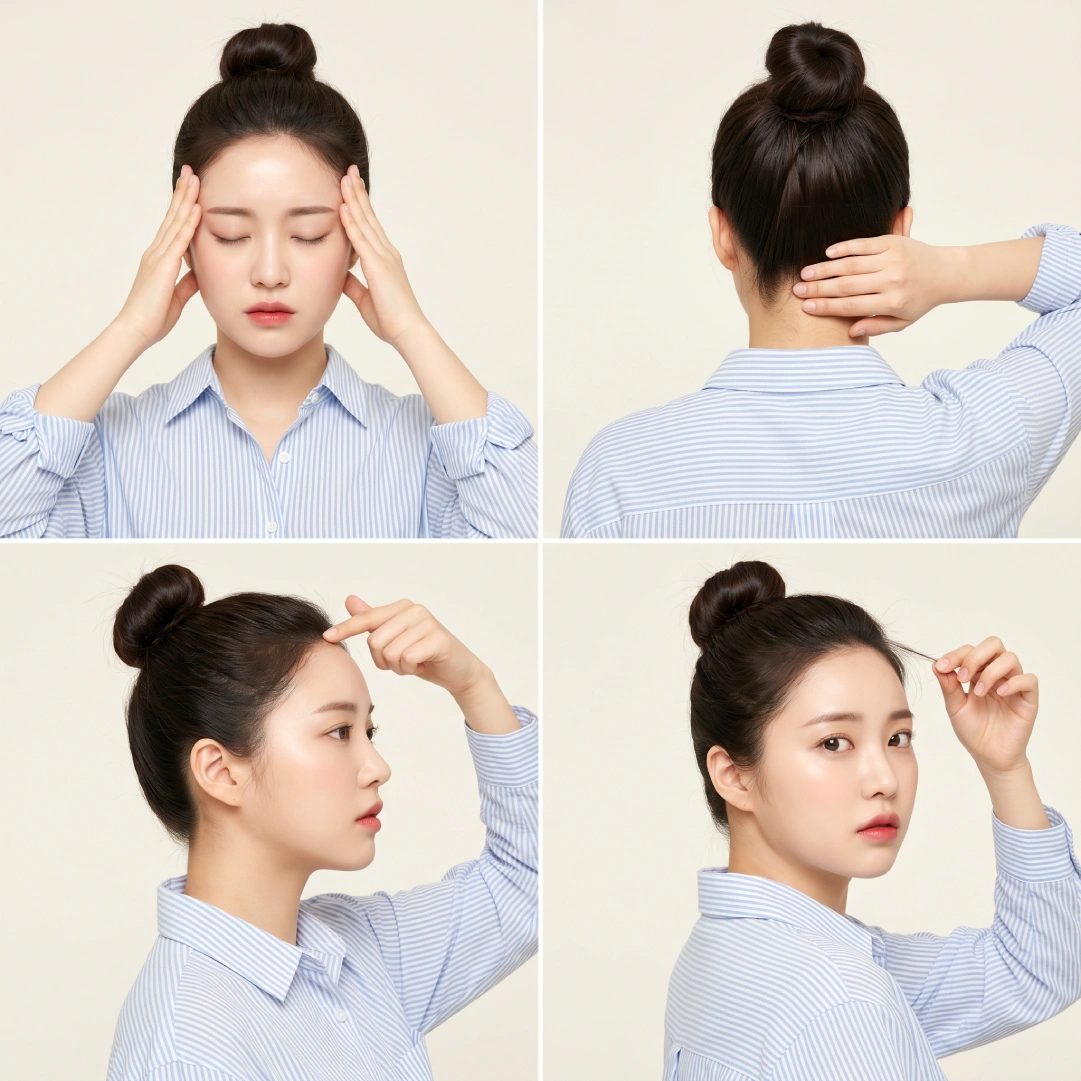
How to wear a top knot safely, long-term:
- Elastic type matters: Swap standard rubber elastics for silk scrunchies or fabric-covered ties — rubber bands snag and cause hair breakage on removal.
- Alternate your placement: Don’t put the ponytail in the exact same spot every single day—shifting it even half an inch reduces repeated stress on the same follicles.
- One day off per two days on: Give your scalp regular breaks from any updo with tension.
- Loosen intentionally: A top knot that feels “secure but not tight” is the right tension. If it hurts at all, it’s too tight.
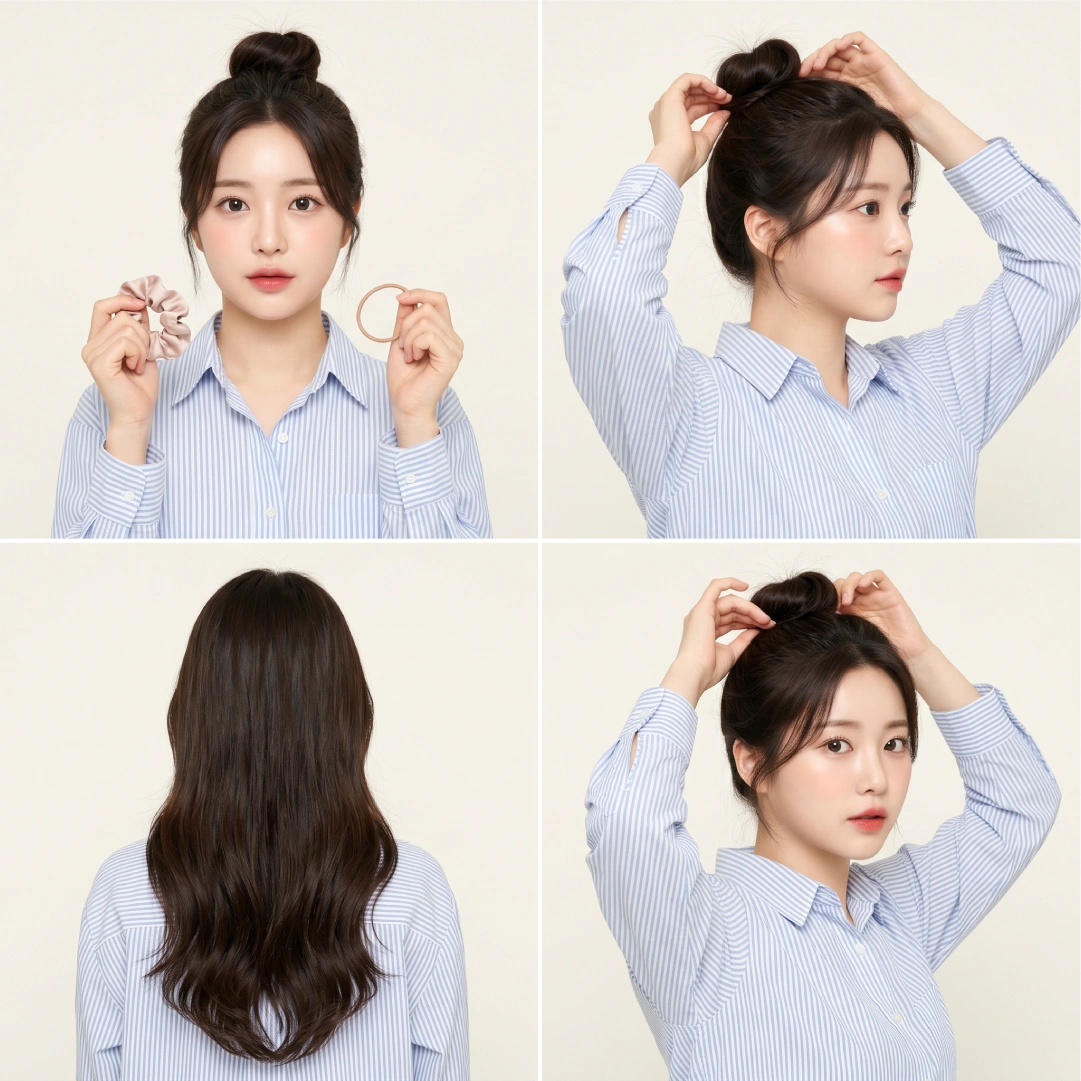
Fine or thinning hair is especially vulnerable to crown tension — wear a top knot for shorter durations and use a clip at the base rather than a tight elastic whenever possible.
What Products Actually Help (And Which Are Overrated)?
Here’s what actually works for each specific problem, and what to skip:
One product note worth emphasizing: for half up half down hairstyles, a texturizing spray at the crown before pulling up the top section gives the knot definition without making the loose layers look flat by comparison.
Frequently Asked Questions
A bun is a general term for any hairstyle where hair is coiled or twisted into a round shape and secured close to the head. A top knot is a specific type of bun placed at the crown of the head (the highest point), giving it distinct height. All top knots are buns, but not all buns are top knots.
Medium-length hair (shoulder length or longer) creates a full top knot without additions. Short hair (chin length or above) can work with a bun insert or extensions, but the knot will be smaller. The minimum workable length is roughly 4–5 inches—enough to loop into a small knot with bobby pin support.
Absolutely. Curly and textured hair actually builds more volume in the bun, which many straight-haired women try to fake with tools. Apply a light leave-in conditioner before styling to define curls, gather hair gently (avoid pulling individual curl clusters), and secure with a satin-lined scrunchie to reduce friction and frizz.
Three approaches work well together: apply dry shampoo at the roots before you gather your hair; tease the ponytail lightly before coiling it; and pull gently at the sides of the finished bun to “expand” it. A bun donut insert also creates the illusion of thickness without any product buildup.
Sleeping in a tight top knot regularly can cause breakage at the hairline and crown, and contribute to traction alopecia over time. If you need hair out of your face overnight, a loose, low ponytail or a single loose braid is safer. Use a silk pillowcase to reduce friction regardless of your sleep style.
Key Takeaways
The top knot earns its place as a daily go-to because it’s genuinely fast, genuinely flattering, and genuinely flexible—but it rewards a little intention.
- Match bun height to your face shape, not just your mood
- Use a silk scrunchie and vary placement to protect your hairline long-term
- Choose dry shampoo for clean hair, texturizing spray for second-day hair
- Try a braided or twisted variation when you want more visual interest without more time
- If your scalp hurts, your top knot is too tight—always
For more styling options that complement a top knot rotation, explore messy bun techniques for those days when undone is the whole aesthetic.