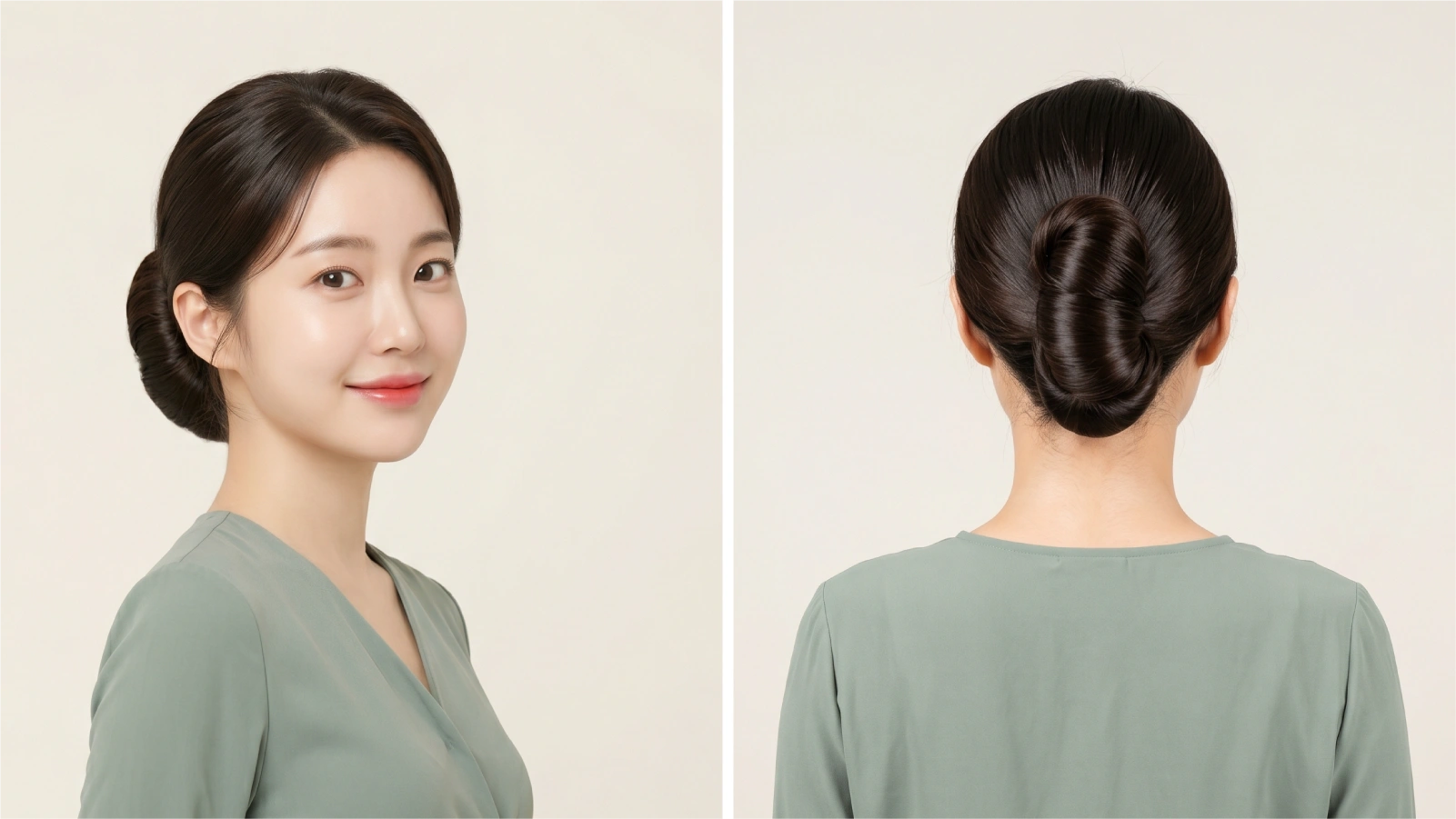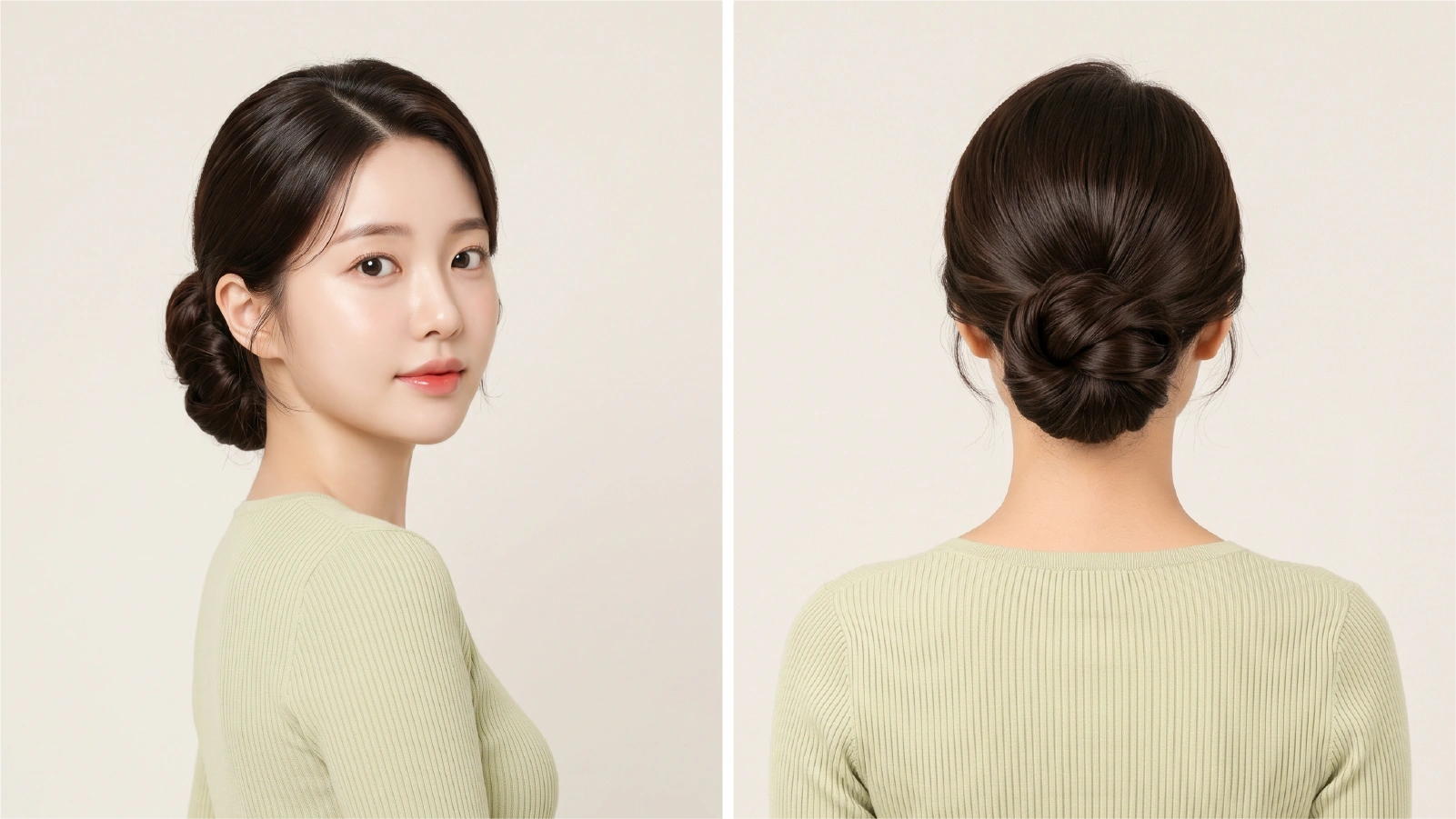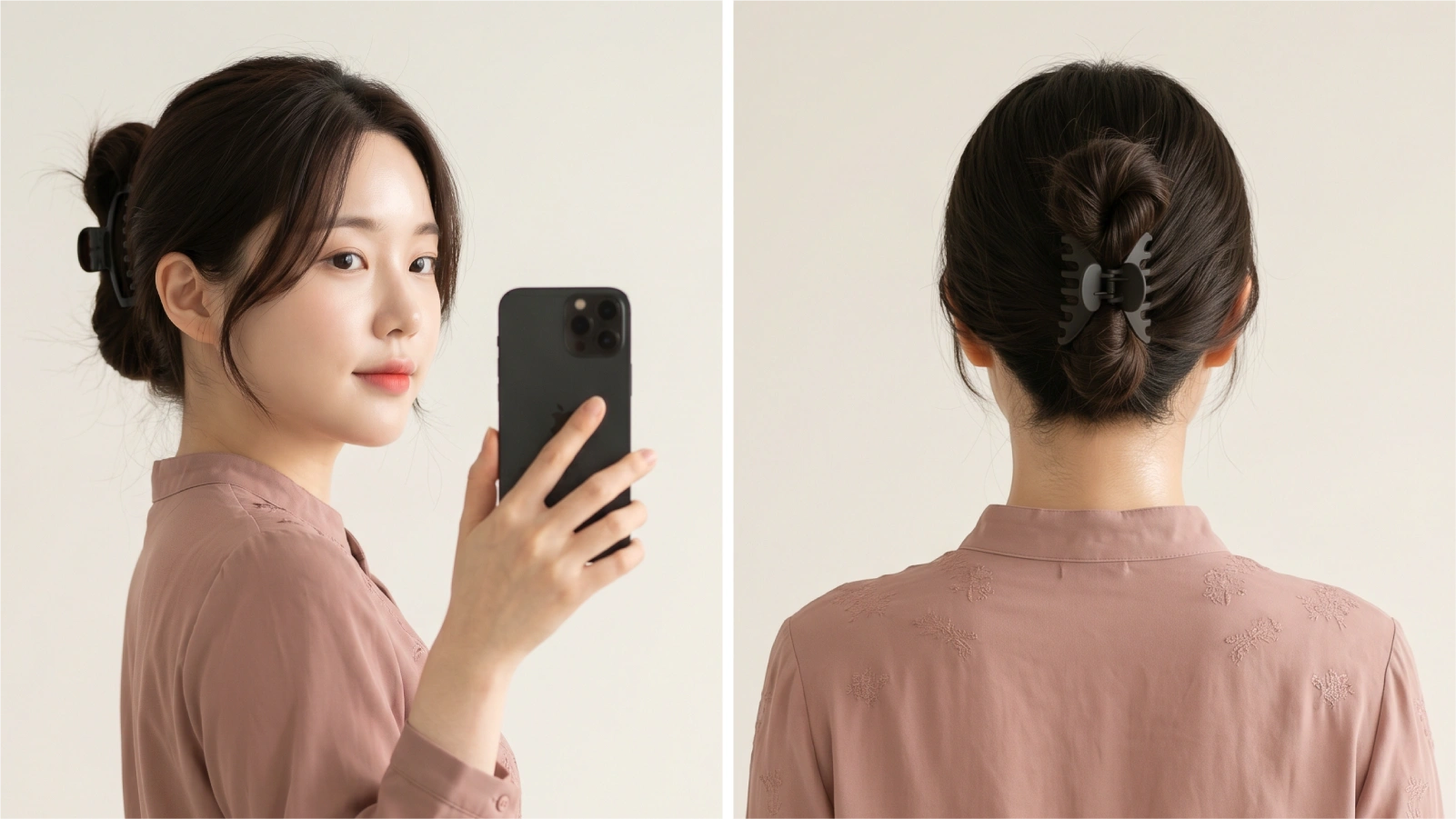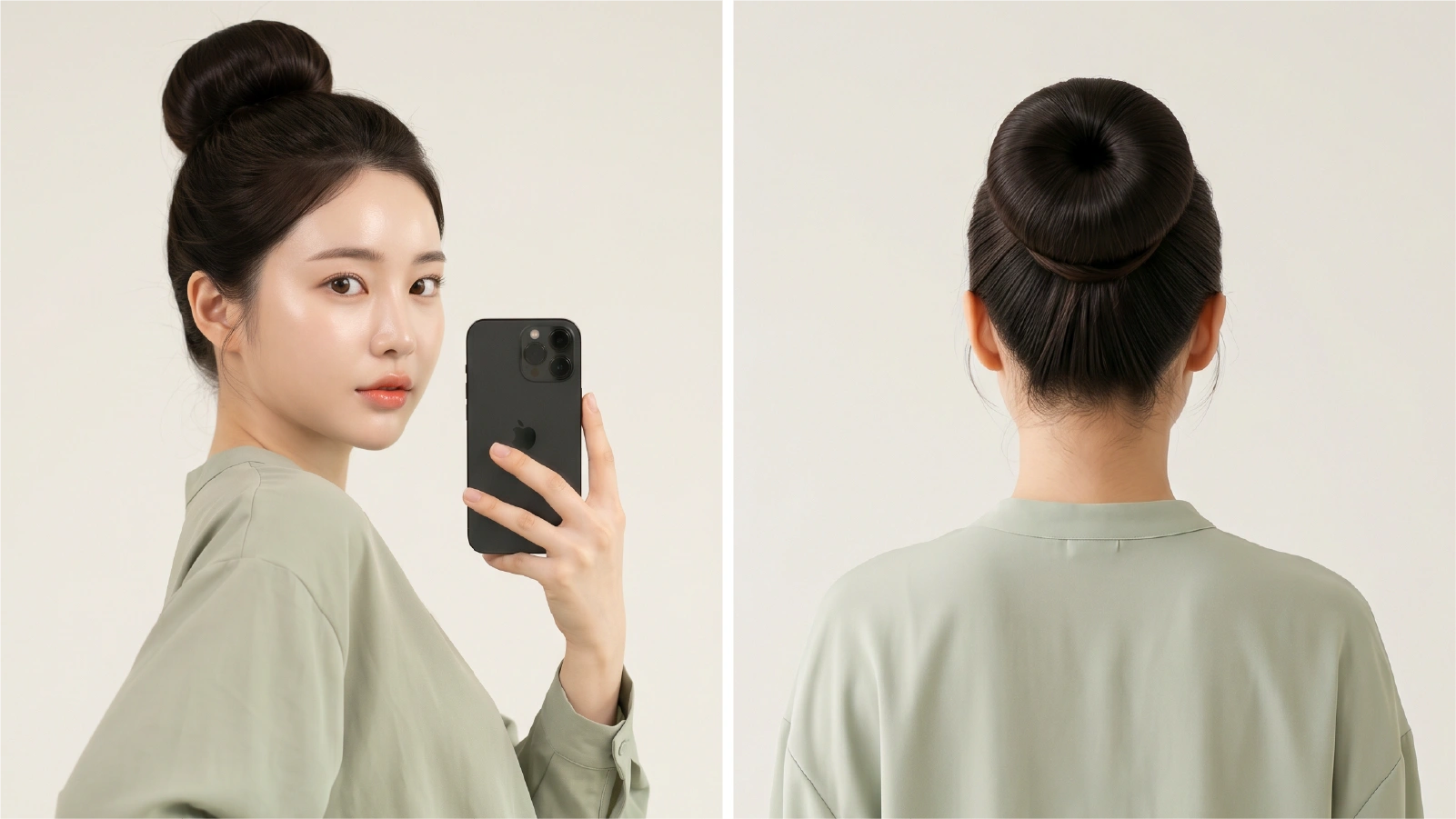
A sock bun is an updo hairstyle created by rolling your hair around a DIY donut made from a cut, rolled sock — giving you a voluminous, polished bun in under five minutes, with zero heat required.
Whether you want a sleek ballerina look or a relaxed, messy version, the sock bun delivers. It’s one of the most beginner-friendly easy updos for women, making it a genuine go-to for busy mornings and lazy wash days.
What most tutorials won’t tell you: sock size, color, and placement all directly affect whether your bun looks salon-worthy or like you napped on it. This guide covers all of it — including how to adapt the technique for every hair type and texture.
Style Snapshot
- The Golden Rule: Always match your sock color to your hair; a mismatched DIY donut is the #1 reason the “scaffold” shows through on fine or thin hair.
- Placement Matters: High-crown placement creates a fashion-forward, energetic look, while a low-nape “chignon” position reads as polished and office-appropriate.
- Health Secret: To prevent traction alopecia, avoid over-tightening the base ponytail—use a silk scrunchie as your anchor and rotate your bun placement daily.
What Is a Sock Bun — and Why Does It Work So Well?
The sock bun (also called a donut bun) uses the structure of a rolled sock as an internal scaffold. Unlike a regular bun — which relies entirely on pins and elastics to hold its shape — the sock donut gives the style a full, round silhouette that stays in place all day. That’s why it looks effortlessly “done” even when you threw it together in two minutes.
Here’s what makes the method work from a styling mechanics standpoint:
- Structure: The sock ring creates a fixed circular frame your hair wraps around, maintaining shape even as the day goes on.
- Volume boost: Fine or thin hair instantly looks thicker because it’s stretched over a solid form.
- Grip: The sock’s fabric texture holds hair in place better than a smooth foam donut, reducing slipping.
- Cost: A DIY sock donut costs nothing. A store-bought bun form costs $3–$8 and works similarly.
A sock bun works because it replaces skill with structure — the donut does the shaping work your hands don’t have to.
For a different updo vibe, a twisted bun delivers the same polished silhouette with a layer of twisted texture running through the style.
How Do You Make the Perfect Sock Donut?
Making the donut correctly is 80% of the result — and the details are simpler than most people expect.
Step-by-step sock prep:
- Choose a mid-calf or crew sock (not ankle socks — too short; not knee-highs — too bulky). Match the color to your hair as closely as possible.
- Cut off the toe section cleanly along the seam — this creates an open tube.
- Turn the sock inside out and begin rolling it from the cut end toward the elastic band.
- Roll tightly and evenly. When you reach the elastic, you should have a firm, uniform donut ring roughly 2–3 inches in diameter.
- Slide your fingers around the inside to test firmness. It should hold its shape without collapsing.
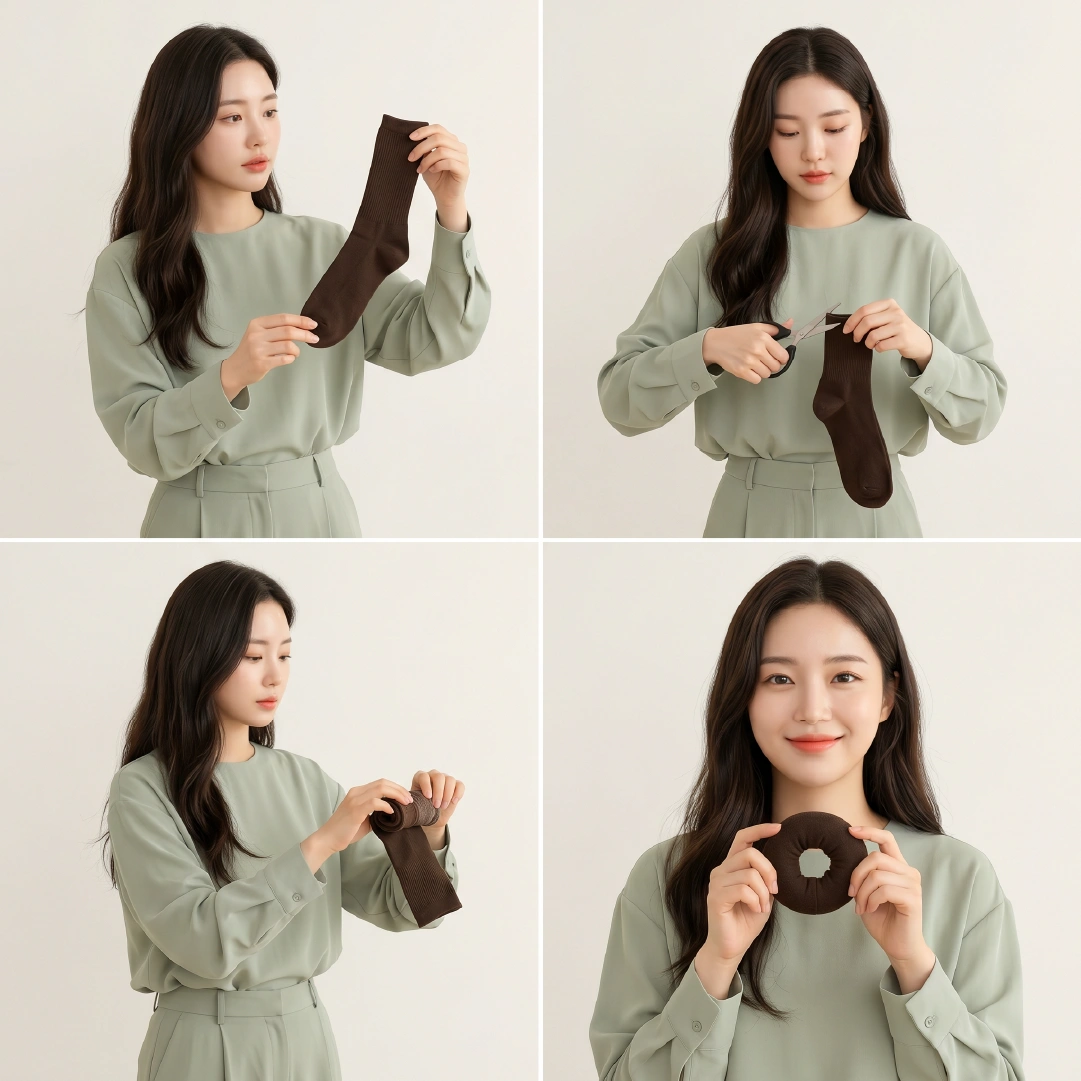
The full sock bun technique (standard method):
- Brush hair thoroughly and pull hair into a ponytail at your target placement height.
- Thread the ponytail through the sock donut and slide it to the ends of your hair.
- Fan hair evenly over the donut, covering it completely.
- Tuck the ends under the donut on all sides.
- Roll the donut down toward your scalp, tucking hair inward with each rotation.
- Once at the base, adjust any gaps, secure loose sections with bobby pins, and finish with a light-hold hairspray.
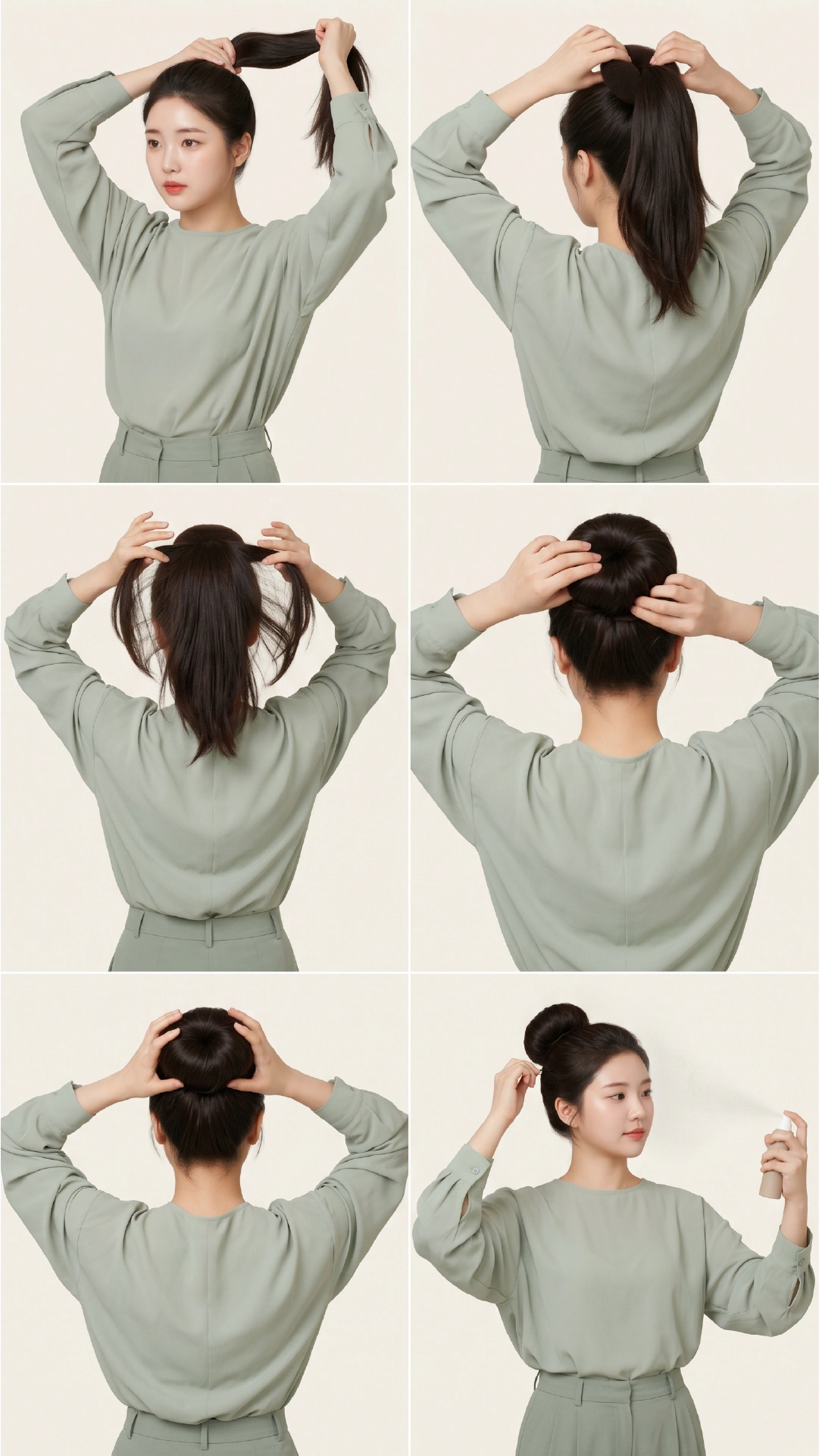
Pro tip: Don’t over-tighten the base ponytail. A relaxed, secure elastic at the root holds just as well — and protects your hairline from unnecessary tension.
Which Hair Types Work Best — and How to Adapt the Technique
Matching the technique to your hair type is what separates a salon-worthy sock bun from one that collapses by midday.
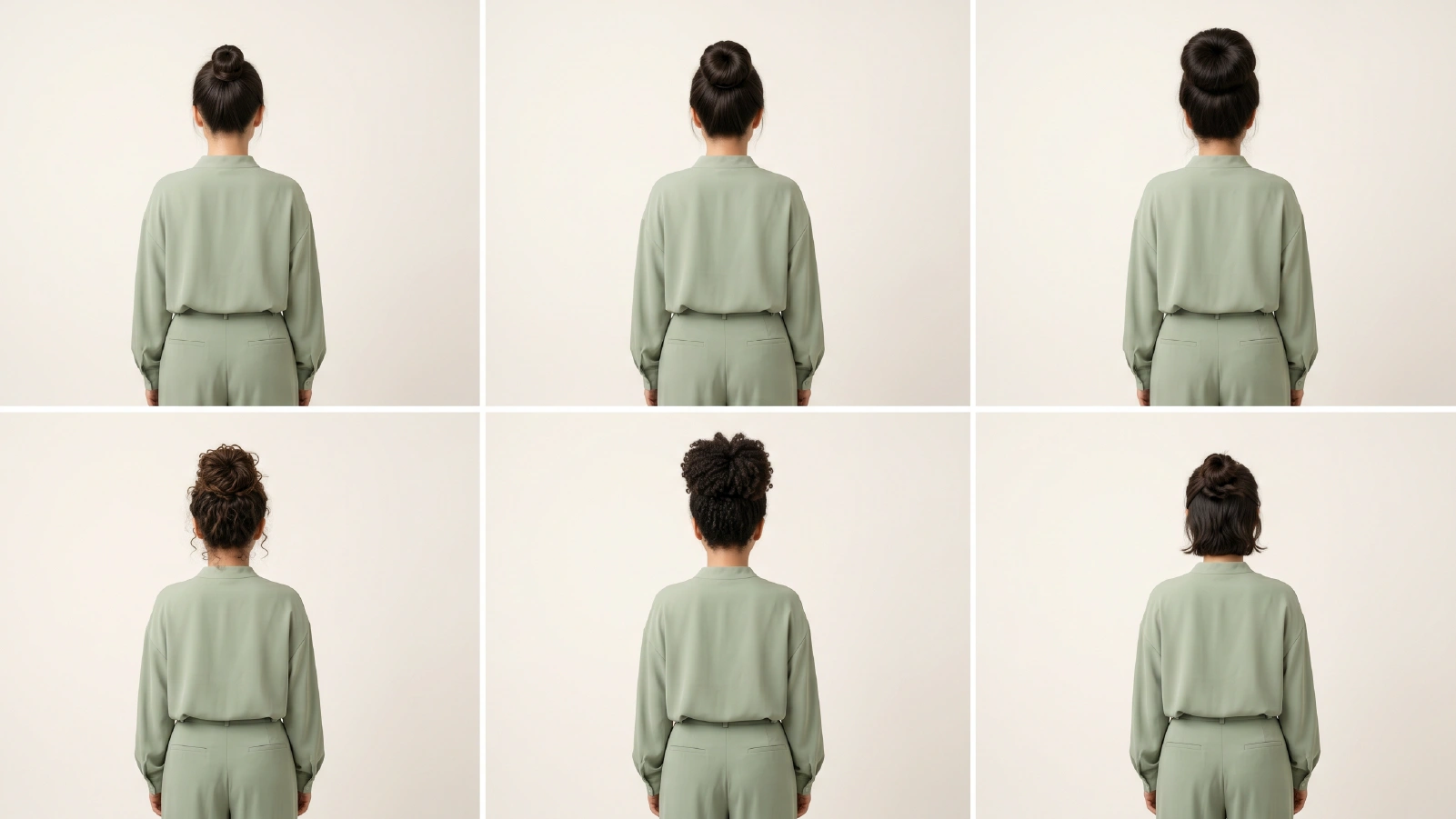
If you love the sleek, pulled-back look of a sock bun, a slicked back bun takes that same clean finish even further — no donut or form required.
Can a Sock Bun Actually Damage Your Hair?
Here’s the topic every other guide ignores completely: hair health. The sock bun is generally safe, but there’s one real risk worth knowing.
Traction alopecia is a form of gradual hair loss caused by repeated tension on the hairline and follicles. Dermatologists flag tight updos — including buns, braids, and ponytails — as a consistent contributor, particularly when worn daily at the same tension point.
Dermatologists consistently link tight daily hairstyles to early-stage follicle damage — making rotation and looser styling habits essential for long-term hair health.
How to keep your sock bun hair-healthy:
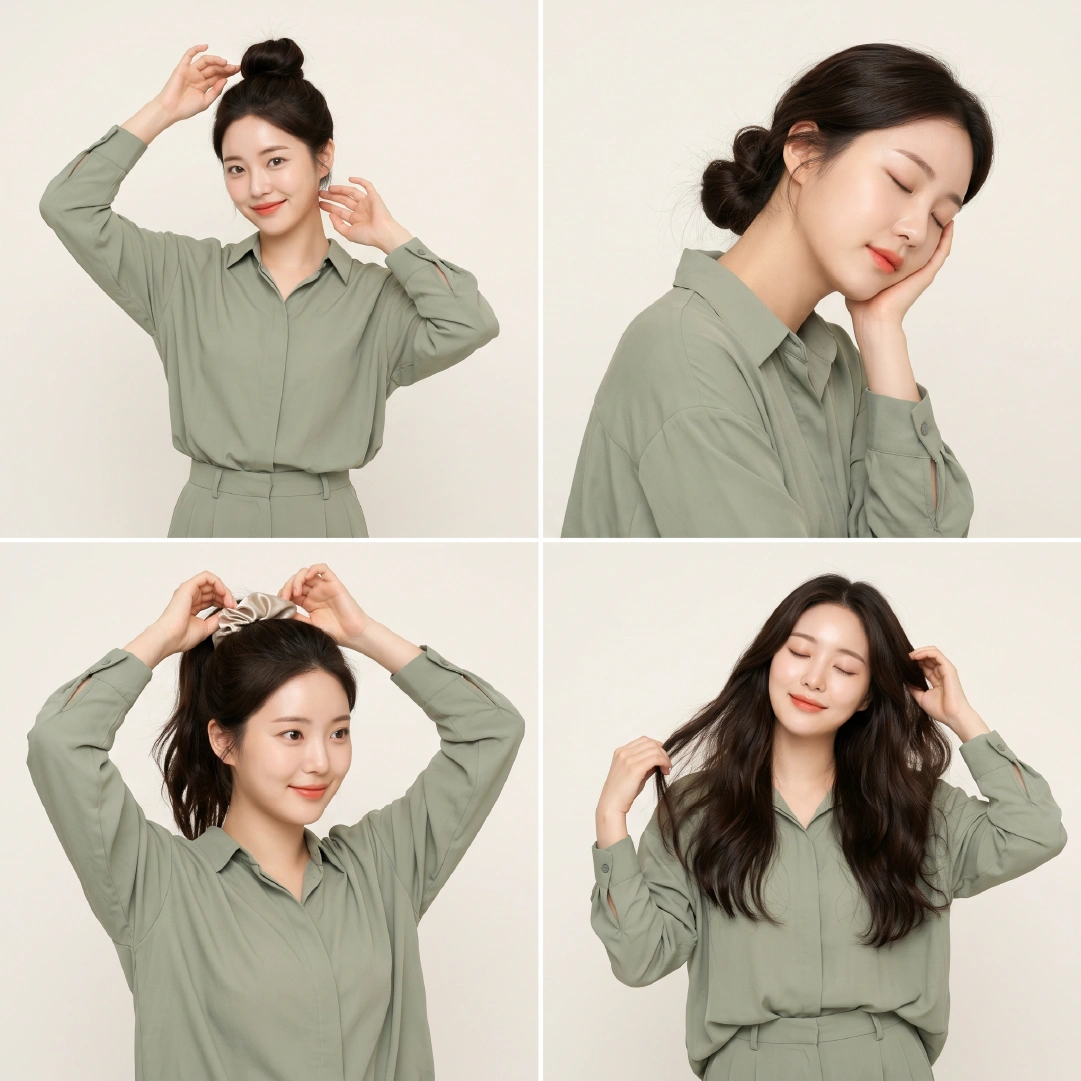
- Vary the height and placement of your bun from day to day — rotating from high to low redistributes tension points.
- A loose, low sock bun on slightly damp hair overnight is completely safe — and produces natural heatless waves by morning, making it a useful styling hack as well.
- Use a silk or satin scrunchie for the base elastic rather than a standard rubber band — less friction means significantly less hair breakage over time.
- Take at least two days per week with your hair fully down or in a protective style without any pulling.
What’s the Difference: DIY Sock vs. Store-Bought Bun Donut?
Both options produce great results. If you’re doing sock buns multiple times a week, a store-bought donut in your hair’s exact shade is worth the $5 investment for the consistent shape.
Sock Bun Placement Guide: High, Mid & Low for Every Occasion
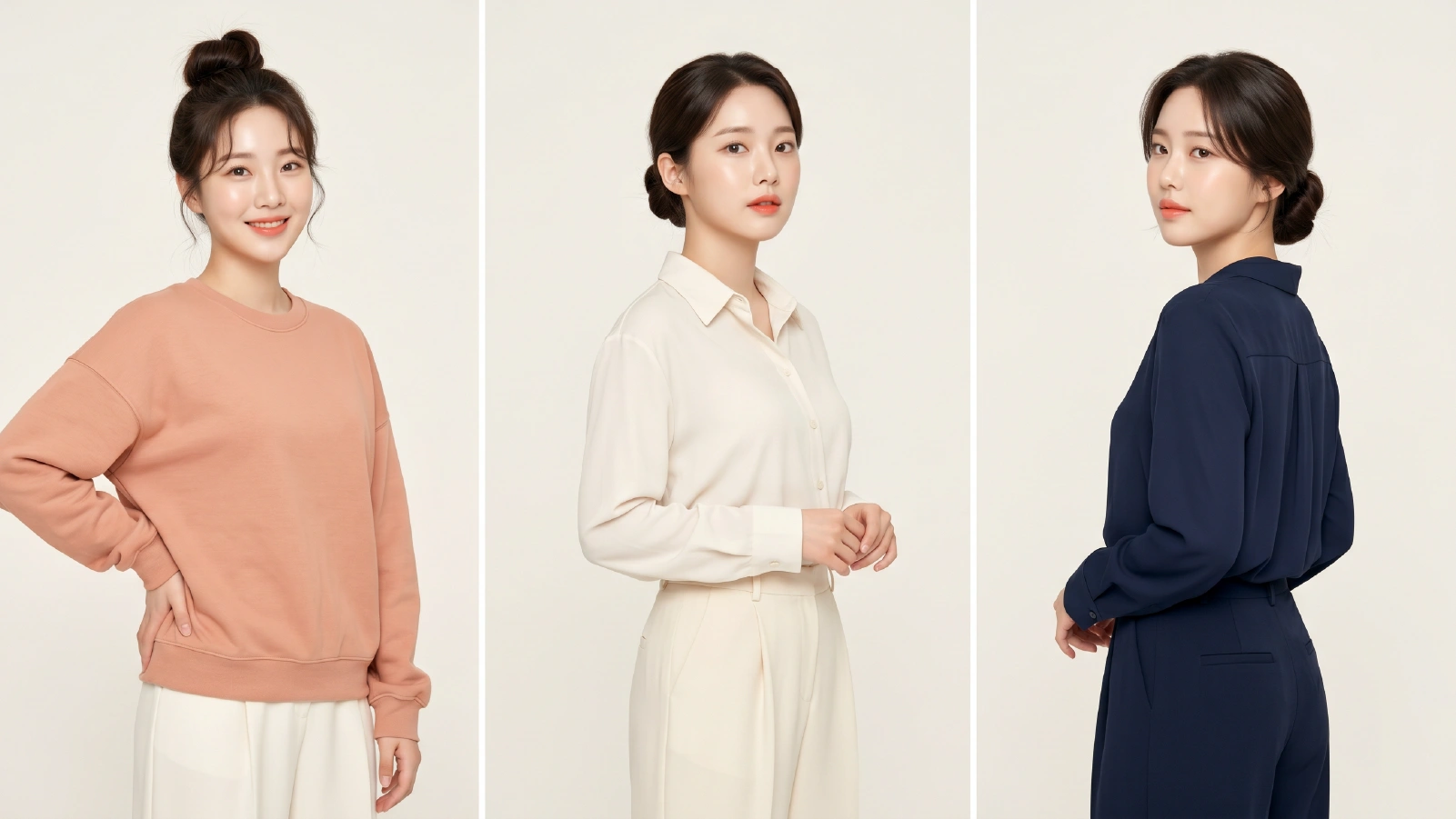
Bun placement transforms the entire look and message of the style. This is one of the most searched-but-poorly-answered questions across PAA and Reddit threads.
- High sock bun (crown of head): Elongates the face, adds visual height, and reads as fashionable and energetic. Ideal for casual outings, festivals, gym sessions, and weekend looks. Pairs naturally with face-framing tendrils for a softer finish.
- Mid-head sock bun (top of ears level): The most versatile position — professional enough for the office without being severe. Works for most face shapes and keeps the look polished without trying too hard.
- Low sock bun (nape of neck / chignon position): Elegant, structured, and event-appropriate. Perfect for weddings, formal events, job interviews, or any occasion calling for a put-together silhouette. A low sock bun at the nape belongs to the broader low bun family of styles, and looks especially polished when paired with face-framing curtain bangs or side-swept layers.
Quick positioning rule: If you’re unsure, place the bun one inch above where you’d naturally wear a ponytail. It reads cleaner and holds better than going directly at the elastic point.
Why Is My Sock Bun Not Looking Right? (Troubleshooting Guide)
Here’s the honest part: most first-time sock buns don’t work perfectly. Here’s exactly why — and how to fix it.
The single biggest mistake, by far, is skipping the flyaway tuck. A sock bun with loose flyaways looks like you slept on it — which, to be fair, you might have. A few targeted bobby pins and a 3-second hairspray blast are the difference between “did she just roll out of bed” and “did she just leave a photo shoot.”
Frequently Asked Questions
Yes — the key is using a smaller donut (a rolled ankle sock or mini bun form) and applying a light gel or serum before pulling hair up. Very short layers around the nape won’t fully wrap; pin those sections individually with bobby pins after rolling. Hair should be at least 4–5 inches long for the technique to work without extensions.
Three-part fix: (1) choose a sock in your exact hair color, (2) make sure your donut isn’t oversized for your hair volume — a bulky donut needs more hair to cover it, and (3) fan hair all the way around the donut before rolling, not after. Gaps appear when hair gets unevenly distributed during the roll.
It does — with the right prep. Apply a leave-in conditioner or curl cream to slightly damp hair, twist into a loose, low sock bun, and sleep on a silk pillowcase. In the morning, loosen the bun slowly and finger-separate the waves. Results vary by hair texture; wavy and curly hair types get the most defined results.
A sock bun uses an internal donut structure to create a round, voluminous shape that holds its form. A messy bun relies entirely on a hair elastic with no internal structure — the shape is looser, more textured, and intentionally undone. You can create a messy sock bun by not smoothing flyaways before rolling and leaving a few tendrils out, combining the structure of one with the aesthetic of the other. A messy bun is the style to explore if you want zero-effort texture over polished volume.
A mid-head or low sock bun is entirely professional when executed cleanly — smooth, flyaway-free, and paired with polished clothing. A high sock bun can read as casual depending on the workplace; if in doubt, drop the placement to ear level or below. The rule: the lower and smoother the bun, the more formal the impression.
Final Takeaways
The sock bun earns its reputation as one of the most reliable quick-styling tools in any woman’s routine — but only when you match the technique to your hair type, choose the right sock, and place the bun intentionally for your occasion.
- Make the donut right: Tight, even rolling in a matched sock color is 80% of the result.
- Adapt by hair type: Thin hair needs a small donut; thick hair needs a bigger one or two nested socks.
- Protect your hairline: Vary placement daily and avoid sleeping in a tight bun.
- Use overnight styling: A loose sock bun on damp hair creates heatless waves — a bonus most people never discover.
- Place with intention: High for fun, mid for work, low for formal events.
For more inspiration beyond the classic updo, explore the full range of half up half down hairstyles — a great middle ground between keeping hair up and wearing it fully down.