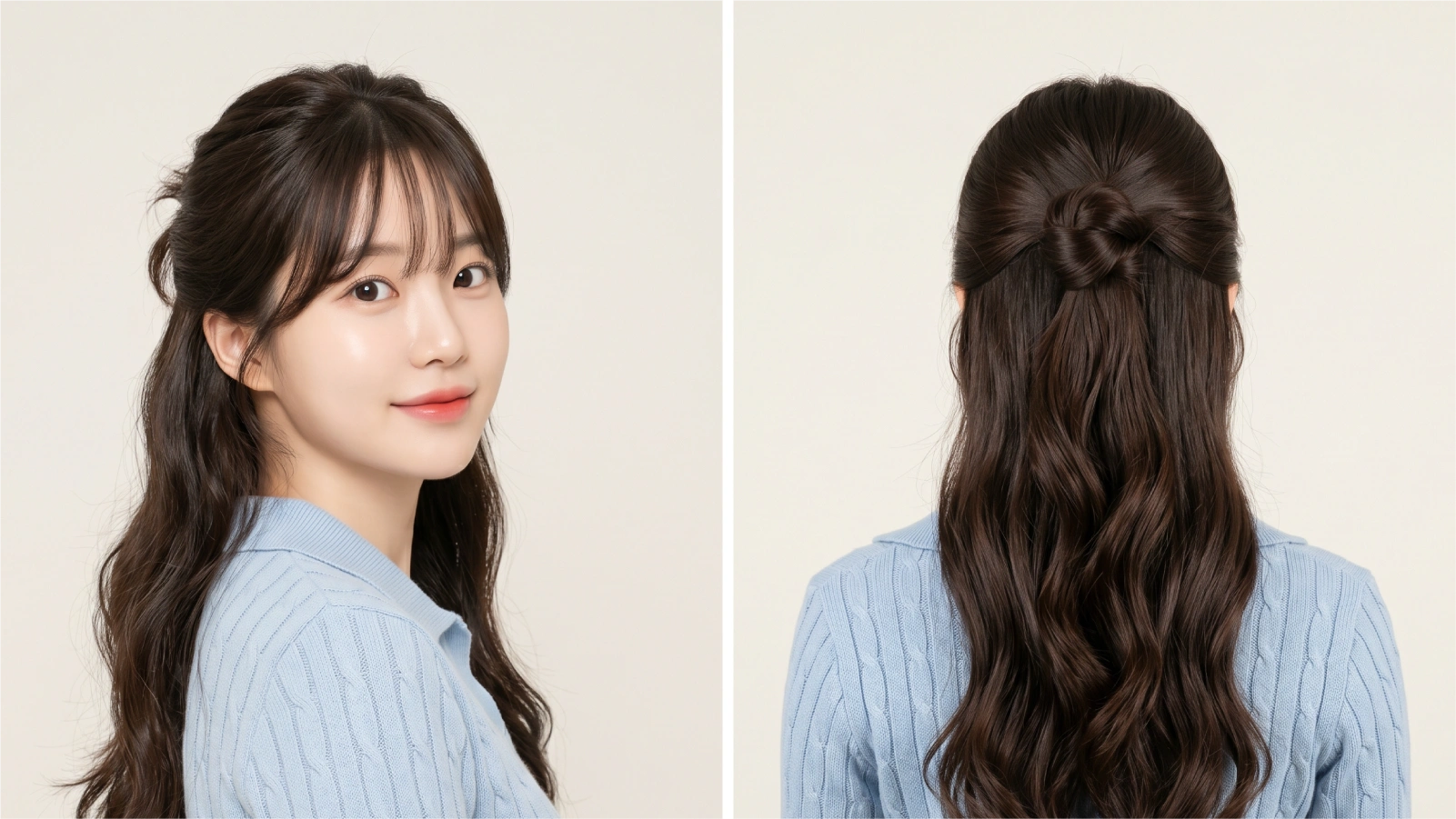
A waterfall braid is a half-French braid where you drop one strand out of the pattern on every pass, so sections of hair spill down through the plait like falling water. You braid across the head instead of down it, which means most of your hair stays loose while a woven band frames your face.
It looks far harder than it is. The whole thing is three moves repeated in a loop, and once your hands learn the rhythm you can finish one in about five minutes.
Below you’ll get the step-by-step method, a prep guide by hair texture so the braid doesn’t slide out an hour later, and the fixes for the two problems that ruin most attempts: slippery strands and uneven drops. If you’re still building your braid skills, start with the broader collection of easy hairstyles and come back to this one.
Style Snapshot
- A waterfall braid is a three-strand braid worked sideways, dropping the bottom strand each stitch and replacing it with fresh hair.
- Day-old hair holds a waterfall braid far better than freshly washed hair, which is too slippery to grip.
- You need roughly chin-length hair or longer, and the dropped sections need enough length to actually cascade.
- Keep the braid loose along the hairline; constant tension at the temples is what damages hair over time.
What makes a waterfall braid different from a French braid?
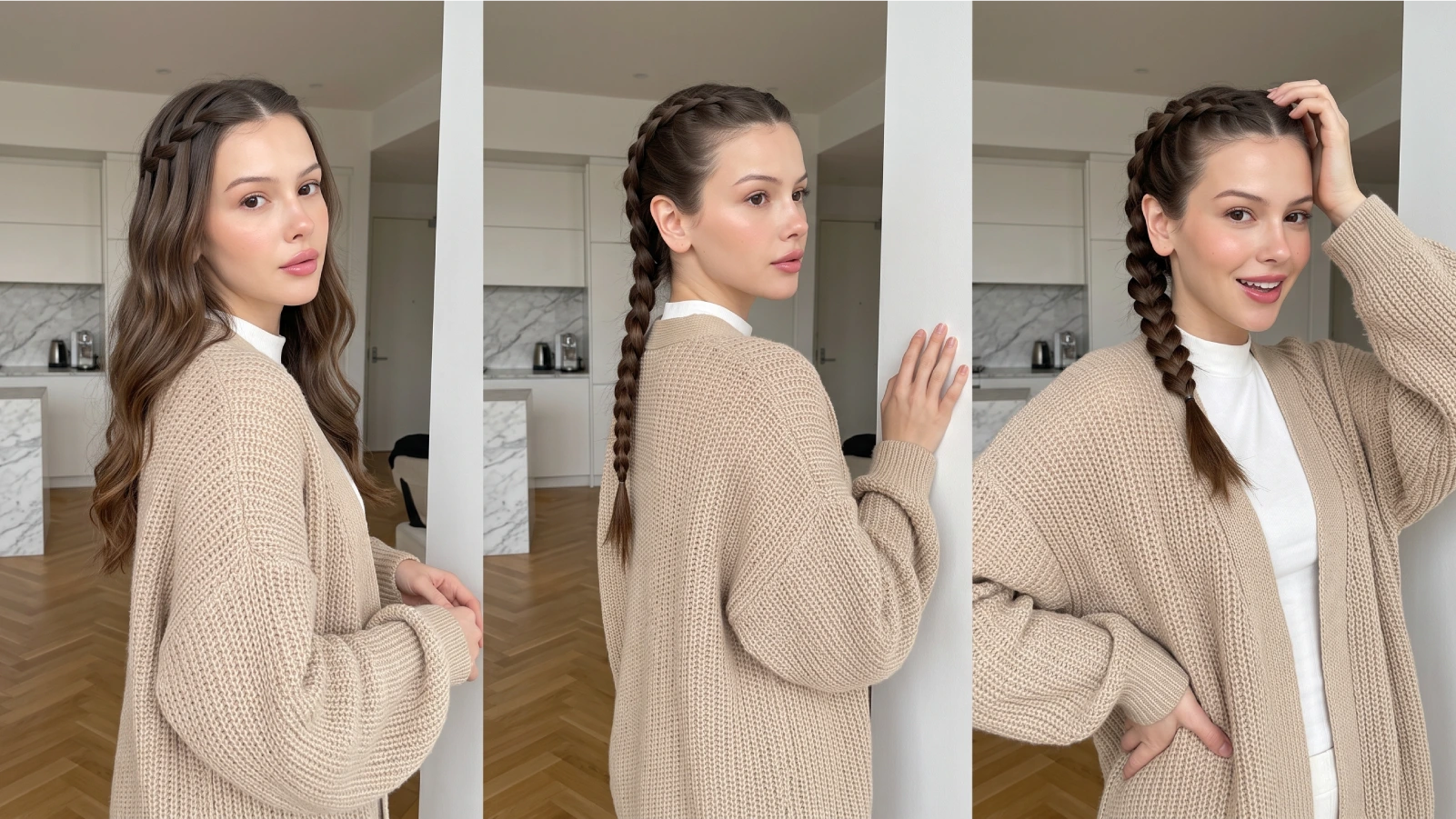
In a French braid, you keep every strand in the pattern and add hair as you go, so the braid grows thicker and stays flat to the scalp. A waterfall braid uses the same add-in motion, but you release the lower strand after each cross and pick up a brand-new section to replace it.
That one change is what creates the cascade. The released pieces hang free and blend into your loose hair, so you get a braided ribbon with hair pouring out of it.
How do you do a waterfall braid step by step?
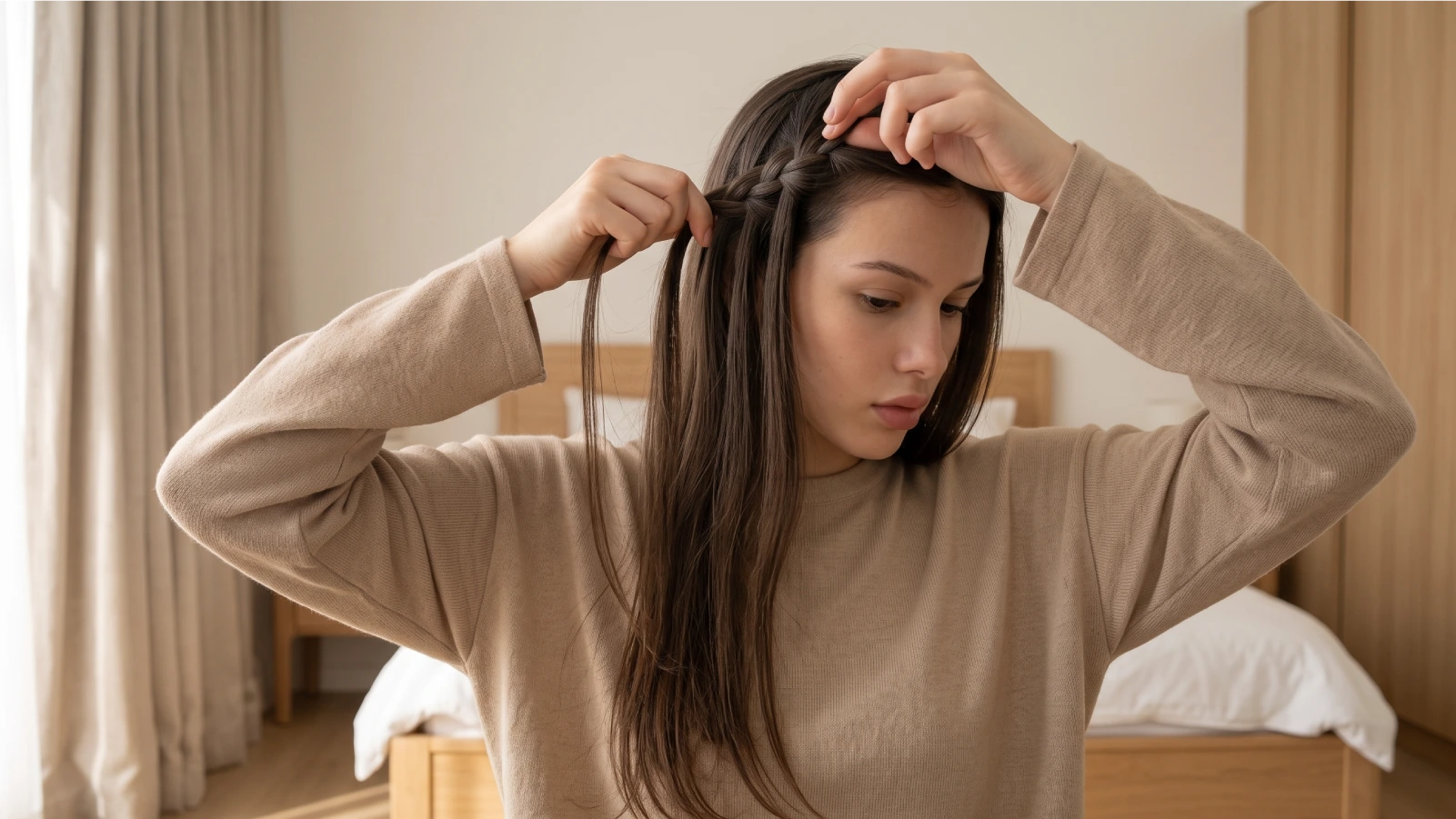
Start at the heavier side of your part and work toward the opposite ear, dropping a strand on every second cross. Here’s the full sequence.
- Brush hair smooth and mist lightly with texturizing spray. Slip is the enemy here.
- Take a two-inch section at the front of your part and split it into three strands.
- Cross the back strand over the middle, then the front strand over the middle. That’s one normal stitch.
- Cross the back strand over the middle again, adding a small piece of hair from above as you go.
- Now drop the front strand. Let it fall straight down and leave it alone.
- Pick up a fresh section from directly beneath the dropped strand. This becomes your new front strand.
- Repeat steps 4 through 6, moving toward the back of your head.
- Finish behind your ear with a small clear elastic, or braid the tail into a regular three-strand plait and pin it under.
Two things fix most beginner problems. Keep the dropped sections the same width every time, or the waterfall looks patchy, and hold your working strands close to the scalp so the braid doesn’t wander down the head.
Which hair types hold a waterfall braid best?
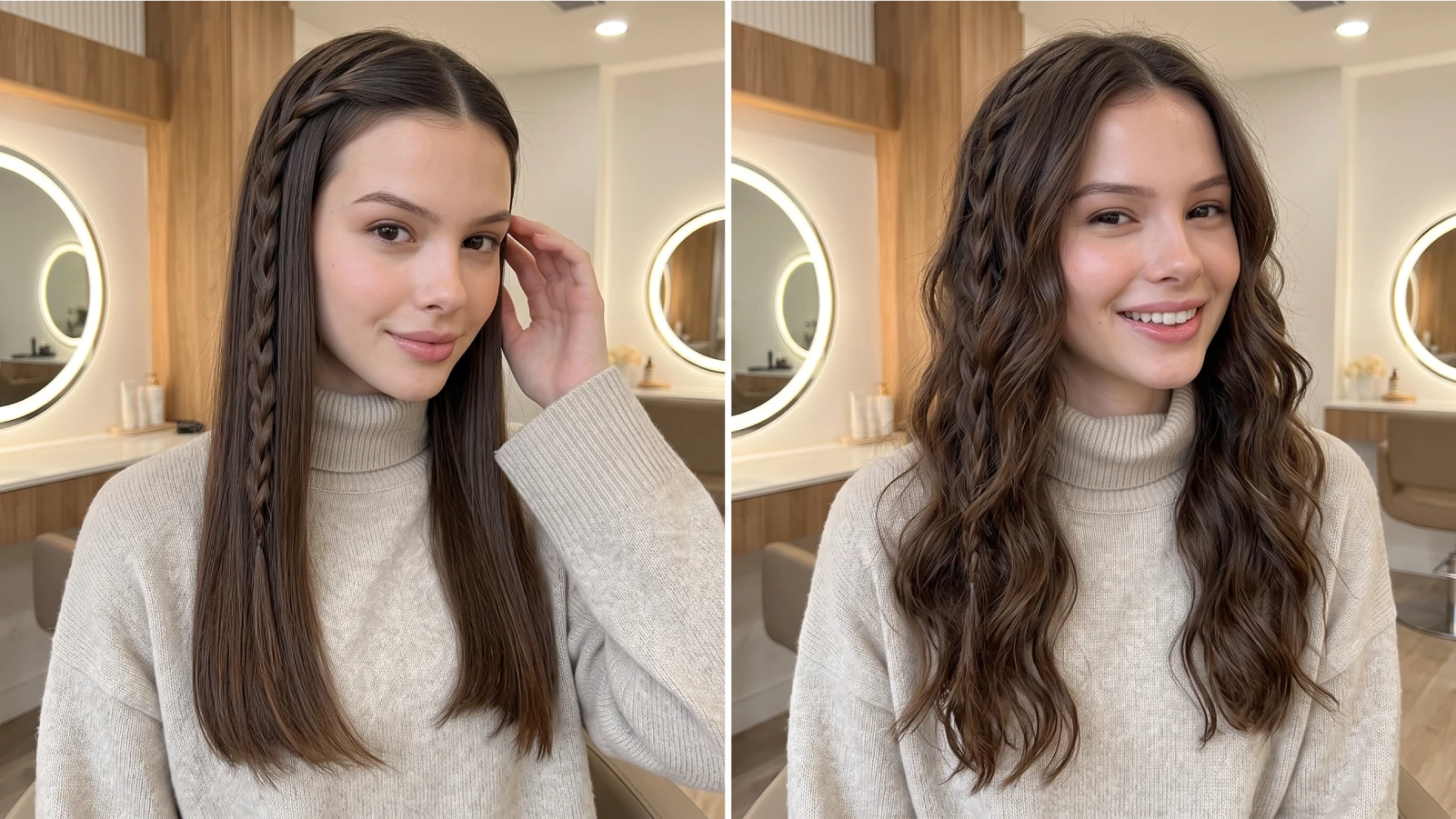
Wavy, day-old hair holds it best because the natural texture creates grip between strands. Very straight or freshly washed hair tends to slide loose within an hour, and tight coils can swallow the drop effect entirely unless the hair is stretched first.
Length matters too. You need enough hair for the dropped pieces to actually fall, which in practice means chin-length as a floor and collarbone-length or longer for the full cascade.
The single best prep step costs nothing: braid on second-day hair instead of washing first.
If your hair is too short to cascade convincingly, a crown braid gives you a similar woven-band look without needing length in the dropped sections.
How do you make a waterfall braid last all day?

Set it once at the end rather than spraying as you go, and anchor the finish with a pin instead of relying on an elastic alone. Product layered mid-braid makes strands stiff and hard to drop cleanly.
A few habits that keep it intact:
- Mist a light hairspray from about ten inches away once the braid is finished and settled.
- Cross two bobby pins in an X under the tail so the weight of loose hair doesn’t drag the braid down.
- Gently pull the outer edges of each stitch to widen the braid before you set it.
- Sleep in a loose low braid if you want a second day out of the waves, not the waterfall itself.
One caution worth taking seriously. Styles that pull tightly at the hairline can cause traction alopecia, and the American Academy of Dermatology lists broken hairs around the forehead, a receding hairline, and patches of loss where hair is pulled tight as the signs to watch for. A waterfall braid should sit snug, never tense, and you shouldn’t feel any sting at the temples.
If you want a woven look with even less scalp tension, fishtail braiding sits lower on the head and pulls almost nothing at the hairline.
Frequently Asked Questions
No. It’s a standard three-strand braid with one added move, dropping the front strand each round. Most people get it in two or three attempts, though braiding it on yourself in a mirror takes longer to feel natural.
Roughly four to eight minutes depending on your hair length and how far across the head you braid. A single side braid is fastest. Double waterfalls meeting at the back take closer to fifteen minutes.
Yes, down to about chin length or a long bob. The braid itself works fine; the dropped sections just cascade a shorter distance, so the effect reads more like a woven headband than a waterfall.
Almost always slippery hair. Freshly washed, conditioner-heavy, or very straight hair gives the strands nothing to grip. Texturizing spray or dry shampoo at the roots fixes it more reliably than hairspray does.
Wrapping up
- The waterfall braid is one repeated loop: cross, add, drop, replace.
- Second-day or lightly textured hair holds it dramatically better than clean hair.
- Consistent drop width is what separates a polished braid from a messy one.
- Keep it loose at the hairline and finish with pins, not tension.
Once this braid feels automatic, try stacking two of them and joining the tails at the back for a softer, fuller version of the same idea.