Curly hair needs more moisture and gentler handling than straight hair, mainly because its spiral shape keeps scalp oils from reaching the ends. Good hair care for curly hair comes down to a few habits: wash less often, condition the full length, and detangle with care instead of force.
Curls twist along each strand, so natural oil (called sebum) struggles to slide down to the tips. The tighter the curl, the harder that trip becomes, which is why coily hair tends to be the driest of all.
This guide walks through how often to wash, a gentle detangling and styling routine, and which trendy ingredients actually earn their place. Build these into a consistent hair care routine and your curls get easier to manage over time.
Quick Take
- Wash curly hair only when it looks or feels dirty. Many curl types do well washing every few days to every few weeks, not daily.
- Condition from root to tip, not just the ends, since curls need moisture along the whole strand.
- Detangle on wet, conditioned hair with fingers or a wide-tooth comb, and skip brushing dry curls.
- Coconut oil has real research behind it for reducing breakage. Rice water and biotin have far weaker evidence.
What makes curly hair different?
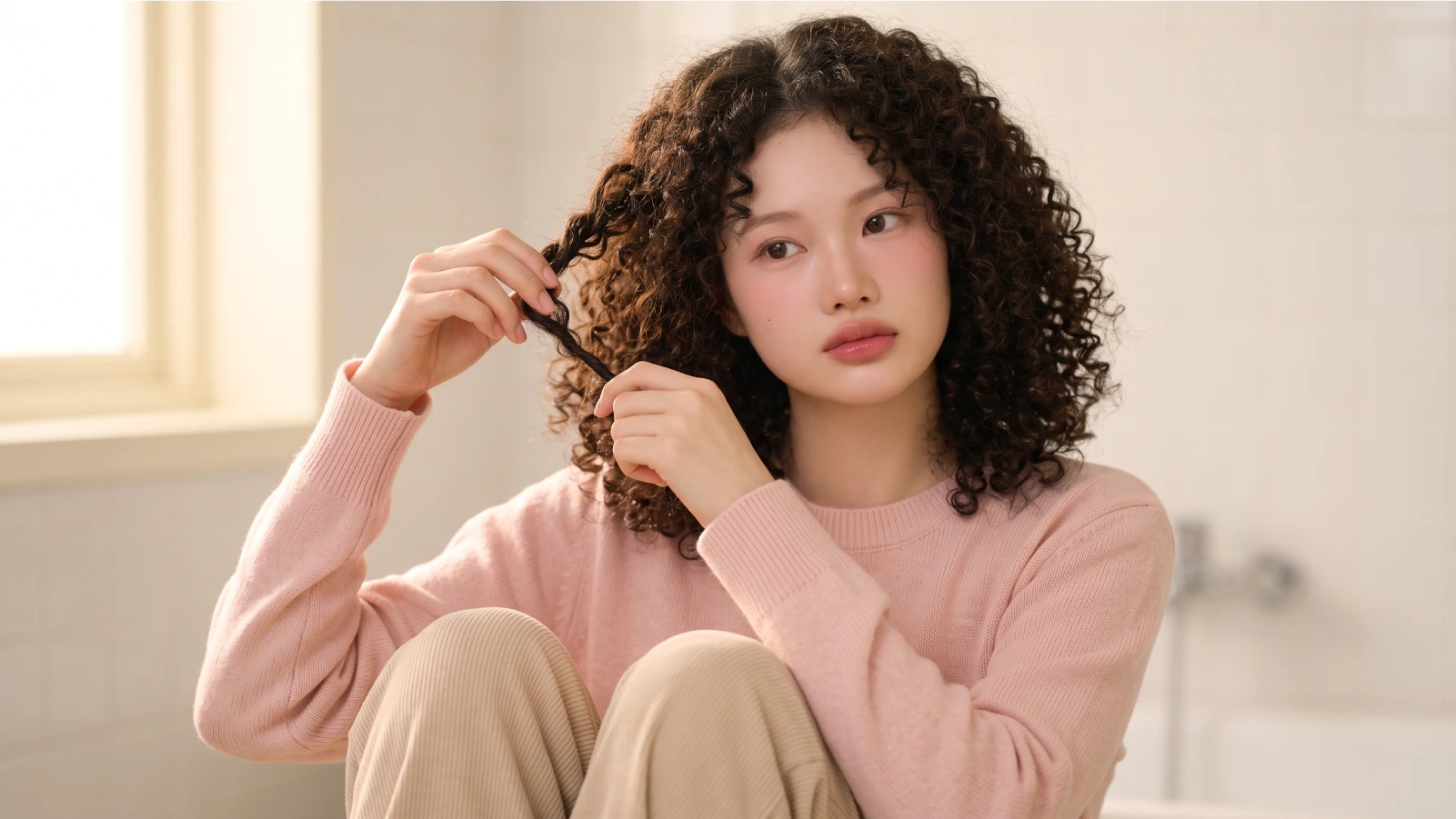
Curly and coily hair is more prone to dryness and breakage than other hair types, according to the American Academy of Dermatology. The reason is structural, not a flaw in your routine.
Each bend in a curl is a weak point where the strand can snap, and those same bends block sebum from coating the hair. So your scalp can feel oily while the ends stay parched. Tighter patterns feel this most, which is why type 4 coils usually need the richest products.
What that means in practice:
- Put moisture where curls are driest, on the lengths and ends.
- Handle strands gently, especially when they are wet.
- Match product weight to your pattern: lighter for waves, richer creams and butters for coils.
It also helps to notice how your hair holds water. High-porosity curls soak up moisture fast but lose it just as quickly, so they lean on richer creams and sealing oils. Lower-porosity curls resist moisture at first and prefer lighter, water-based products.
If your texture leans looser, the rules shift a little. Caring for wavy hairs usually means lighter products and more frequent washing than tighter curls need.
How often should you wash curly hair?
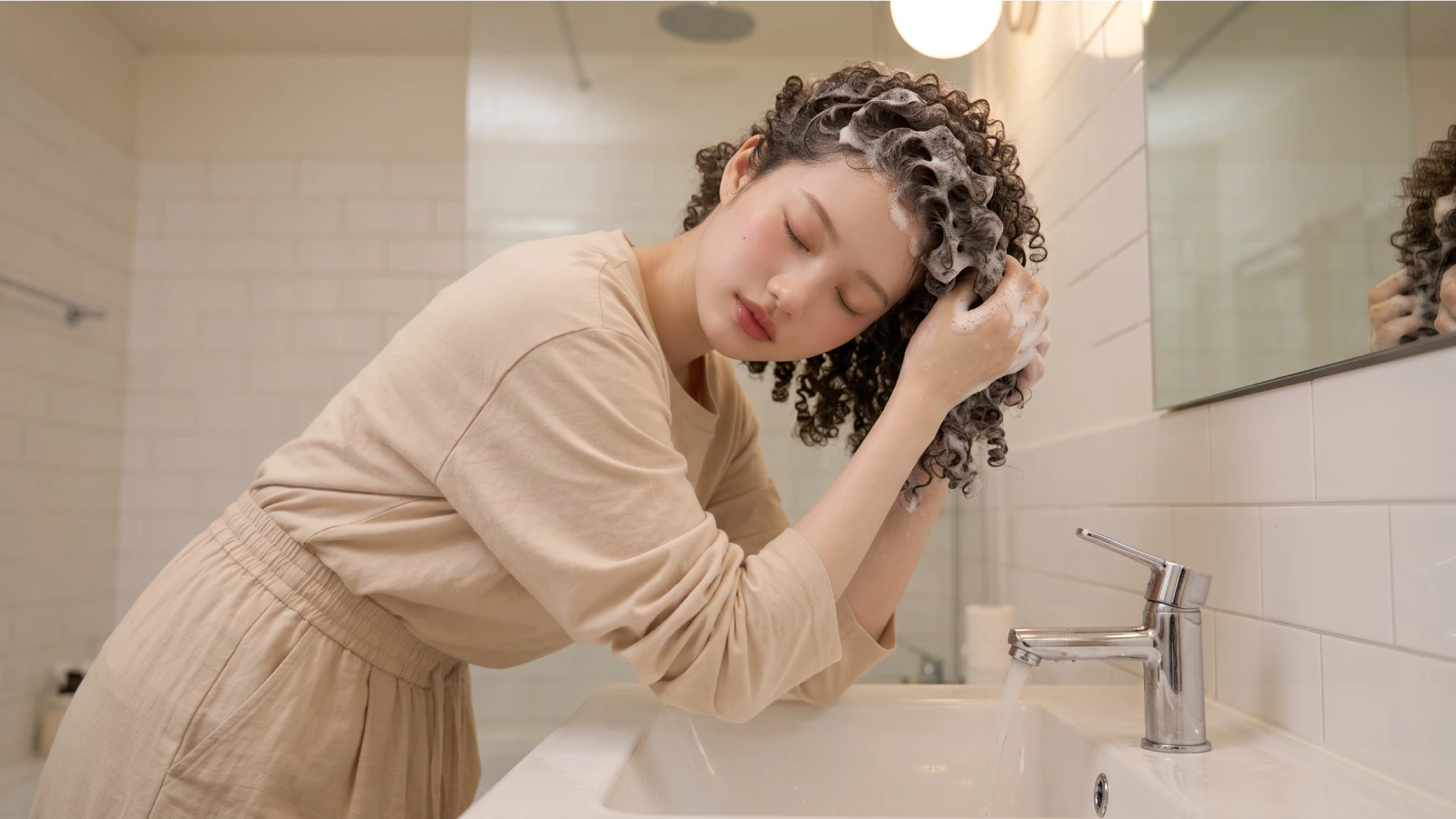
Wash curly hair when it looks or feels dirty, not on a fixed daily schedule. The AAD notes that thick, curly hair does not need washing daily or even weekly, and suggests cleansing at minimum every two to three weeks for scalp and hair health.
Over-washing strips oils that curls can barely spare, which leaves them dry and frizzy. When you do shampoo, pick a moisturizing formula and focus it on the scalp. Then condition every wash, and unlike straighter hair, run conditioner from roots to ends.
You also have options beyond one standard shampoo. Co-washing (cleansing with conditioner) and low-lather formulas suit drier, tighter curls, while an occasional clarifying wash clears buildup that leaves curls limp. Harsh sulfates can strip curls, so many people skip them.
The frequencies below are general starting points, not rules. Expect some trial and error to find your own sweet spot.
Washing too hard or too often can also make breakage worse. If you are seeing more strands than usual in the drain, our guide on how to reduce hair fall covers the common causes.
How do you detangle and style curls without damage?
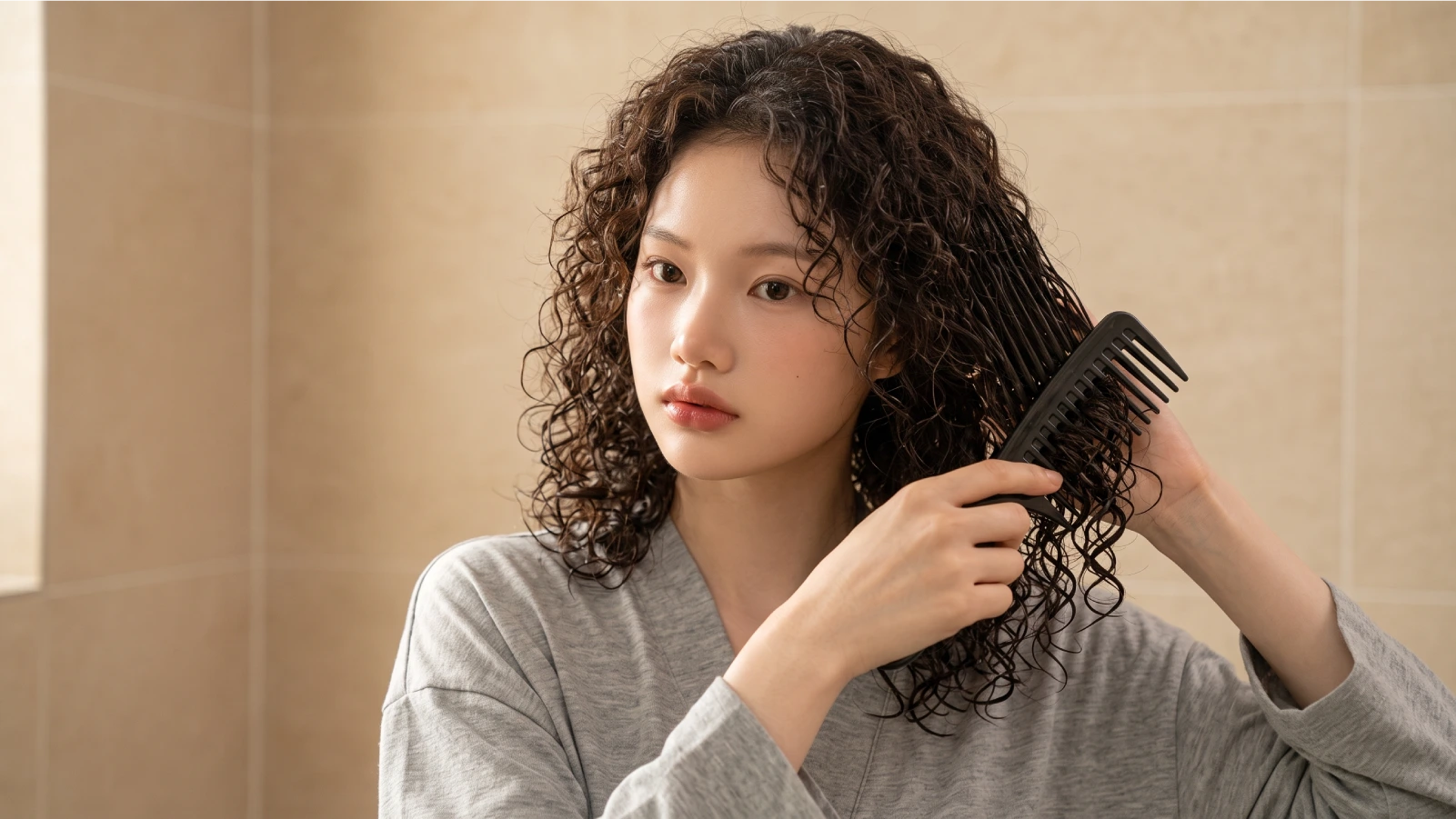
Detangle only when hair is wet and coated with conditioner, using your fingers or a wide-tooth comb. The AAD advises against brushing curly hair while it is dry, since that invites breakage and frizz.
A simple wash-day routine looks like this:
- Rinse and condition, then detangle in sections while the conditioner is still in.
- Rinse with cooler water to help the cuticle lie flatter.
- Blot, do not rub, with a cotton T-shirt or microfiber towel to cut frizz.
- On damp hair, apply a leave-in, then a cream or gel using the praying-hands or scrunch method.
- Air-dry when you can. If you use heat, keep it low or medium and add a heat protectant.
Protect curls overnight, too. Sleeping on a satin or silk pillowcase, or loosely piling curls on top of your head, cuts the friction that leaves you with frizz and flattened curls by morning.
Constant tension from tight ponytails, braids, and extensions can cause breakage and, over time, permanent hair loss, so ease up on styles that pull. If curls already feel fried, learning how to repair damaged strands helps. Any sudden shedding or bald patches is worth a visit to a dermatologist or trichologist.
Do popular curl ingredients actually work?
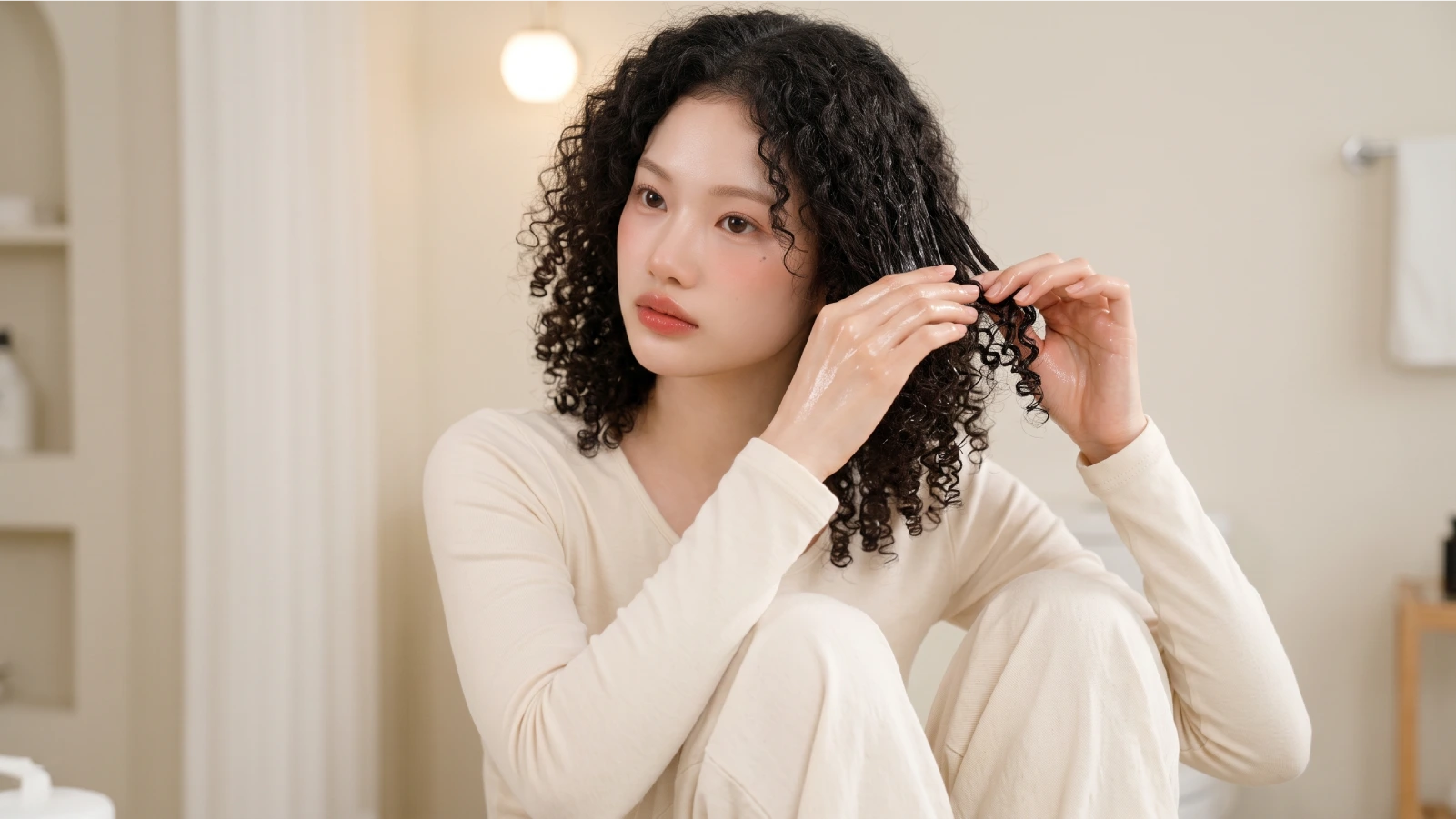
Some do, some are mostly marketing. Coconut oil has the strongest evidence. A 2003 study by Rele and Mohile in the Journal of Cosmetic Science found it reduced protein loss in both damaged and undamaged hair, unlike mineral or sunflower oil, because it penetrates the hair shaft.
Other trendy picks are shakier. Rice water is popular for shine and slip, but the research behind it is thin. Biotin only tends to help hair if you are actually deficient, and castor oil has little direct evidence for growth despite the hype.
Balance matters as much as any single ingredient. Too much protein can leave curls stiff and brittle, while too much moisture can make them limp and shapeless. Watch how your hair responds after each wash and adjust from there.
None of these treats hair loss or a scalp condition. If you are chasing growth or dealing with thinning, a board-certified dermatologist can point you toward options with real evidence behind them.
Frequently Asked Questions
No. Daily washing strips the oils curls need and leads to dryness and frizz. Most curl types do better washing anywhere from twice a week to once every few weeks, depending on how oily the scalp gets.
It can be. Research shows coconut oil reduces protein loss and breakage because it penetrates the strand. Use a small amount on lengths and ends as a pre-wash treatment, and keep it off an oily scalp.
Frizz usually signals dryness or rough handling. Curls that lack moisture swell and lift. Deep conditioning, gentle detangling, and blotting with a soft T-shirt instead of a rough towel all help calm it down.
There is little solid research behind rice water for growth. Some people like the shine and slip it adds, but treat viral claims with caution and do not expect it to fix thinning or hair loss.
The Takeaway
Healthy curls come from consistency, not a cabinet full of products. Keep these in mind:
- Wash when your hair needs it, and condition root to tip every time.
- Detangle wet, handle gently, and skip dry brushing.
- Reach for moisture-rich ingredients with real evidence, like coconut oil, before chasing trends.
- See a dermatologist for ongoing shedding, scalp issues, or breakage that will not quit.
Once your curls feel healthier, dialing in the right leave-in and gel for your exact pattern is where the real fun starts.