
Caring for colored hair comes down to washing less often with a gentle, sulfate-free shampoo, sealing in moisture, and shielding your strands from sun, heat, and chlorine. Color-treated hair is chemically altered and more porous, so it dries out and loses pigment faster than untreated hair.
The good news is that most fade and dryness come from a few fixable habits. Get your washing, conditioning, and protection right, and your shade stays richer for weeks longer. This guide covers what actually works for hair care for colored hair, what to skip, and when a problem is worth a professional’s attention. Everything here is general hair care, not medical advice, and it fits neatly into a solid everyday hair care plan.
Quick Take
- Wash less often and only with a sulfate-free, color-safe shampoo to slow fading.
- Condition after every wash and use a weekly mask, since color-treated hair is drier and more porous.
- Protect color from sun, heat styling, and pool chlorine, which all speed up fade and breakage.
- When you dye, staying within three shades of your natural color causes less damage, per the AAD.
Why does colored hair need special care?

Colored hair needs special care because the coloring process chemically opens the hair’s outer cuticle to deposit or lift pigment, which leaves strands more porous and prone to moisture loss. That raised cuticle is why dye washes out over time and why colored hair often feels dry or rough.
More porous hair drinks up water fast but loses it just as quickly. That imbalance is what makes color-treated strands feel brittle, look dull, and tangle more easily. It also makes them thirstier for conditioner and slower to bounce back from heat.
Fade itself is mostly mechanical. Every time you wash, tiny color molecules loosen from that raised cuticle and rinse away, which is why your shade looks softer a few weeks in. Heat and sun speed the same process by lifting the cuticle even more.
Bleaching and lightening go further than deposit-only color, so those strands are the most fragile of all. According to the American Academy of Dermatology, lightening hair more than three shades requires higher volumes of peroxide, which causes more hair damage. Knowing your hair sits on the fragile end helps you treat it gently and set realistic expectations.
How often should you wash colored hair?
Wash colored hair as little as your scalp allows, ideally two to three times a week, because every wash pulls a little pigment down the drain. Fewer washes mean slower fade and less dryness. When you do wash, reach for a sulfate-free, color-safe shampoo, which cleanses without stripping color and oils as harshly.
Technique matters as much as frequency. The AAD recommends applying shampoo mainly to your scalp, then letting it rinse through the lengths, and following every wash with conditioner. That protects your ends, where color lives longest, and helps calm the dryness and frizz that colored hair is prone to.
A quick reference for tailoring wash days:

Water temperature is an easy win too. Hot water swells the cuticle and releases more pigment, so wash and rinse with lukewarm or cool water instead. A quick cool rinse at the end helps flatten the cuticle and adds shine.
Watch for product build-up as well. If your color looks dull and coated, a gentle clarifying wash every few weeks resets your hair, but use it sparingly so it doesn’t strip fresh color. Between washes, dry shampoo stretches your color further and keeps roots looking clean.
What actually protects your color from fading?

The biggest fade culprits are sun, heat styling, and chlorine, so protecting against all three does more than any single product. UV exposure is especially rough on dyed hair. The AAD notes that the sun can leave hair weak, dry, rough, faded, and brittle, and that this is especially true for hair that is dyed, bleached, or permed.
Simple protective habits go a long way:
- Wear a wide-brimmed hat or use a leave-in with UV filters on sunny days.
- Turn heat tools down and always apply a heat protectant first.
- Rinse hair before swimming and wear a swim cap, since pool chemicals are hard on color.
- Add a weekly deep-conditioning mask to replace lost moisture.
A weekly deep-conditioning mask does the heaviest lifting here. Because colored hair loses moisture faster, a rich mask left on for several minutes softens strands, boosts shine, and makes color look richer. On very dry or lightened hair, twice a week is reasonable.
Heat protectant is not optional for colored hair. It coats the strand and buffers the cuticle, which reduces the scorching that dulls tone and causes breakage. Pair it with the lowest heat setting that still styles your hair.
Be honest about “repair” and supplement claims. No leave-in truly rebuilds the hair shaft, and evidence that biotin or vitamin supplements boost hair color in people who aren’t deficient is thin. Good conditioners smooth and protect the cuticle, which reduces breakage and shedding that make color look patchy, but they don’t reverse structural damage.
Which coloring choices cause the least damage?
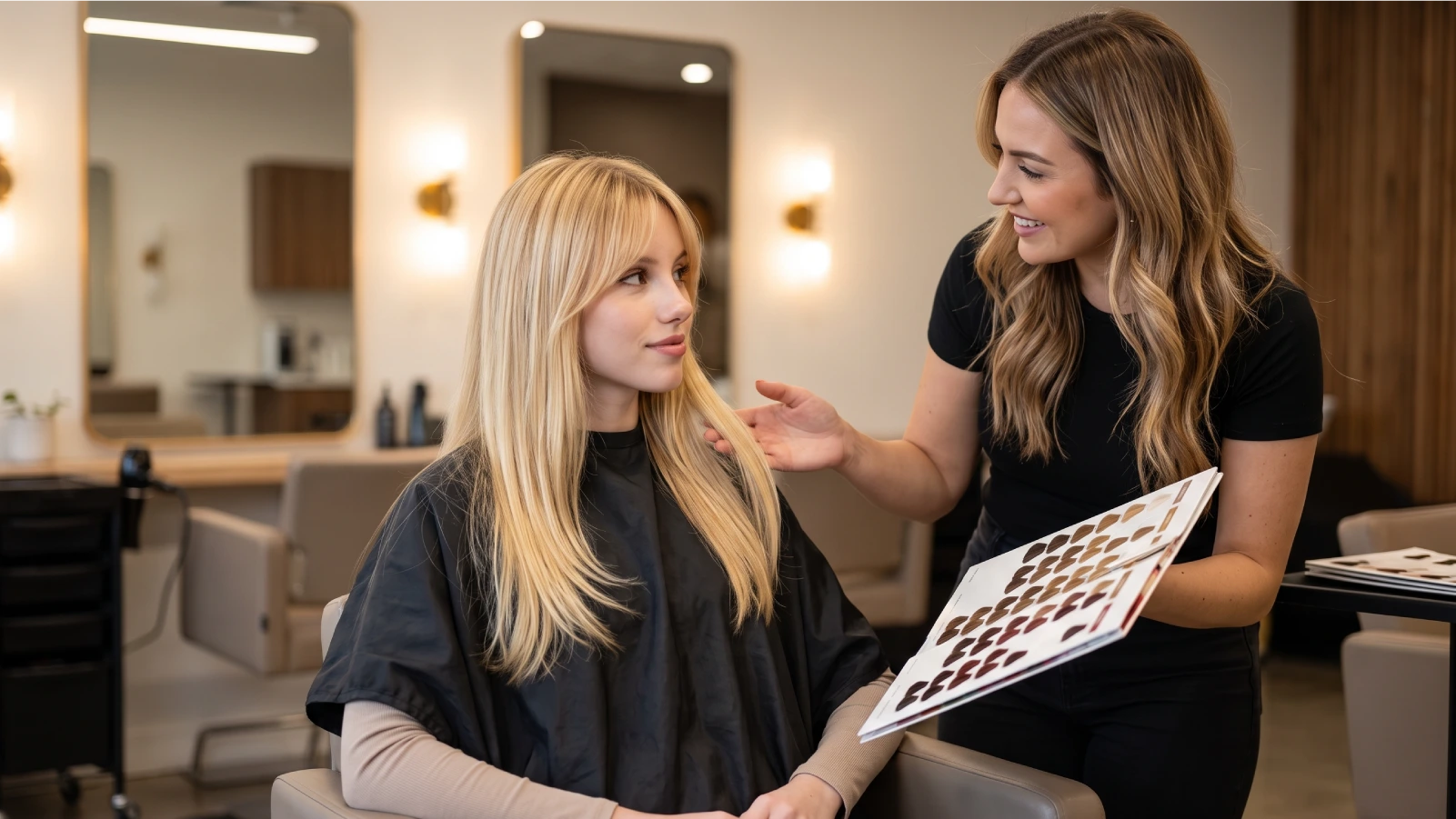
The gentlest coloring choice is staying close to your natural shade and spacing out chemical services. The AAD advises choosing a dye within three shades of your natural color and notes that dyeing darker is generally less damaging than going lighter, because heavy lightening needs stronger peroxide.
Two more derm-backed habits limit damage. First, don’t stack chemical services on the same day. The AAD’s damage-prevention guidance says to have only one service at a time, and if you perm or relax, do it about two weeks before you color.
Second, always do the patch test on store-bought color. The AAD warns that a rash, redness, swelling, burning, or itching signals an allergic reaction, so stop and see a dermatologist for allergy testing. Gloss and toner refreshes between full color sessions also help revive tone without another round of harsh processing.
Choose a dye within three shades of your natural color. Typically dyeing hair darker is better than lighter. (American Academy of Dermatology)
If you notice ongoing shedding, bald patches, a painful or flaking scalp, or a reaction after coloring, that is beyond at-home care. See a board-certified dermatologist or trichologist rather than relying on products alone.
Frequently Asked Questions
Sulfate-free formulas clean more gently, so they strip less pigment and natural oil per wash. That means slower fade and less dryness for color-treated hair, especially when you also wash less often and use cool water.
Many colorists suggest waiting about 48 to 72 hours after coloring so the cuticle can settle and pigment can set. Your first wash after that window should be gentle, with a sulfate-free, color-safe shampoo and lukewarm water.
Yes, but color-safe or moisture-rich conditioners work best because colored hair is drier and more porous. Condition after every wash, focus on the ends, and add a weekly mask to replace the moisture that coloring and washing remove.
There’s little solid evidence that supplements prevent color fade in people who eat a balanced diet. Fade is mostly caused by washing, sun, and heat, so protective habits matter far more than pills for keeping color vibrant.
The Takeaway
- Wash two to three times a week with a sulfate-free, color-safe shampoo and always condition after.
- Shield color from sun, heat, and chlorine, the three fastest routes to fade and breakage.
- Stay within a few shades of your natural color and space chemical services to limit damage.
- See a dermatologist for any rash, persistent shedding, or scalp trouble after coloring.
Nail these basics and your color stays glossy far longer between salon visits. Next, learn how your wash routine changes by texture in our guide to caring for curly hair.