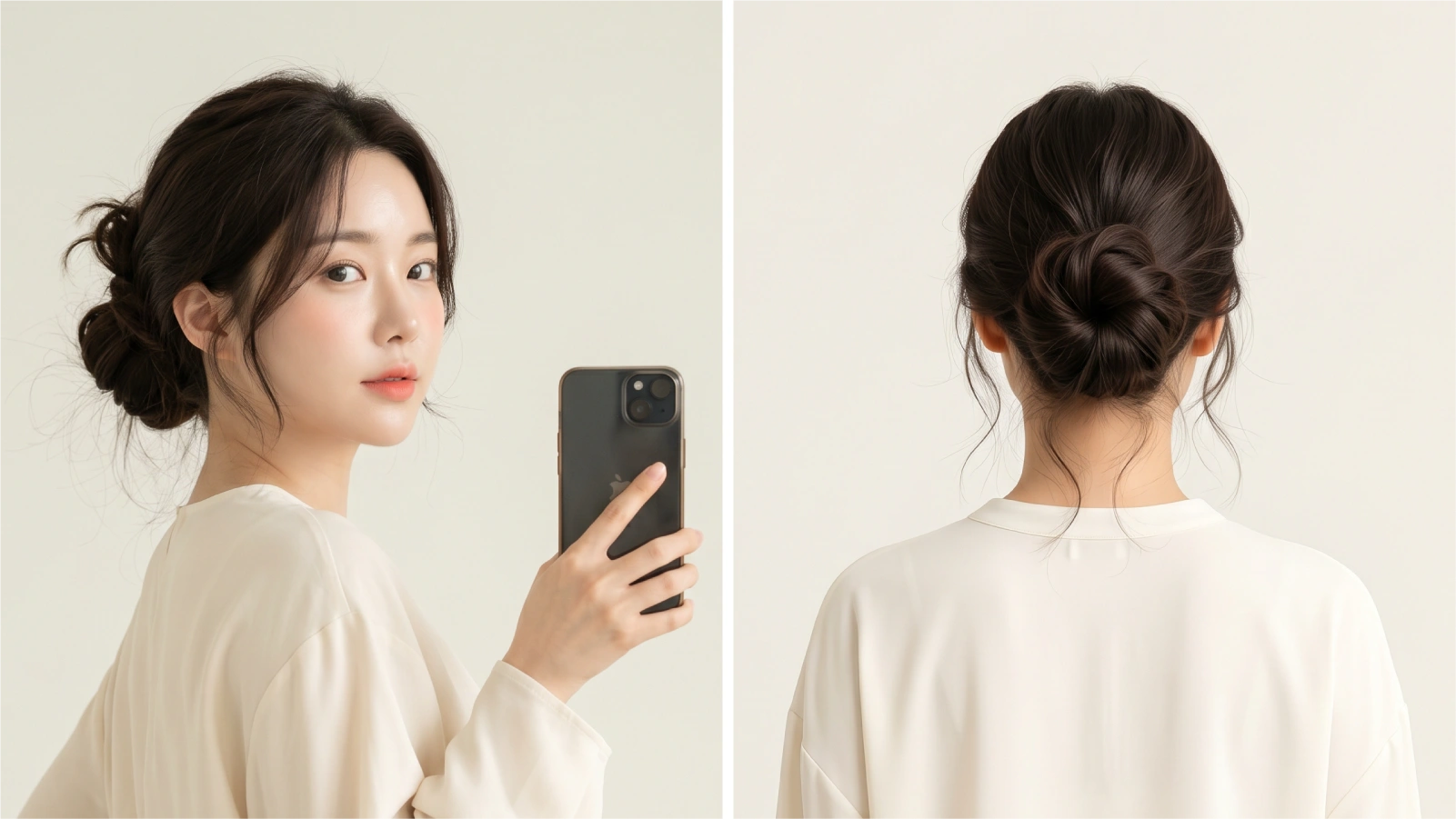
The low ponytail is one of the most versatile hairstyles you can master — worn at the nape of the neck, it works for job interviews, formal events, gym sessions, and lazy Sundays without changing a single technique.
Unlike trendy styles that demand hours of effort, the low ponytail delivers polish in under five minutes, works on hair lengths from bob to waist-length, and actively protects your hair health. If you’re building a practical library of easy hairstyles for women that travel from casual to formal, the low ponytail belongs at the top of that list.
Whether you want sleek and structured or loose and lived-in, this guide walks you through every variation, the right products for each hair type, and exactly which version flatters your face shape.
Style Snapshot
What Is a Low Ponytail (and Why It’s Better for Your Hair)?
A low ponytail is any secured ponytail positioned at or below the occipital bone — the bony ridge at the back of your skull, roughly at nape level. That placement isn’t just aesthetic. It’s functional.
High ponytails pull hair upward against gravity, creating concentrated stress on the hairline and temples. The American Academy of Dermatology (AAD) identifies repeated high-tension styles as a leading cause of traction alopecia, a form of gradual, preventable hair loss. Low ponytails distribute that tension more evenly, making them the better everyday choice for long-term hair health.
As celebrity stylist Andrew Fitzsimons told Newsweek (2024), a low ponytail “elongates the face, softening features and creating a more sophisticated look,” while a high ponytail “provides a lifting effect that can emphasize cheekbones.”
Here’s the thing — knowing where to position it is only the start. The real skill is in the prep, the finish, and the variations.
A low ponytail reduces hairline tension by distributing pull across the full scalp rather than concentrating stress at the temples.
What you’ll need for any low ponytail:
- A boar bristle brush or paddle brush (smooths without creating static)
- A snag-free elastic or silk scrunchie
- Bobby pins (3–5)
- Smoothing serum or light-hold gel (for sleek styles)
- Texturizing spray (for volume-forward styles)
How Do You Do a Low Ponytail Step by Step?
The classic sleek low ponytail is the foundation. Every other variation builds from this base.
Classic Sleek Low Ponytail — 5 Steps:
- Start with second-day hair. Freshly washed hair is slippery and harder to grip. If you’re working with clean hair, apply a pea-sized amount of smoothing serum first.
- Brush all hair back using a boar bristle brush, working from hairline to nape in smooth, downward strokes. Smooth the crown with your palm as you go.
- Gather at the nape — hold everything at the base of your skull, keeping tension even across both sides.
- Secure with an elastic that matches your hair color. Loop it three times; the third wrap should feel snug without pulling.
- Wrap-and-pin the elastic. Pull a half-inch section from the underside of the ponytail, wrap it clockwise around the elastic band, and secure the tip with a bobby pin tucked underneath. This single step transforms a gym-ready pony into a polished finish.

Pro tip from L’Oréal Professionnel artist Cassi Pinder, as shared on Hair.com: use a rattail comb to smooth the crown before securing, and always start with a boar bristle brush to remove tangles without frizz.
Which Low Ponytail Style Suits Your Face Shape?
Not all low ponytail variations flatter every face shape equally. The placement and texture of the style create optical adjustments that work for or against your natural proportions. Use this table as your quick-reference guide.
For round face shapes, a side-swept low ponytail with asymmetric parting creates the illusion of a longer, more defined facial structure.
What Are the Best Low Ponytail Variations for Different Hair Types?
Here’s where most guides fall short — they show 36 photos of straight-haired tutorials and call it comprehensive. Your hair texture changes which techniques and products actually work.
For Straight and Wavy Hair (Types 1–2):
- Sleek low ponytail with a flat iron prep and shine spray
- Textured low ponytail with sea salt spray before styling
- Side-swept ponytail with a deep side part for added dimension
For Curly Hair (Types 3A–3C):
- Work with your curl pattern, don’t fight it. Finger-coil the front sections before gathering
- Use a satin scrunchie — rubber elastics cause friction breakage on curly strands
- A claw clip ponytail at the nape works beautifully for Type 3 curls without disturbing the curl pattern
- Diffuse first, then gather loosely — forcing straight-hair techniques on curly hair creates frizz
For Natural and Coily Hair (Types 4A–4C):
- Stretch hair with a banding method before styling into a low ponytail to reduce tension
- Apply a leave-in conditioner and light oil (argan or jojoba) before brushing back
- Opt for a puff-style low ponytail that keeps the natural texture at the front while gathering cleanly at the nape
- Avoid fine-tooth combs on dry hair — detangle with a wide-tooth comb on damp, conditioned hair only
For Fine or Thinning Hair:
- Backcomb (tease) the roots lightly before gathering — this adds body without extensions
- A volumizing mousse applied to damp roots, then blow-dried, creates the illusion of fullness
- Try a half-up low ponytail: gather only the top half for a fuller look with less exposed thinness
Low Ponytail Accessories: What Works and When
The right accessory can take a basic nape pony from “gym bag” to “runway-ready” in seconds. Here’s how the main options compare:
Celebrity hairstylist Kellon Deryck, speaking to Marie Claire in 2025, put it well: “Think of it like putting together an outfit — every detail counts.” The elastic is part of the look, not just a functional hold.
A high ponytail works the accessory differently — the placement higher up the head demands structured, sleek accessories. At the nape, you have more room to play with softer, more decorative choices.
Swapping a rubber elastic for a satin scrunchie reduces friction-related breakage, making it the single easiest switch for healthier daily styling.
How to Style a Low Ponytail for Different Occasions
One of the biggest missed opportunities in competitor content is the transition guide — how the same base style adapts across your day or week.
Occasion-to-Style Quick Reference:
- Work/Office: Sleek low ponytail with wrapped elastic. Use light-hold spray to tame flyaways. Keep parting straight for a polished look.
- Casual/Errands: Messy low ponytail. Don’t brush too hard — gather loosely, let face-framing strands fall out naturally. No product needed.
- Date Night/Evening Event: Add a velvet scrunchie or ribbon. Pull a few curled face-framers out with a curling wand set to 1.25 inches.
- Wedding/Formal: Twisted low ponytail with a decorative pin. Apply a smoothing serum, use a rattail comb for precision, and finish with shine spray.
- Gym/Active: A bubble ponytail variation keeps the style secure and adds visual interest. Use a non-slip elastic and secure with two bands.
- Travel: Half-up low ponytail — the most forgiving variation for long days, refreshes easily, and works on day 2 or 3 hair.
What Are the Trendiest Low Ponytail Variations Right Now?
The Spring/Summer 2025 runway made a strong case for the low ponytail as a fashion statement. Here are the variations getting the most traction in 2025–2026:
- Sculptural wet-look low pony — As seen at Rabanne SS2025, this combines a deep side part with a compact, glossy gathered pony. Key product: a firm-hold gel applied to damp hair before blow-drying.
- Wrapped strand pony — The hair-over-elastic trick has officially moved from “finishing detail” to centerpiece. Rush Hairdressers’ 2026 trend report identifies this as the most-searched low ponytail refinement on social platforms.
- Braided-front low pony — A French or Dutch braid along the crown flowing into a low ponytail. Seen at Zimmermann SS2025. Works on medium to long hair of any texture.
- Side-swept low pony — The ponytail drapes over one shoulder rather than hanging centered. Victoria Beckham’s longtime signature look. A bubble ponytail variation of this style has been surging on TikTok since late 2024.
- Textured or undone low pony — Loose, slightly frizzy, with deliberate face-framing wisps. Positioned as the anti-sleek counterpoint by Zimmermann’s SS2025 collection. This is actually the most wearable version for everyday casual settings.
For an elevated take on ponytail texture, a textured ponytail with piece-y layers is the easiest upgrade to this base style.
Frequently Asked Questions About the Low Ponytail
Yes — significantly. The American Academy of Dermatology notes that styles pulling hair tightly upward concentrate stress on the hairline and temples. A low ponytail at the nape distributes tension across the full scalp, reducing the risk of traction-related breakage and thinning over time.
They’re nearly identical in placement. A nape ponytail specifically references the hairline at the very base of the skull; a low ponytail is a broader term that includes any secured style below the occipital bone. For practical styling purposes, the two terms are interchangeable.
The minimum workable length is approximately 4–5 inches gathered at the nape. For hair at jaw-length or above, gather what you can at the nape and use bobby pins to tuck in any pieces too short to reach the elastic. A texturizing spray adds grip so shorter strands stay put. Alternatively, use a claw clip ponytail style — the clip grips short sections that elastic bands can’t hold.
Absolutely. The key is finish — a sleek, wrapped-elastic low ponytail with no flyaways reads as polished and intentional. Add a satin ribbon, a jeweled pin, or a velvet scrunchie and it’s genuinely red-carpet appropriate. Cassi Pinder of L’Oréal Professionnel recommends using a light-hold hairspray (not a stiff-hold one) to lock the style without dulling the finish.
Backcomb the roots lightly at the crown before gathering. A volumizing mousse applied to damp roots, then blow-dried, gives lasting lift. You can also tease the ponytail itself gently once it’s secured, then lightly smooth the top layer with a brush to create volume underneath with a neat surface.
Key Takeaways
- The low ponytail sits at the nape of the neck and is healthier for daily wear than high styles — it distributes scalp tension evenly and reduces traction risk.
- Match your variation to your face shape: side-swept for round faces, textured with face-framers for square, loose and voluminous for heart-shaped faces.
- Curly and coily hair types need different techniques — satin accessories, wide-tooth detangling, and working with the natural texture, not against it.
- The wrapped-elastic finish is the fastest upgrade: one extra step transforms a casual pony into a polished style.
- Accessories are styling tools — a silk scrunchie, satin ribbon, or gold cuff each signal a completely different occasion without changing the underlying technique.